
Papa a la huancaína
Peruvian cold potato starter with a creamy, spicy cheese sauce
Papa a la huancaína is a classic Peruvian dish of sliced boiled potatoes topped with a smooth, spicy sauce made from fresh cheese, yellow Peruvian peppers, and milk. Served cold, often as a first course, it is enjoyed across Peru both on ordinary days and for special gatherings.
- Served cold with a creamy cheese and yellow pepper sauce
- A staple at Peruvian celebrations and everyday meals
- Named after Huancayo, but popular across Peru
- Often topped with olives, corn, and hard-boiled eggs
What is Papa a la huancaína?
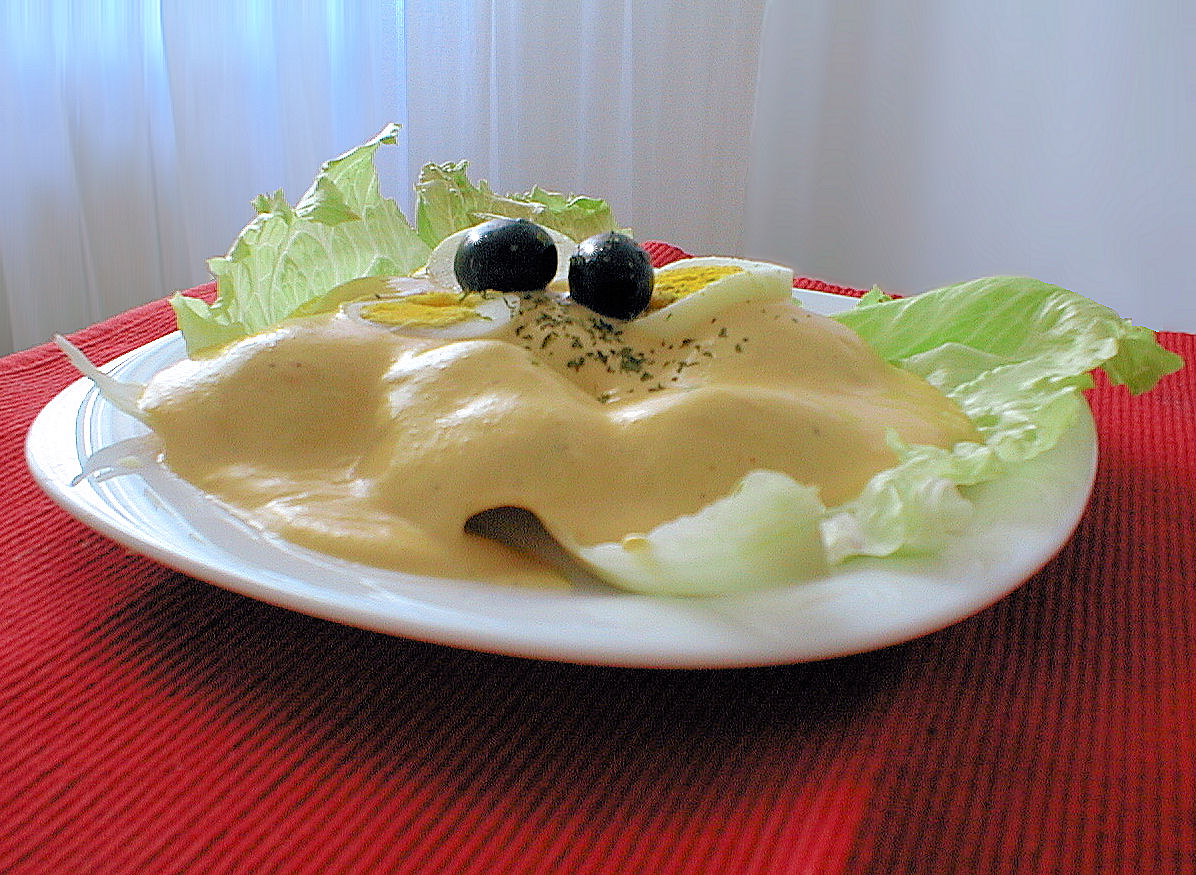
Papa a la huancaína is a Peruvian dish where slices of boiled yellow potatoes are covered in a thick, creamy sauce. The sauce is made by blending fresh white cheese, yellow Peruvian peppers (ají amarillo), evaporated milk, oil, and salt. It is usually served cold, placed on a bed of lettuce, and finished with toppings such as black olives, white corn, and hard-boiled eggs. The sauce is smooth and has a mild heat from the peppers, balanced by the cheese and milk.
Where does Papa a la huancaína come from?
The roots of papa a la huancaína are debated. Some say it began during the building of the Central Railroad from Lima to Huancayo, where women from Huanca prepared potatoes with a cheese and pepper sauce for the workers. Another account suggests it was sold at train stations along the route as a convenient meal for travelers. While its name refers to Huancayo, many of its key ingredients, such as yellow pepper and olives, are grown along Peru’s coast. The dish does not match the usual hot, meat-based foods of Huancayo.
How is Papa a la huancaína made?
To prepare papa a la huancaína, yellow potatoes are boiled, peeled, and sliced. The sauce is made by blending fresh cheese, yellow ají peppers sautéed or grilled, evaporated milk, vegetable oil, and salt until smooth. Traditionally, the ingredients were ground together using a batán, a stone tool. The potatoes are arranged on lettuce, covered with the sauce, and garnished with black olives, white corn, and quarters of hard-boiled egg.
How and when is Papa a la huancaína eaten?
This dish is most often served as a starter or light meal, especially at lunch or dinner. Because it is served cold, it is popular for picnics and outings. The creamy, spicy sauce pairs well with the mild potatoes, and the garnishes add color and texture. It is a common sight at gatherings and celebrations, but is also enjoyed as an everyday food throughout Peru.
Kinds of Papa a la huancaína
In southern Peru, especially around Cuzco, Puno, and Arequipa, a similar dish uses ocopa sauce instead of huancaína. Ocopa is made with peanuts, onions, tomatoes, yellow peppers, milk or cream, crushed crackers or bread, salt, and huacatay (a local herb). Each region may use slightly different garnishes or adjust the sauce ingredients to local tastes.
What Papa a la huancaína means
Papa a la huancaína is considered one of Peru’s signature foods and is widely recognized as a symbol of Peruvian cooking. It is found at both family tables and festive events, reflecting its versatility. The dish’s name and history connect it to both the highlands and the coast, showing the blend of influences in Peruvian cuisine.
Questions people ask about Papa a la huancaína
What is papa a la huancaína made of?
It consists of boiled yellow potatoes covered in a sauce made from fresh cheese, yellow Peruvian peppers, evaporated milk, oil, and salt, with garnishes like olives, corn, and hard-boiled eggs.
Where does papa a la huancaína come from?
It is a traditional dish from Peru. Its name refers to Huancayo, but it is enjoyed throughout the country and its exact origin is debated.
Is papa a la huancaína vegetarian?
Yes, the main ingredients are potatoes, cheese, peppers, and milk, with no meat or fish included.
When is papa a la huancaína usually eaten?
It is typically served as a starter or light meal at lunch or dinner, and is also popular for picnics and special occasions.
How is papa a la huancaína served?
The dish is served cold, with potato slices on lettuce, topped with the creamy sauce and garnished with black olives, white corn, and hard-boiled eggs.
Good reading and sources
- Papa a la huancaína on WikipediaEncyclopedia
- More photos on Wikimedia CommonsPhotos
- Wikidata recordOpen data
The facts on this page come from the Wikipedia article "Papa a la huancaína", written by its contributors and used under the CC BY-SA 4.0 licence, and from its Wikidata record (CC0). Thali rewrote the text in its own words, with AI assistance, and compares every page with the article to make sure no passage is copied. It may be reused under the same CC BY-SA 4.0 licence with a link back.
It may contain mistakes, and it is not dietary or allergy advice: recipes differ from cook to cook. If something is wrong, tell us. Last refreshed 2026-10-03.
More from Peru
All the food of Peru OcopaVegetarian
🇵🇪 PeruPeruvian sauce of yellow chili, huacatay, cheese and peanuts, often served over potatoes
Sauce, pickle or ferment, Lunch, Dinner
Causa limeña
🇵🇪 PeruCold layered potato dish with a savoury filling, typical of Peru
Main dish, Lunch, Dinner
OcopaVegetarian
🇵🇪 PeruPeruvian sauce of yellow chili, huacatay, cheese and peanuts, often served over potatoes
Sauce, pickle or ferment, Lunch, Dinner
Causa limeña
🇵🇪 PeruCold layered potato dish with a savoury filling, typical of Peru
Main dish, Lunch, Dinner
 Mojito
🇨🇺 Cuba and 5 moreCuban cocktail of white rum, lime, mint, sugar and soda water over ice
Drink
Mojito
🇨🇺 Cuba and 5 moreCuban cocktail of white rum, lime, mint, sugar and soda water over ice
Drink
 PachamancaMeat
🇵🇪 Peru and 1 moreAndean meats and vegetables slow-cooked with hot stones in an earthen oven
Main dish, Lunch, Dinner
PachamancaMeat
🇵🇪 Peru and 1 moreAndean meats and vegetables slow-cooked with hot stones in an earthen oven
Main dish, Lunch, Dinner
Its cousins elsewhere
All salads and sides VinegretVeganвинегрет
🇷🇺 Russia and 1 moreA Russian salad of beet, potato, carrot, onion and sauerkraut or pickles
Salad or side, Lunch, Dinner
VinegretVeganвинегрет
🇷🇺 Russia and 1 moreA Russian salad of beet, potato, carrot, onion and sauerkraut or pickles
Salad or side, Lunch, Dinner
 TaramasalataFish or seafoodταραμοσαλάτα
🇬🇷 Greece and 5 moreFish roe blended with oil, lemon and bread or potato, served as a meze spread
Sauce, pickle or ferment, Snacks
TaramasalataFish or seafoodταραμοσαλάτα
🇬🇷 Greece and 5 moreFish roe blended with oil, lemon and bread or potato, served as a meze spread
Sauce, pickle or ferment, Snacks
 SauerkrautVegan
🇩🇪 Germany and 5 moreFinely shredded cabbage preserved by natural fermentation in salt
Sauce, pickle or ferment, Lunch, Dinner
SauerkrautVegan
🇩🇪 Germany and 5 moreFinely shredded cabbage preserved by natural fermentation in salt
Sauce, pickle or ferment, Lunch, Dinner
 GuacamoleVegan
🇲🇽 Mexico and 1 moreAvocado mashed with lime, salt, and herbs, served as a dip or spread
Sauce, pickle or ferment, Snacks, Lunch
GuacamoleVegan
🇲🇽 Mexico and 1 moreAvocado mashed with lime, salt, and herbs, served as a dip or spread
Sauce, pickle or ferment, Snacks, Lunch