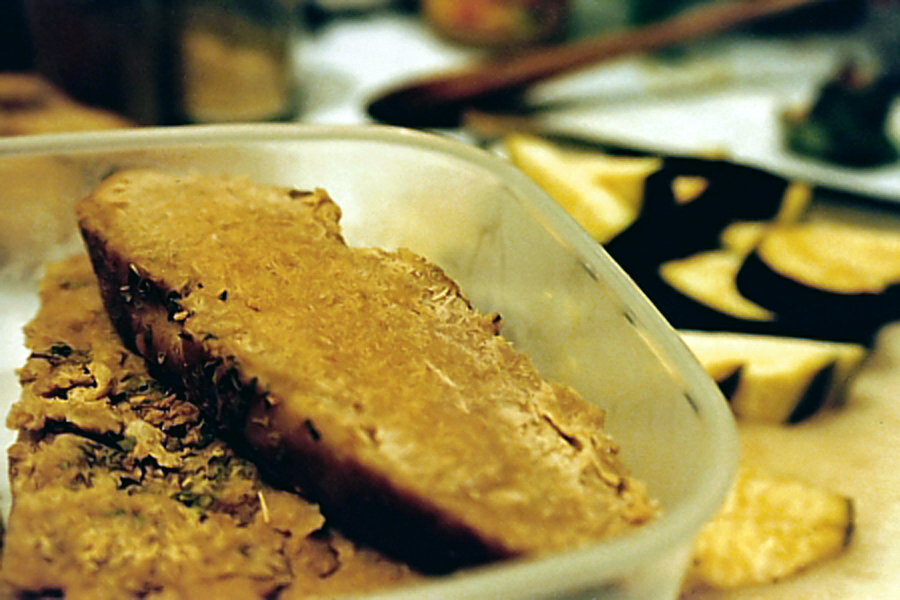
Seitan
Wheat gluten shaped and cooked as a meat substitute
Seitan is a food made from wheat gluten, used as a meat substitute in East and Southeast Asian cuisines and by vegetarians and vegans worldwide. It is valued for its chewy texture, which can resemble meat, and is often marinated or cooked in broths. Seitan has a long history in China and Japan, especially in Buddhist cooking.
- Seitan is made from wheat gluten, the main protein in wheat.
- It has been eaten in China since at least the 6th century.
- Seitan is widely used in Buddhist vegetarian cooking.
- It can be deep-fried, steamed, baked, or simmered in broth.
- The name 'seitan' was coined in Japan in the 1960s.
What is Seitan?
Seitan is made from gluten, the main protein in wheat, and is formed into a chewy, elastic mass that can be shaped and cooked in many ways. It is often used as a plant-based alternative to meat, with a texture that can be stringy or dense depending on how it is prepared. Seitan itself is nearly flavorless, but it absorbs marinades and broths well, making it adaptable to many dishes. It can be found as blocks, strips, or balls, and may be fried, steamed, baked, or simmered.
Where does Seitan come from?
The earliest records of wheat gluten as food come from China in the 6th century, where it was called miànjīn and used as a meat substitute, especially among Buddhists. It appears in ancient Chinese texts as both a noodle ingredient and a food in its own right. The practice spread to Japan, where it became known as fu, and later to other East and Southeast Asian cuisines. Seitan as a term was coined in Japan in the 1960s for the macrobiotic diet, and the food was introduced to the West soon after.
How is Seitan made?
Traditional seitan is made by washing wheat flour dough with water until the starch is removed, leaving behind the sticky gluten. This gluten mass is then cooked—often simmered in a broth flavored with soy sauce, kombu (a type of seaweed), and ginger, or deep-fried, steamed, or baked. Industrially, gluten can be separated, dried, and sold as a powder to be rehydrated and formed into seitan at home. Seitan is usually marinated or cooked with seasonings to give it flavor.


How and when is Seitan eaten?
Seitan is eaten in many forms, from fried balls in Chinese dishes to steamed blocks in Japanese cuisine. In China and Vietnam, it is common in Buddhist vegetarian meals and can be found in both restaurants and home cooking. It is also sold canned or jarred, sometimes marinated with mushrooms or peanuts, and eaten with rice porridge for breakfast. In the West, seitan is used as a meat alternative in sandwiches, stir-fries, and snacks, often flavored with sauces or spices.
Kinds of Seitan
There are several regional types of seitan. In China, oil-fried gluten forms puffy balls, steamed gluten is shaped into sausages or wheels, and baked spongy gluten (kaofu) is diced and cooked in sauces. Japanese fu comes as raw (nama-fu), often colored and shaped, or dry-baked (yaki-fu), which is added to soups. Vietnamese mì căn is similar to Chinese miànjīn. Western seitan is often sold in flavored blocks, strips, or as mock meats like ribs and patties.
What Seitan means
Seitan has a special place in Buddhist cuisine, offering a plant-based protein for those who avoid meat. In China, it is part of traditional food therapy and has been used in medicinal diets. In Japan, fu is important in temple and tea ceremony cooking. Seitan became popular among vegetarians and vegans in the West in the 20th century, and is now widely available as a meat substitute. It is also used by some religious communities, such as the African Hebrew Israelites in Israel.
Questions people ask about Seitan
What is seitan made of?
Seitan is made from wheat gluten, which is the main protein found in wheat. The gluten is separated from wheat flour and then cooked in various ways.
Where does seitan come from?
Seitan originated in China, where it has been eaten since the 6th century, and later became part of Japanese and other East and Southeast Asian cuisines.
What does seitan taste like?
Seitan itself is nearly flavorless, but it absorbs the flavors of marinades and broths very well, making it adaptable to many savory dishes.
How is seitan used in cooking?
Seitan can be deep-fried, steamed, baked, or simmered in broth. It is often used as a meat substitute in stir-fries, soups, stews, and snacks.
Is seitan suitable for vegans?
Yes, seitan is vegan, as it contains no animal products and is made entirely from wheat gluten.
Good reading and sources
The facts on this page come from the Wikipedia article "Seitan", written by its contributors and used under the CC BY-SA 4.0 licence, and from its Wikidata record (CC0). Thali rewrote the text in its own words, with AI assistance, and compares every page with the article to make sure no passage is copied. It may be reused under the same CC BY-SA 4.0 licence with a link back.
It may contain mistakes, and it is not dietary or allergy advice: recipes differ from cook to cook. If something is wrong, tell us. Last refreshed 2026-10-03.
More from China
All the food of China Pasta
🇮🇹 Italy and 1 moreUnleavened dough shaped and cooked, a staple of Italian cuisine
Main dish, Lunch, Dinner
TofuVegan豆腐
🇨🇳 China and 5 moreSoft white blocks made by curdling soy milk and pressing the curds
Main dish
Pasta
🇮🇹 Italy and 1 moreUnleavened dough shaped and cooked, a staple of Italian cuisine
Main dish, Lunch, Dinner
TofuVegan豆腐
🇨🇳 China and 5 moreSoft white blocks made by curdling soy milk and pressing the curds
Main dish
 Tofu skin roll
🇨🇳 ChinaTofu skin wrapped around a savoury filling, served steamed or fried as dim sum
Main dish, Lunch, Dinner
Tofu skin roll
🇨🇳 ChinaTofu skin wrapped around a savoury filling, served steamed or fried as dim sum
Main dish, Lunch, Dinner
 Mu kropMeat
🇹🇭 Thailand and 4 moreThai-style fried pork belly with a crunchy golden skin
Main dish, Lunch, Dinner
Mu kropMeat
🇹🇭 Thailand and 4 moreThai-style fried pork belly with a crunchy golden skin
Main dish, Lunch, Dinner
Its cousins elsewhere
All main dishes Pizza
🇮🇹 Italy and 4 moreFlatbread topped with tomato, cheese and baked at high heat
Main dish, Lunch, Dinner
Pizza
🇮🇹 Italy and 4 moreFlatbread topped with tomato, cheese and baked at high heat
Main dish, Lunch, Dinner
 HamburgerMeat
🇺🇸 United States and 1 moreA hot ground meat patty in a sliced bun, often with salad and sauces
Main dish, Lunch, Dinner
HamburgerMeat
🇺🇸 United States and 1 moreA hot ground meat patty in a sliced bun, often with salad and sauces
Main dish, Lunch, Dinner
 SpaghettiVegan
🇮🇹 Italy and 2 moreLong, thin pasta strands made from durum wheat and water
Noodle or pasta dish, Lunch, Dinner
SpaghettiVegan
🇮🇹 Italy and 2 moreLong, thin pasta strands made from durum wheat and water
Noodle or pasta dish, Lunch, Dinner
 Hot dogMeat
🇺🇸 United States and 2 moreA sausage in a sliced bun, topped with condiments and eaten hot
Street food, Lunch, Dinner
Hot dogMeat
🇺🇸 United States and 2 moreA sausage in a sliced bun, topped with condiments and eaten hot
Street food, Lunch, Dinner