
Shakshuka
Eggs poached in a spiced tomato and pepper sauce from North Africa
Shakshuka is a North African dish where eggs are poached in a sauce of tomatoes, peppers, onion, garlic, and spices like cumin and paprika. It is widely enjoyed across North Africa and the Middle East, eaten for breakfast or dinner, and often served with bread.
- Eggs are poached in a spicy tomato and pepper sauce
- Popular across North Africa and the Middle East
- Often eaten for breakfast or dinner with bread
- Name means 'mixture' in Maghrebi Arabic
- Variations include cheese, sausage, or extra vegetables
What is Shakshuka?
Shakshuka is a dish of eggs gently cooked in a thick, spiced sauce made from tomatoes, peppers, onions, and garlic. Olive oil is used to sauté the vegetables, and the sauce is flavored with spices such as cumin, paprika, and cayenne pepper. The eggs are cracked directly into the simmering sauce and poached until just set, with the yolks often left runny. The finished dish is usually served in the pan, with the eggs nestled in the vibrant red sauce. Its taste is rich and savory, with a hint of heat from the spices.
Where does Shakshuka come from?
Shakshuka comes from the Maghreb region of North Africa, with roots in Ottoman North Africa. The name means 'mixture' in Algerian and Tunisian Arabic, and the dish is thought to have evolved from similar Ottoman and Mediterranean vegetable stews. It spread across North Africa and the Middle East, and became especially popular in Israel after being brought by Maghrebi Jewish migrants in the 1950s. The dish is now a staple in many countries, with each adding its own touch.
How is Shakshuka made?
To make shakshuka, onions, peppers, and garlic are sautéed in olive oil until soft. Chopped tomatoes are added, along with spices like cumin, paprika, and cayenne pepper. The sauce is simmered until thickened, then eggs are cracked into the pan so they poach in the sauce. Some versions use scrambled eggs instead of poached. The dish is often garnished with fresh herbs or cheese, and served straight from the pan.


How and when is Shakshuka eaten?
Shakshuka is eaten for breakfast or dinner, often with bread to scoop up the sauce and eggs. In Egypt, it is commonly enjoyed with eish baladi, a local flatbread. In North Africa and the Middle East, it may be served with pickled vegetables or merguez sausage. The dish is popular in homes and restaurants alike, and is sometimes made in large batches for family meals.
Kinds of Shakshuka
There are many local versions of shakshuka. Some cooks add preserved lemon, cheese, olives, or spicy sausage like chorizo or merguez. In Algeria, hmiss is a related pepper and tomato dish, while Tunisia has slata meshouia with onions, cumin, and tuna. Egypt’s version may include domiati cheese and is often garnished with fresh herbs. Some recipes add potatoes, beans, or artichokes, and the sauce can be made more or less spicy.
What Shakshuka means
Shakshuka is a beloved everyday food in North Africa and the Middle East, and has become popular in Israel and beyond. It is often associated with home cooking and shared meals. In Jewish culture, leftover tomato stew from Sabbath dinner may be used to make shakshuka for breakfast. The dish is part of a wider family of Mediterranean vegetable and egg stews, and appears in many regional cuisines.
Questions people ask about Shakshuka
What is shakshuka made of?
Shakshuka is made from eggs poached in a sauce of tomatoes, peppers, onions, garlic, and spices such as cumin, paprika, and cayenne pepper. Olive oil is used to cook the vegetables.
Where does shakshuka come from?
Shakshuka originates from the Maghreb region of North Africa, particularly Tunisia, and spread throughout North Africa and the Middle East.
Is shakshuka vegetarian?
Yes, the basic version of shakshuka is vegetarian, as it contains eggs and vegetables. Some variations may include cheese or sausage.
How is shakshuka served?
It is usually served in the pan it is cooked in, with bread on the side to scoop up the eggs and sauce. It can be eaten for breakfast or dinner.
Are there different versions of shakshuka?
Yes, variations exist across regions. Some add cheese, preserved lemon, olives, or sausage, while others include extra vegetables like potatoes or beans.
Good reading and sources
The facts on this page come from the Wikipedia article "Shakshouka", written by its contributors and used under the CC BY-SA 4.0 licence, and from its Wikidata record (CC0). Thali rewrote the text in its own words, with AI assistance, and compares every page with the article to make sure no passage is copied. It may be reused under the same CC BY-SA 4.0 licence with a link back.
It may contain mistakes, and it is not dietary or allergy advice: recipes differ from cook to cook. If something is wrong, tell us. Last refreshed 2026-10-03.
More from Tunisia
All the food of Tunisia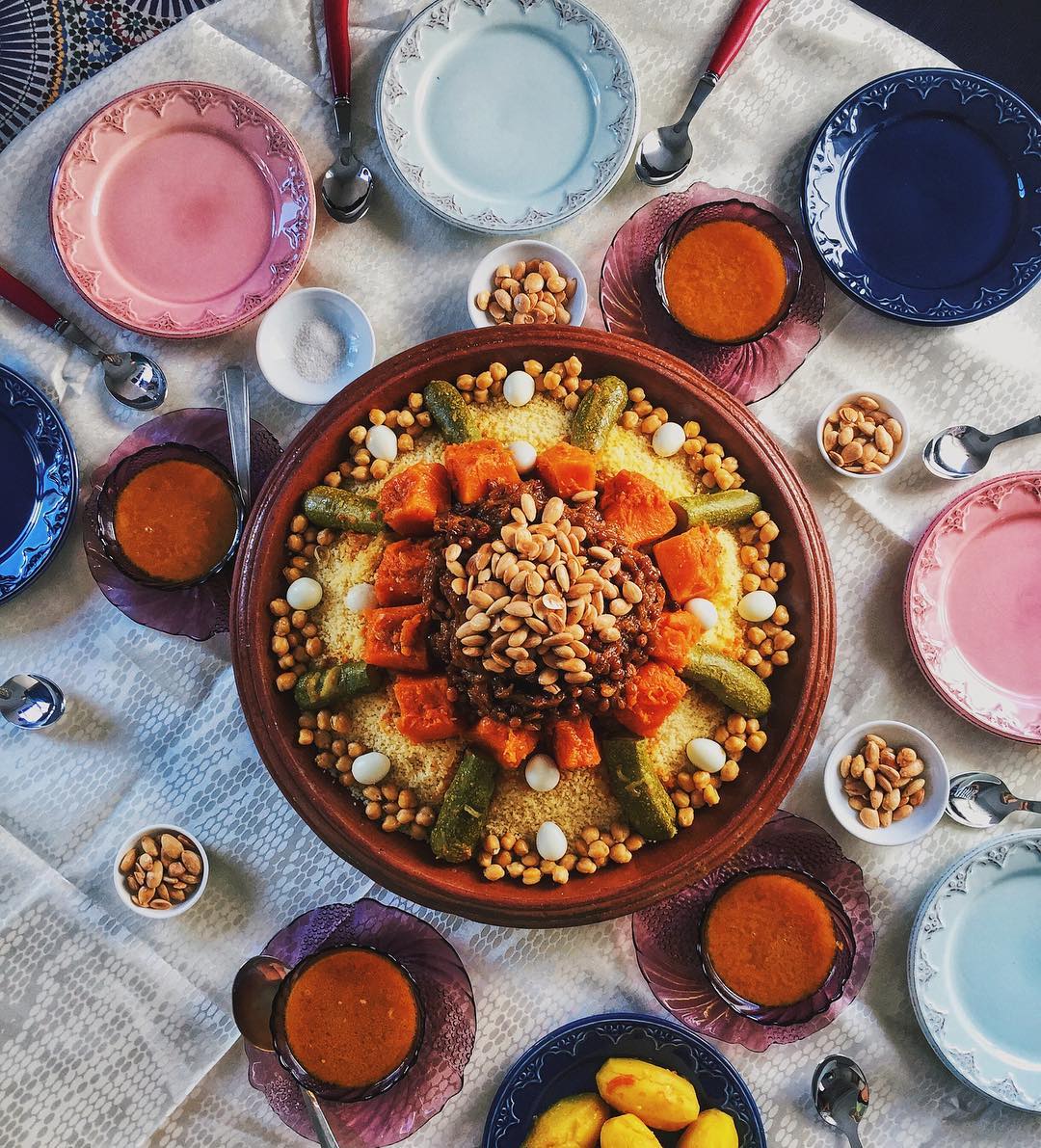 Couscousseksu
🇩🇿 Algeria and 4 moreSteamed semolina granules served with stew or vegetables across North Africa
Main dish, Lunch, Dinner
Couscousseksu
🇩🇿 Algeria and 4 moreSteamed semolina granules served with stew or vegetables across North Africa
Main dish, Lunch, Dinner
 RechtaMeatرشتة
🇩🇿 Algeria and 1 moreAlgerian handmade noodles served with chicken and vegetables in a spiced sauce
Main dish, Lunch, Dinner
RechtaMeatرشتة
🇩🇿 Algeria and 1 moreAlgerian handmade noodles served with chicken and vegetables in a spiced sauce
Main dish, Lunch, Dinner
 Freekehفريكة
🇵🇸 Palestine and 5 moreRoasted green durum wheat grains, a staple across the eastern Mediterranean
Main dish, Lunch, Dinner
Freekehفريكة
🇵🇸 Palestine and 5 moreRoasted green durum wheat grains, a staple across the eastern Mediterranean
Main dish, Lunch, Dinner
 Tajineطاجين
🇲🇦 Morocco and 4 moreNorth African stew slow-cooked in a cone-lidded clay pot
Main dish, Lunch, Dinner
Tajineطاجين
🇲🇦 Morocco and 4 moreNorth African stew slow-cooked in a cone-lidded clay pot
Main dish, Lunch, Dinner
Its cousins elsewhere
All main dishes Menemen
🇹🇷 TurkeyEggs gently cooked with tomatoes, peppers, and spices, often served for breakfast in Turkey
Main dish, Breakfast, Lunch
Menemen
🇹🇷 TurkeyEggs gently cooked with tomatoes, peppers, and spices, often served for breakfast in Turkey
Main dish, Breakfast, Lunch
 RatatouilleVegan
🇫🇷 FranceA Provençal stew of summer vegetables cooked in olive oil
Main dish, Lunch, Dinner
RatatouilleVegan
🇫🇷 FranceA Provençal stew of summer vegetables cooked in olive oil
Main dish, Lunch, Dinner
 RajmaVegetarian
🇮🇳 India and 2 moreKidney beans stewed with spices, often served with rice in North India and Nepal
Main dish, Lunch, Dinner
RajmaVegetarian
🇮🇳 India and 2 moreKidney beans stewed with spices, often served with rice in North India and Nepal
Main dish, Lunch, Dinner
 Cataplana
🇵🇹 PortugalSeafood and meat stew cooked in a sealed metal vessel from Portugal's Algarve
Main dish, Lunch, Dinner
Cataplana
🇵🇹 PortugalSeafood and meat stew cooked in a sealed metal vessel from Portugal's Algarve
Main dish, Lunch, Dinner