
Tajine
In its own language: طاجين
North African stew slow-cooked in a cone-lidded clay pot
Tajine is a slow-cooked North African stew named after the clay pot with a tall, cone-shaped lid in which it is made. The dish usually features spiced meat, poultry or fish, combined with vegetables or fruit, and is popular in Morocco, Algeria, Tunisia, and Libya. Tajine is often served with bread or couscous and appears at both everyday meals and festive occasions.
- Named after the clay pot with a tall, cone-shaped lid
- Uses little water thanks to the pot's design
- Popular in Morocco, Algeria, Tunisia, and Libya
- Key dish for Sephardi Jews at Shabbat and holidays
- Combines meat or fish with vegetables, fruit, and spices
What is Tajine?
Tajine is a stew from North Africa, named after the earthenware pot with a tall, conical lid used to cook it. The dish brings together spiced meat, poultry, or fish with vegetables or sometimes fruit, and often includes nuts or dried fruit for added flavor. Common spices are ginger, cumin, turmeric, cinnamon, and saffron, with paprika and chili in vegetable versions. The result is a tender, aromatic stew, sometimes sweet and sour, served directly from the pot.
Where does Tajine come from?
The word 'tajine' comes from the Arabic طاجين, which traces back to the Ancient Greek word for frying-pan. Many North African clay cooking vessels share this root, but the cone-lidded tajine pot is thought to have originated in Tafraout, Morocco. Over time, the dish and its pot spread across Morocco, Algeria, Tunisia, and Libya, with each region developing its own styles and recipes. Tajine is also known as maraq or marqa in some areas.
How is Tajine made?
Tajine is traditionally cooked in a clay pot over charcoal, though modern cooks may use a stove or oven with a heat diffuser. The pot's unique lid traps steam and returns condensed liquid to the stew, allowing the ingredients to braise gently with little added water. The stew is assembled with layers of meat or fish, vegetables, fruit, and spices, then left to cook slowly until tender. Some recipes finish with a charred top, achieved by placing hot coals above the dish or using a broiler.


![Kelaa-des-Mgouna [2005]](https://thumb.wikimedia.org/wikipedia/commons/thumb/4/40/Kelaa-des-Mgouna_%28rosino-02%29.jpg/960px-Kelaa-des-Mgouna_%28rosino-02%29.jpg)

How and when is Tajine eaten?
Tajine is usually eaten for lunch or dinner, often as a main course. It is commonly served with bread, which is used to scoop up the stew, or with couscous, especially in Jewish communities. The dish is brought to the table in its pot, with the lid removed just before serving. Tajine is a part of daily meals but also appears at religious and festive gatherings, such as Shabbat dinners and Jewish holidays.
Kinds of Tajine
There are many regional and cultural variations of tajine. Moroccan versions may include dried fruit and sweet spices, while Tunisian tajines often feature vegetables like potatoes, carrots, and zucchini. Algerian and Libyan styles have their own local ingredients and spice blends. Jewish communities in North Africa and abroad prepare tajine for Shabbat and holidays, adapting it to local tastes and available ingredients.
What Tajine means
Tajine holds a special place in North African and Sephardi Jewish cooking. For Maghrebi Jews, it is a key dish for Shabbat and holidays like Rosh Hashanah and Yom Kippur. The pot itself is a symbol of communal meals, and the cooking method reflects traditions shaped by limited water supplies. Tajine is also recognized as part of the culinary heritage of Morocco, Algeria, Tunisia, and Libya.
When Tajine is on the table
Questions people ask about Tajine
What is tajine made of?
Tajine is a stew that usually includes spiced meat, poultry, or fish, combined with vegetables or fruit. It often features spices like ginger, cumin, turmeric, cinnamon, and saffron, and may include nuts or dried fruit.
Where does tajine come from?
Tajine comes from North Africa, especially Morocco, Algeria, Tunisia, and Libya. The dish is named after the clay pot with a cone-shaped lid in which it is cooked.
How is tajine cooked?
Tajine is slow-cooked in a special clay pot, either over charcoal or on a stove with a heat diffuser. The pot's lid traps steam and returns it to the stew, allowing the ingredients to braise gently with little added water.
Is tajine always made with meat?
Tajine can be made with meat, poultry, fish, or just vegetables. Some versions include fruit, nuts, or dried fruit, and the ingredients vary by region and tradition.
When is tajine eaten?
Tajine is eaten for lunch or dinner and is part of both everyday meals and special occasions. In Jewish communities, it is often served for Shabbat and holidays like Rosh Hashanah and Yom Kippur.
Good reading and sources
The facts on this page come from the Wikipedia article "Tagine", written by its contributors and used under the CC BY-SA 4.0 licence, and from its Wikidata record (CC0). Thali rewrote the text in its own words, with AI assistance, and compares every page with the article to make sure no passage is copied. It may be reused under the same CC BY-SA 4.0 licence with a link back.
It may contain mistakes, and it is not dietary or allergy advice: recipes differ from cook to cook. If something is wrong, tell us. Last refreshed 2026-10-03.
More from Morocco
All the food of Morocco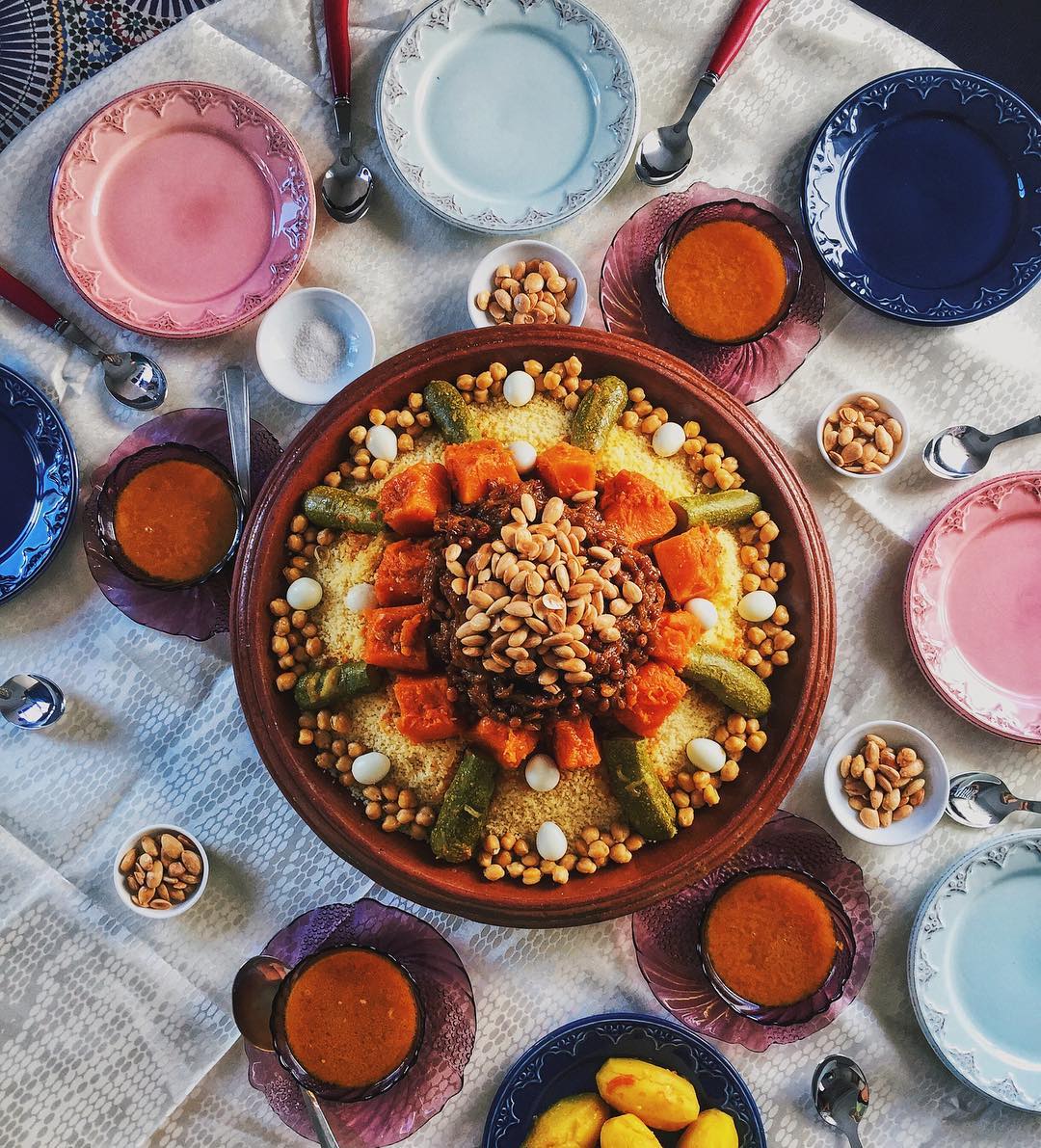 Couscousseksu
🇩🇿 Algeria and 4 moreSteamed semolina granules served with stew or vegetables across North Africa
Main dish, Lunch, Dinner
Couscousseksu
🇩🇿 Algeria and 4 moreSteamed semolina granules served with stew or vegetables across North Africa
Main dish, Lunch, Dinner
 ShakshukaVegetarian
🇹🇳 Tunisia and 5 moreEggs poached in a spiced tomato and pepper sauce from North Africa
Main dish, Breakfast, Dinner
ShakshukaVegetarian
🇹🇳 Tunisia and 5 moreEggs poached in a spiced tomato and pepper sauce from North Africa
Main dish, Breakfast, Dinner
 Hariraالحريرة
🇲🇦 Morocco and 3 moreNorth African soup of tomato, legumes, herbs and spices, often served during Ramadan
Soup, Dinner, Supper
Hariraالحريرة
🇲🇦 Morocco and 3 moreNorth African soup of tomato, legumes, herbs and spices, often served during Ramadan
Soup, Dinner, Supper
 Ful medamesVeganفول مدمس
🇪🇬 Egypt and 5 moreStew of slow-cooked fava beans with olive oil and spices, a staple across Egypt
Main dish, Breakfast
Ful medamesVeganفول مدمس
🇪🇬 Egypt and 5 moreStew of slow-cooked fava beans with olive oil and spices, a staple across Egypt
Main dish, Breakfast
Its cousins elsewhere
All main dishes Pâté
🇫🇷 France and 5 moreA smooth or coarse spread made from minced meat, liver, or vegetables
Sauce, pickle or ferment
Pâté
🇫🇷 France and 5 moreA smooth or coarse spread made from minced meat, liver, or vegetables
Sauce, pickle or ferment
 Thai curryแกง
🇹🇭 ThailandA Thai dish of curry paste simmered with meat, fish, or vegetables and herbs
Stew or curry, Lunch, Dinner
Thai curryแกง
🇹🇭 ThailandA Thai dish of curry paste simmered with meat, fish, or vegetables and herbs
Stew or curry, Lunch, Dinner
 Curry
🇮🇳 India and 5 moreA spiced dish with sauce, first from India, now made worldwide in many styles
Main dish, Lunch, Dinner
Curry
🇮🇳 India and 5 moreA spiced dish with sauce, first from India, now made worldwide in many styles
Main dish, Lunch, Dinner
 Biryani
🇮🇳 India and 5 moreRice and spiced meat or vegetables layered and cooked together
Main dish, Lunch, Dinner
Biryani
🇮🇳 India and 5 moreRice and spiced meat or vegetables layered and cooked together
Main dish, Lunch, Dinner