Couscous
In its own language: seksu
Steamed semolina granules served with stew or vegetables across North Africa
Couscous is a North African dish of small steamed semolina granules, often topped with a stew of meat and vegetables. It is a staple in Algeria, Morocco, Tunisia, Mauritania, and Libya, and is eaten at both everyday meals and special occasions. Couscous can be savory or sweet, depending on local custom.
- Couscous is made from steamed semolina granules
- It is a staple food in Algeria, Morocco, Tunisia, Mauritania, and Libya
- Recognized by UNESCO as Intangible Cultural Heritage in 2020
- Can be served savory or sweet, with meat, vegetables, or nuts
- Traditionally steamed in a special pot called a couscoussier
What is Couscous?
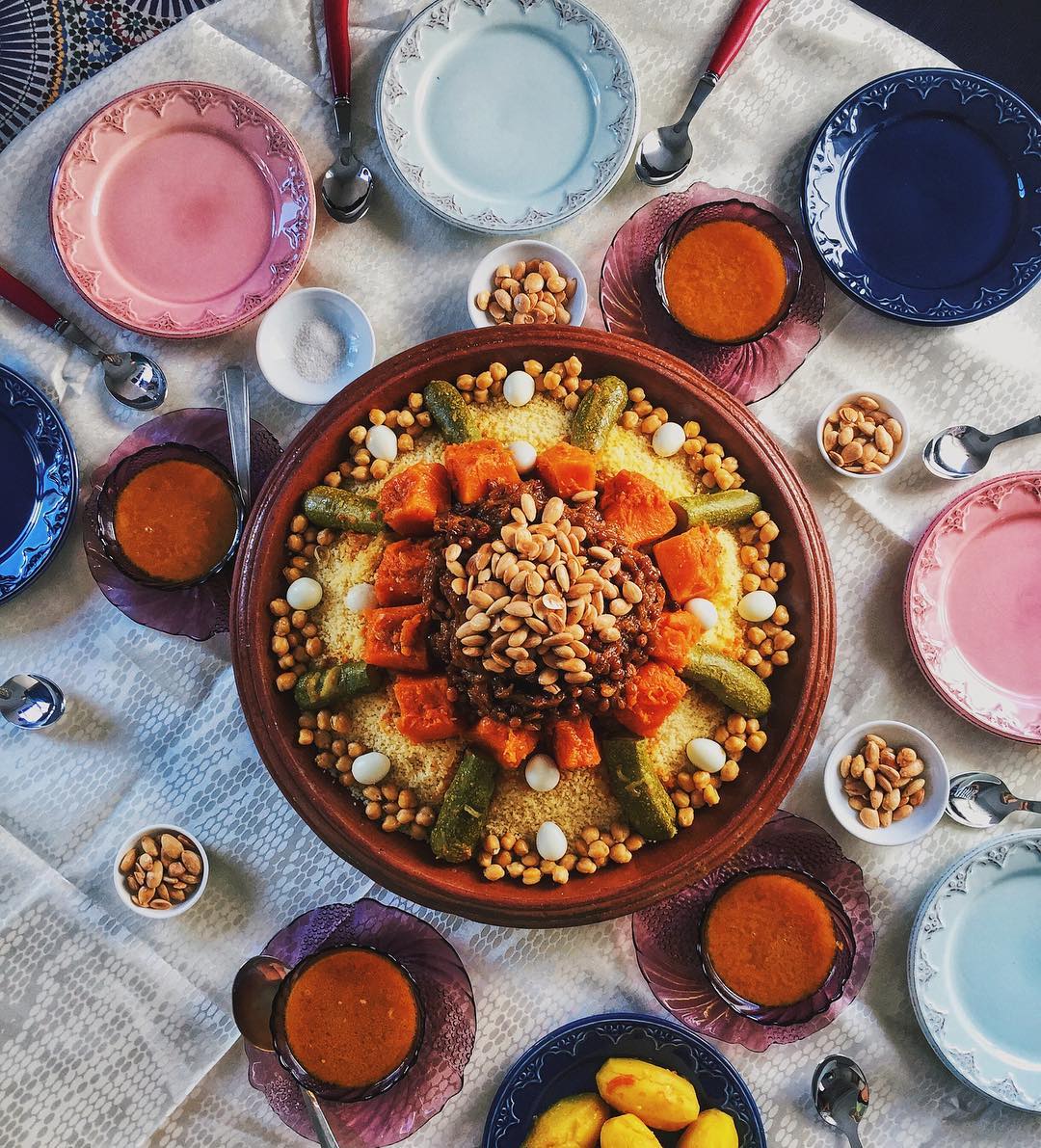
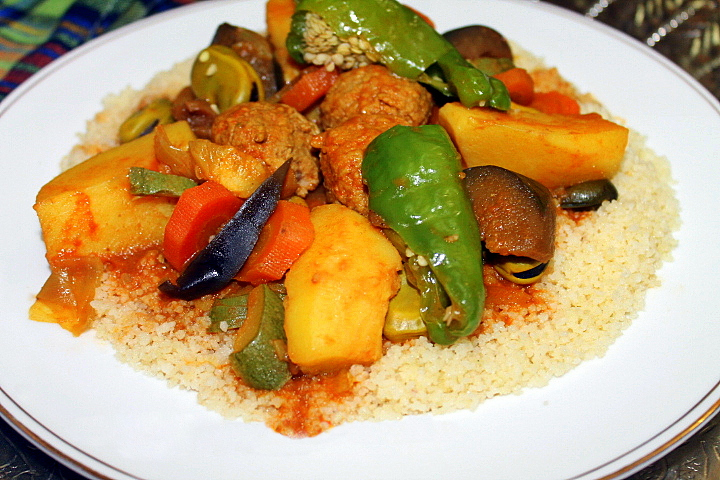
Couscous is made from semolina, which is the hardest part of durum wheat, rolled into tiny granules. These are steamed until light and fluffy, then served with a ladle of stew or broth, often including vegetables like carrots, turnips, and pumpkin, and meats such as lamb, chicken, or beef. In some regions, couscous is made from other grains like barley or millet. The dish can be savory or sweet, depending on local tradition, and is sometimes topped with caramelized onions, raisins, or nuts.
Where does Couscous come from?
Couscous has deep roots in North Africa, especially among Berber communities. Archaeological finds in Mauritania and Algeria suggest that cooking vessels similar to couscoussiers were used as early as 700 BCE. Written recipes appear in Arabic cookbooks from the 13th century. The dish spread across the Maghreb and later to Europe, especially France, through migration and colonial ties. In 2020, couscous was recognized by UNESCO as part of the Intangible Cultural Heritage of Humanity.
How is Couscous made?
Traditional couscous is made by sprinkling semolina with water, rolling it by hand into small pellets, and dusting with flour to keep them separate. The granules are sieved and re-rolled as needed. They are then steamed over a pot of simmering stew in a special two-part vessel called a couscoussier. Modern couscous is often pre-steamed and dried, requiring only a short soak in hot water before serving. In some regions, couscous is made from other grains like millet or barley.



How and when is Couscous eaten?
Couscous is usually served as a main dish at lunch or dinner, often in a large communal platter. It is topped with a stew of meat and vegetables, and sometimes chickpeas. In Morocco, couscous is traditionally eaten on Fridays after midday prayers. Sweet versions are eaten for breakfast or dessert in Egypt and Tunisia, sometimes with nuts, raisins, or cinnamon. In the Sahel, couscous may be mixed with yogurt or leafy greens.
Kinds of Couscous
Couscous varies widely by region. Moroccan couscous often features a mix of seven vegetables or a sweet-savoury topping called tfaya. Tunisian couscous is known for its spiciness and may include fish or seafood. In Libya, lamb or camel is common, and couscous can also be served as a dessert with dates and honey. Egyptian couscous is typically sweet. In Mauritania, couscous is darker and made with large wheat grains. West African versions use millet or sorghum.
What Couscous means
Couscous is a symbol of hospitality and togetherness in North African societies. It is central to family gatherings and festive occasions. The dish is recognized as a shared heritage by Algeria, Morocco, Tunisia, and Mauritania, and was inscribed on UNESCO's Intangible Cultural Heritage list in 2020. In France, couscous has become one of the most popular dishes, reflecting the influence of North African communities.
Questions people ask about Couscous
What is couscous made of?
Couscous is made from semolina, which is the coarsest part of durum wheat. In some regions, it can also be made from barley, millet, or other grains.
Where does couscous come from?
Couscous comes from North Africa and is especially common in Algeria, Morocco, Tunisia, Mauritania, and Libya. It has ancient roots among Berber communities.
How is couscous traditionally prepared?
Traditional couscous is made by sprinkling semolina with water, rolling it into small granules, and steaming it over a pot of stew in a special vessel called a couscoussier.
Is couscous always savory?
No, couscous can be savory or sweet. In Egypt and Tunisia, sweet versions are eaten with sugar, nuts, and raisins, while in other regions it is usually served with meat and vegetables.
What meals is couscous eaten at?
Couscous is commonly eaten at lunch or dinner as a main dish. In some places, sweet couscous is served for breakfast or dessert.
Good reading and sources
The facts on this page come from the Wikipedia article "Couscous", written by its contributors and used under the CC BY-SA 4.0 licence, and from its Wikidata record (CC0). Thali rewrote the text in its own words, with AI assistance, and compares every page with the article to make sure no passage is copied. It may be reused under the same CC BY-SA 4.0 licence with a link back.
It may contain mistakes, and it is not dietary or allergy advice: recipes differ from cook to cook. If something is wrong, tell us. Last refreshed 2026-10-03.
More from Algeria
All the food of Algeria RechtaMeatرشتة
🇩🇿 Algeria and 1 moreAlgerian handmade noodles served with chicken and vegetables in a spiced sauce
Main dish, Lunch, Dinner
RechtaMeatرشتة
🇩🇿 Algeria and 1 moreAlgerian handmade noodles served with chicken and vegetables in a spiced sauce
Main dish, Lunch, Dinner
 Börek
🇹🇷 Turkey and 5 moreFlaky pastry filled with cheese, meat or vegetables, baked or fried
Pie or savoury pastry, Breakfast, Lunch
Börek
🇹🇷 Turkey and 5 moreFlaky pastry filled with cheese, meat or vegetables, baked or fried
Pie or savoury pastry, Breakfast, Lunch
 ShakshukaVegetarian
🇹🇳 Tunisia and 5 moreEggs poached in a spiced tomato and pepper sauce from North Africa
Main dish, Breakfast, Dinner
ShakshukaVegetarian
🇹🇳 Tunisia and 5 moreEggs poached in a spiced tomato and pepper sauce from North Africa
Main dish, Breakfast, Dinner
 Tajineطاجين
🇲🇦 Morocco and 4 moreNorth African stew slow-cooked in a cone-lidded clay pot
Main dish, Lunch, Dinner
Tajineطاجين
🇲🇦 Morocco and 4 moreNorth African stew slow-cooked in a cone-lidded clay pot
Main dish, Lunch, Dinner
Its cousins elsewhere
All main dishes Biryani
🇮🇳 India and 5 moreRice and spiced meat or vegetables layered and cooked together
Main dish, Lunch, Dinner
Biryani
🇮🇳 India and 5 moreRice and spiced meat or vegetables layered and cooked together
Main dish, Lunch, Dinner
 Lasagnalasagne
🇮🇹 ItalyBaked layers of pasta sheets, sauce, cheese and fillings from Italy
Main dish, Lunch, Dinner
Lasagnalasagne
🇮🇹 ItalyBaked layers of pasta sheets, sauce, cheese and fillings from Italy
Main dish, Lunch, Dinner
 ShawarmaMeatشاورما
🇸🇾 Syria and 5 moreMeat roasted on a vertical spit and sliced into flatbread with sauces and vegetables
Street food, Lunch, Dinner
ShawarmaMeatشاورما
🇸🇾 Syria and 5 moreMeat roasted on a vertical spit and sliced into flatbread with sauces and vegetables
Street food, Lunch, Dinner
 Taco
🇲🇽 Mexico and 1 moreA folded tortilla filled with meat, beans or vegetables, eaten by hand
Street food, Lunch, Dinner
Taco
🇲🇽 Mexico and 1 moreA folded tortilla filled with meat, beans or vegetables, eaten by hand
Street food, Lunch, Dinner