
Sheermal
In its own language: شیرمال
A sweet, saffron-scented flatbread made with milk and cardamom
Sheermal is a lightly sweet flatbread flavored with saffron and cardamom, enjoyed in Iran and parts of India. Made from refined wheat flour, milk, and sugar, it is baked until golden and often served with savory dishes. Sheermal is a part of Awadhi and Iranian cooking and is eaten at various meals.
- Sheermal is flavored with saffron and cardamom.
- It is made with milk, sugar, and maida flour.
- The bread is popular in both Iran and northern India.
- Sheermal is often served with kababs or nihari in India.
- Regional versions exist in different parts of Iran.
What is Sheermal?
Sheermal is a round, golden flatbread with a gentle sweetness and a distinct aroma from saffron and cardamom. Its dough is made with refined wheat flour (maida), milk, sugar, and ghee, which gives it a soft, rich texture. Yeast is used to help it rise slightly. The bread is often brushed with more ghee after baking, making the surface shiny and tender. Sheermal is sometimes enjoyed on its own, but it is also paired with savory foods.
Where does Sheermal come from?
Sheermal has roots in Iran, where it is a traditional bread, and it later became established in northern India. The name comes from Persian words for milk and kneading, describing the method of making the dough. Over time, it became a part of Awadhi cuisine and is now found in cities such as Lucknow, Hyderabad, Aurangabad, and Bhopal. The bread also spread to Pakistan after the partition.
How is Sheermal made?
To make sheermal, a dough is prepared from maida flour, yeast, and a mixture of warm milk, sugar, saffron, and cardamom. The dough is kneaded until smooth, then left to rise. Once ready, it is shaped into rounds and baked in a tandoor or oven until lightly browned. Ghee is often brushed on top for extra flavor and softness. The use of milk instead of water and the addition of sugar and spices set sheermal apart from other flatbreads.
How and when is Sheermal eaten?
Sheermal is enjoyed at different times of day, from breakfast to dinner, and can be eaten as a snack. In Lucknow and other parts of India, it is commonly served with dishes like kababs, tikkia, or nihari, which is a slow-cooked meat stew. The bread’s mild sweetness and buttery flavor make it a good match for rich, savory foods, but it can also be eaten plain.
Kinds of Sheermal
In Iran, sheermal recipes can differ by region, with some areas having their own take on the bread. These regional versions are sometimes sold as souvenirs. In India, the bread is closely linked to Awadhi cuisine but is also found in other cities, each with slight differences in preparation or serving style. The basic ingredients and method remain similar across regions.
What Sheermal means
Sheermal is a familiar part of daily meals in both Iran and parts of India. In India, it is especially associated with Awadhi cooking and is served at gatherings or with special dishes. In Iran, it is sometimes bought as a gift or keepsake when traveling between regions. The bread’s use of saffron and cardamom gives it a festive touch, though it is eaten year-round.
Questions people ask about Sheermal
What is sheermal made of?
Sheermal is made from refined wheat flour (maida), milk, sugar, saffron, cardamom, ghee, and yeast. The dough is enriched with milk and flavored with spices, giving it a sweet, aromatic taste.
Where does sheermal come from?
Sheermal originated in Iran and later became part of northern Indian cuisine, especially in cities like Lucknow, Hyderabad, and Aurangabad. It is also found in Pakistan.
How is sheermal different from regular naan?
Unlike regular naan, sheermal uses milk instead of water in the dough and is sweetened with sugar. It is also flavored with saffron and cardamom, giving it a unique aroma and taste.
When is sheermal usually eaten?
Sheermal can be eaten at any meal, including breakfast, lunch, or dinner, and is sometimes enjoyed as a snack. In India, it is often served with savory dishes like kababs or nihari.
Is sheermal vegetarian?
Yes, sheermal is vegetarian. It contains no meat or fish, and its main ingredients are flour, milk, sugar, ghee, saffron, cardamom, and yeast.
Good reading and sources
The facts on this page come from the Wikipedia article "Sheermal", written by its contributors and used under the CC BY-SA 4.0 licence, and from its Wikidata record (CC0). Thali rewrote the text in its own words, with AI assistance, and compares every page with the article to make sure no passage is copied. It may be reused under the same CC BY-SA 4.0 licence with a link back.
It may contain mistakes, and it is not dietary or allergy advice: recipes differ from cook to cook. If something is wrong, tell us. Last refreshed 2026-10-03.
More from Iran
All the food of Iran BaklavaVegetarianباقلوا
🇹🇷 Turkey and 5 moreThin pastry filled with nuts and soaked in sweet syrup
Sweet or dessert, Tea time, Snacks
BaklavaVegetarianباقلوا
🇹🇷 Turkey and 5 moreThin pastry filled with nuts and soaked in sweet syrup
Sweet or dessert, Tea time, Snacks
 JalebiVegetarian
🇮🇳 India and 6 moreDeep-fried spirals of batter soaked in syrup, enjoyed across Asia and Africa
Pie or savoury pastry, Breakfast, Snacks
JalebiVegetarian
🇮🇳 India and 6 moreDeep-fried spirals of batter soaked in syrup, enjoyed across Asia and Africa
Pie or savoury pastry, Breakfast, Snacks
 SharbatVeganشربت
🇮🇷 Iran and 5 moreSweet fruit or flower drink, served chilled or as a syrup
Drink, Snacks
SharbatVeganشربت
🇮🇷 Iran and 5 moreSweet fruit or flower drink, served chilled or as a syrup
Drink, Snacks
Its cousins elsewhere
All breads Cardamom breadVegetarian
🇫🇮 Finland and 3 moreEnriched Nordic sweet bread scented with cardamom, served with coffee or tea
Bread, Snacks, Tea time
Cardamom breadVegetarian
🇫🇮 Finland and 3 moreEnriched Nordic sweet bread scented with cardamom, served with coffee or tea
Bread, Snacks, Tea time
 BriocheVegetarianune brioche
🇫🇷 FranceFrench bread made with eggs and butter, often shaped in rounds or loaves
Bread, Breakfast, Snacks
BriocheVegetarianune brioche
🇫🇷 FranceFrench bread made with eggs and butter, often shaped in rounds or loaves
Bread, Breakfast, Snacks
 Lángos
🇭🇺 Hungary and 5 moreHungarian deep-fried flatbread, often topped with cheese or sour cream
Bread, Breakfast, Snacks
Lángos
🇭🇺 Hungary and 5 moreHungarian deep-fried flatbread, often topped with cheese or sour cream
Bread, Breakfast, Snacks
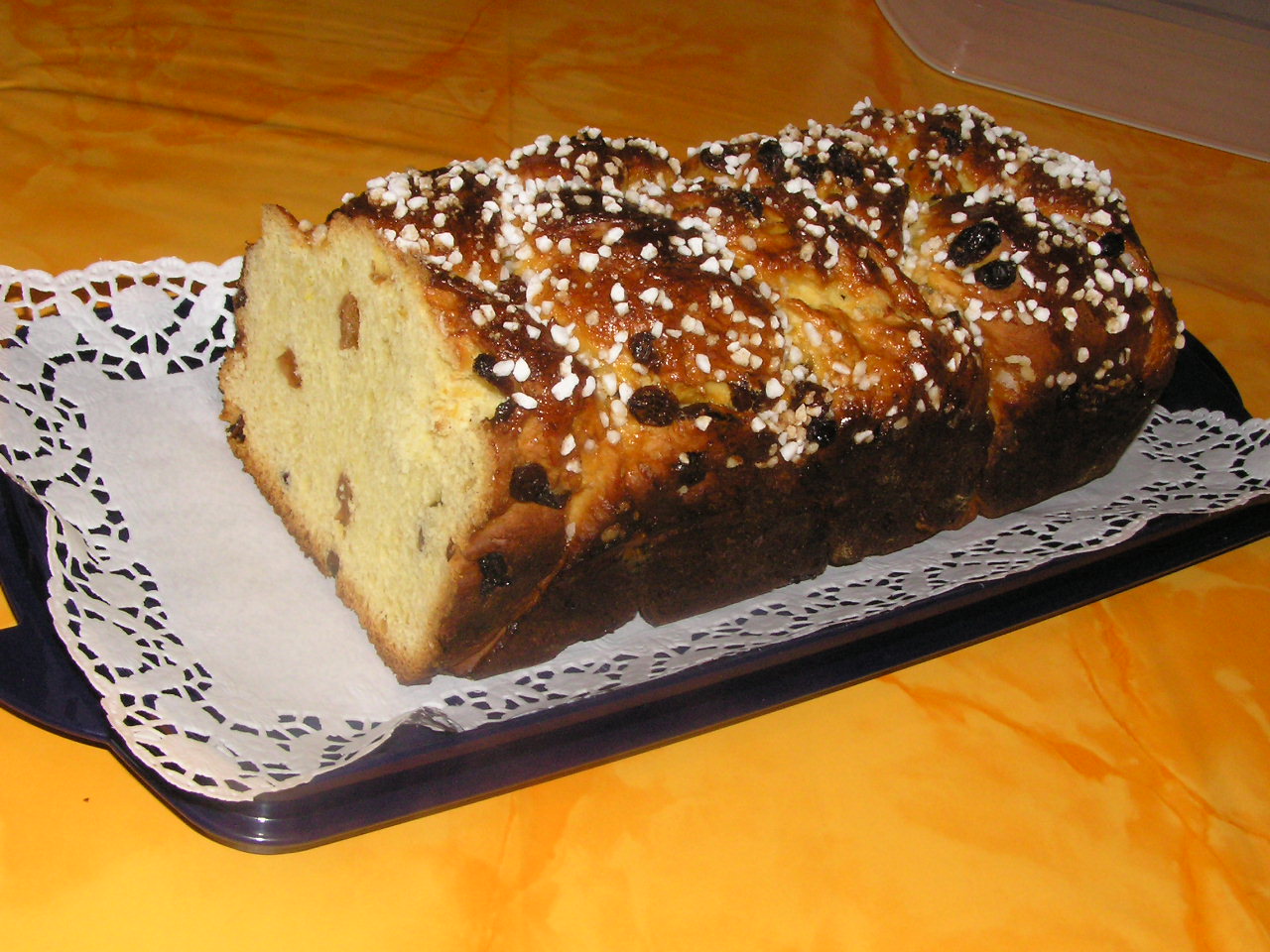 Cozonac
🇷🇴 Romania and 4 moreA sweet, enriched bread often filled with nuts or dried fruit, baked for Easter
Sweet or dessert, Tea time, Snacks
Cozonac
🇷🇴 Romania and 4 moreA sweet, enriched bread often filled with nuts or dried fruit, baked for Easter
Sweet or dessert, Tea time, Snacks