
Sundae
Scooped ice cream crowned with sweet syrup, whipped cream and varied toppings
A sundae is an American chilled dessert built from scoops of ice cream covered with sweet syrups and rich garnishes. First popularized at nineteenth-century soda fountains, it is enjoyed today as an everyday indulgence or casual treat after a meal.
- Created in the late nineteenth-century United States as an alternative to ice cream soda.
- Ithaca and Two Rivers have engaged in a decades-long rivalry over claiming its invention.
- Traditionally served in a footed, tulip-shaped glass cup topped with a maraschino cherry.
- Classic toppings include hot fudge, fruit syrups, whipped cream, nuts, and candy.
What is Sundae?
A sundae is a cold sweet dish centered on scoops of ice cream doused in thick syrup or sauce. Vanilla is the customary base, though any flavor works. Cooked or bottled syrups like chocolate, strawberry, or raspberry run down the sides of the scoops. Soft whipped cream sits on top, usually finished with a bright red maraschino cherry. Beyond that classic formula, makers often add crunchy or chewy textures. Peanuts, sprinkles, marshmallows, and chocolate chips are common additions, along with chunks of brownies, broken cookies, or sliced fresh fruit. The dessert delivers a mix of icy dairy, smooth cream, and sticky sweetness in every spoonful.
Where does Sundae come from?
The treat arose in late nineteenth-century America, closely tied to the soda fountain boom. Several towns claim to be its true birthplace. In Two Rivers, Wisconsin, local lore credits soda shop owner Edward Berners with drizzling chocolate syrup onto ice cream in 1881. Meanwhile, Ithaca, New York, holds the earliest documented record: an April 1892 newspaper advertisement by Chester Platt, who sold a cherry-topped ice cream bowl after church on Sunday. Other origin stories come from Plainfield and Evanston in Illinois. Evanston banned Sunday soda water sales under local blue laws, leading shopkeepers to serve syrup over plain ice cream instead. Religious objections to using the Sabbath name may have prompted the change from Sunday to sundae.
How is Sundae made?
Making a sundae begins with scooping firm, chilled ice cream into a dish or footed glass. The maker ladles sweet syrup directly over the scoops so it pools around the base and coats the surface. Sauces range from hot fudge and warm caramel to fruit reductions made from cherries, strawberries, or pineapple. Once the syrup is poured, garnishes follow. A mound of whipped cream is piped or spooned onto the peak. Crushed nuts, candy bits, or baked treats like brownie pieces are scattered over the dairy. Finally, a single maraschino cherry is set firmly on top.


How and when is Sundae eaten?
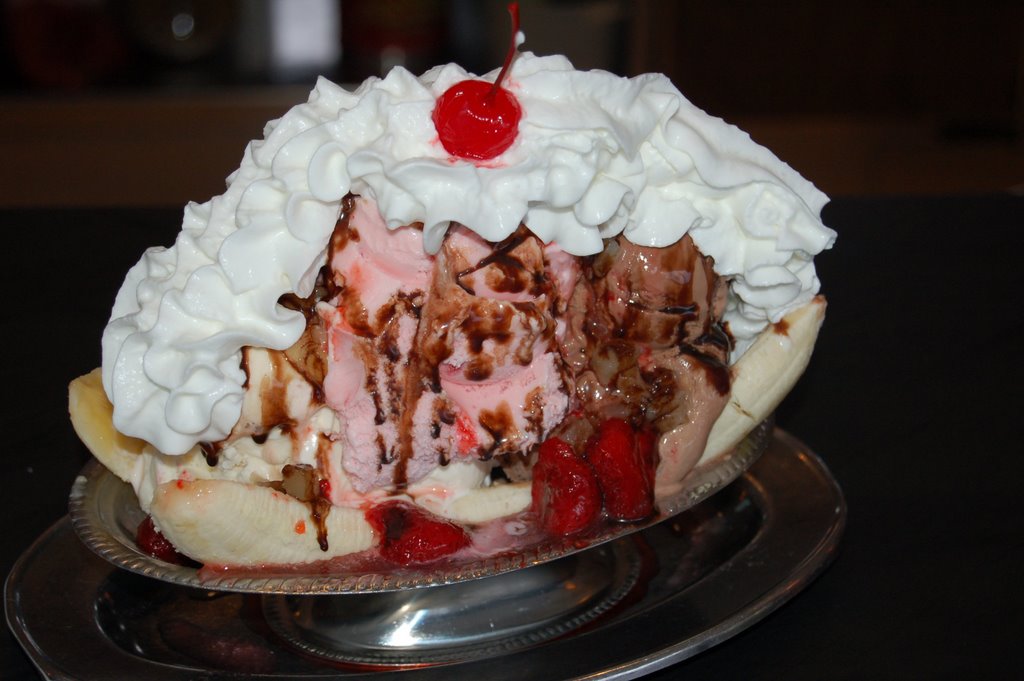
Sundaes are eaten chilled with a long dessert spoon, allowing diners to reach the syrup resting at the bottom. Soda fountains initially promoted them as special weekend treats, but they are now eaten anytime as an afternoon snack or evening dessert. They are typically served in a distinctive, footed tulip glass known as a sundae dish, which showcases the colorful layers. Eaters dig through the whipped cream and sauces to balance each bite with cold ice cream. Sundaes are common orders in ice cream parlors, casual diners, and home kitchens.
Kinds of Sundae
Countless adaptations have emerged since the early 1900s. The banana split uses a lengthwise split banana cradling three scoops of different ice creams with matching syrups, whipped cream, and cherries. A parfait layers ice cream or yogurt with fruit, granola, or syrup in a slender glass. In Britain, the knickerbocker glory stacks ice cream with fruit, jelly, cream, and nuts. Nebraska introduced the tin roof sundae, built with vanilla and chocolate scoops, chocolate sauce, marshmallow sauce, and red-skinned Spanish peanuts. Warm brownie sundaes add dense baked fudge cake beneath melting vanilla scoops.
What Sundae means
The sundae holds a fond place in American soda fountain history, sparking lasting community pride and friendly civic disputes. Ithaca, New York, and Two Rivers, Wisconsin, have waged a long-running public rivalry over which city can claim its birth, exchanging humorous postcards and official proclamations. In Nebraska, state lawmakers have debated bills to designate the tin roof version as their official state sundae. The dish also left an enduring mark on tableware design, creating the tall, tulip-shaped sundae glass that remains standard worldwide.
Questions people ask about Sundae
What is a sundae made of?
A sundae is made from scoops of ice cream topped with sweet sauce or syrup, such as chocolate, strawberry, or hot fudge. It is usually finished with whipped cream, chopped peanuts or other toppings, and a maraschino cherry.
Where did the sundae originate?
The sundae originated in the United States during the late nineteenth century. Several Midwestern and East Coast towns claim its creation, with Ithaca, New York, and Two Rivers, Wisconsin, maintaining the most famous historical rivalry over the title.
Why is it spelled sundae instead of Sunday?
The spelling shift may stem from local religious sensibilities or legal concerns. Some accounts suggest church leaders objected to naming a confection after the Sabbath, while other historians believe shopkeepers altered the name to avoid trademark issues.
What is a tin roof sundae?
First created during the 1930s at a soda fountain in Potter, Nebraska, this version features vanilla and chocolate ice cream layered with chocolate sauce, marshmallow topping, and red-skinned Spanish peanuts.
Good reading and sources
The facts on this page come from the Wikipedia article "Sundae", written by its contributors and used under the CC BY-SA 4.0 licence, and from its Wikidata record (CC0). EveryThali rewrote the text in its own words, with AI assistance, and compares every page with the article to make sure no passage is copied. It may be reused under the same CC BY-SA 4.0 licence with a link back.
It may contain mistakes, and it is not dietary or allergy advice: recipes differ from cook to cook. If something is wrong, tell us. Last refreshed 2026-10-04.
More from the United States
All the food of the United States Ice cream
🇺🇸 United States and 5 moreA frozen dessert made from sweetened, flavoured milk or cream
Sweet or dessert, Snacks
Ice cream
🇺🇸 United States and 5 moreA frozen dessert made from sweetened, flavoured milk or cream
Sweet or dessert, Snacks
 Candy
🇺🇸 United States and 5 moreSmall sweet treats made mainly from sugar or sweeteners
Sweet or dessert, Snacks
Candy
🇺🇸 United States and 5 moreSmall sweet treats made mainly from sugar or sweeteners
Sweet or dessert, Snacks
 Doughnut
🇺🇸 United States and 5 moreSweet fried or baked rings or balls, often glazed or filled
Sweet or dessert, Breakfast, Snacks
Doughnut
🇺🇸 United States and 5 moreSweet fried or baked rings or balls, often glazed or filled
Sweet or dessert, Breakfast, Snacks
 Hot chocolate
🇲🇽 Mexico and 5 moreA warm drink made from chocolate or cocoa, milk or water, and sugar
Drink, Breakfast, Snacks
Hot chocolate
🇲🇽 Mexico and 5 moreA warm drink made from chocolate or cocoa, milk or water, and sugar
Drink, Breakfast, Snacks
Its cousins elsewhere
All sweets and desserts Ais kacangVegetarianاءيس كاچڠ
🇲🇾 Malaysia and 2 moreShaved ice dessert with beans, sweet corn and colourful syrups
Sweet or dessert, Snacks
Ais kacangVegetarianاءيس كاچڠ
🇲🇾 Malaysia and 2 moreShaved ice dessert with beans, sweet corn and colourful syrups
Sweet or dessert, Snacks
 BaklavaVegetarianباقلوا
🇹🇷 Turkey and 5 moreThin pastry filled with nuts and soaked in sweet syrup
Sweet or dessert, Tea time, Snacks
BaklavaVegetarianباقلوا
🇹🇷 Turkey and 5 moreThin pastry filled with nuts and soaked in sweet syrup
Sweet or dessert, Tea time, Snacks
 Jolpan
🇮🇳 IndiaAssamese breakfast snacks of rice, pitha, and sweets, often served with tea or curd
Sweet or dessert, Breakfast, Snacks
Jolpan
🇮🇳 IndiaAssamese breakfast snacks of rice, pitha, and sweets, often served with tea or curd
Sweet or dessert, Breakfast, Snacks
 StroopwafelVegetarian
🇳🇱 NetherlandsThin Dutch waffles sandwiched with a spiced syrup filling
Pie or savoury pastry, Snacks
StroopwafelVegetarian
🇳🇱 NetherlandsThin Dutch waffles sandwiched with a spiced syrup filling
Pie or savoury pastry, Snacks