
Syrniki
In its own language: сирники
Fried pancakes made from curd cheese, popular in Eastern Europe
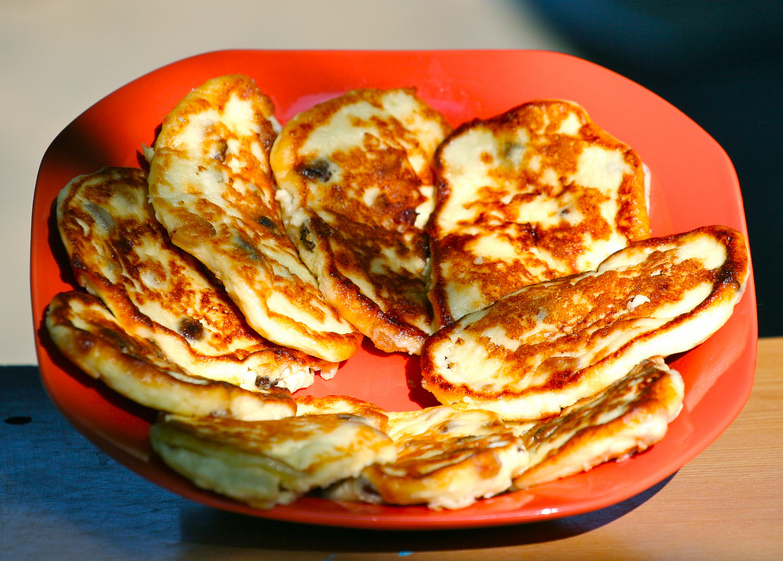
Syrniki are small, pan-fried pancakes made from tvorog (a type of curd cheese), flour, eggs, and sugar. They are a traditional breakfast or dessert in Ukraine, Russia, Belarus, Latvia, and Lithuania, sometimes served with sour cream, jam, or melted butter. Sweet or savory, they are often enjoyed warm.
- Made from tvorog, a type of curd cheese
- Popular in Ukraine, Russia, Belarus, Latvia, and Lithuania
- Served with sour cream, jam, or melted butter
- Can be sweet or savory, sometimes with fruit added
- Known as tvorozhniki in Russia
What is Syrniki?
Syrniki are soft, round pancakes made by blending tvorog (a fresh curd cheese) with flour, eggs, and sugar. The mixture is shaped into small cakes and fried until golden on both sides, keeping a creamy center. They are usually sweet, but can be made savory. Sometimes, raisins, dried fruit, or bits of apple or pear are mixed in. Syrniki are often served with sour cream, jam, fruit preserves, or melted butter. Their texture is tender and slightly dense, with a mild, milky flavor from the cheese.
Where does Syrniki come from?
Syrniki have roots in Eastern Slavic cooking, especially in Ukraine, Russia, and Belarus. The name comes from the Slavic word for cheese, 'syr', which in Ukrainian still means a soft curd cheese. In Russian, the cheese is called tvorog. Syrniki are also found in Latvia and Lithuania, where similar pancakes are made. The dish has spread beyond its original region, with versions appearing in Germany (as Quarkkäulchen) and among Eastern European communities in Israel.
How is Syrniki made?
To make syrniki, tvorog (or a similar curd cheese like quark or farmer's cheese) is mixed with flour, eggs, and sugar to form a soft dough. Sometimes vanilla or dried fruit is added. The dough is shaped into small, thick cakes, dusted with flour, and pan-fried in butter or oil until browned on both sides. The inside should remain moist and creamy. Syrniki are typically served warm, with toppings such as sour cream, jam, or melted butter.
How and when is Syrniki eaten?
Syrniki are most often eaten for breakfast or as a dessert. They are served warm, sometimes with a dollop of smetana (sour cream), a spoonful of jam or varenye (fruit preserves), or a drizzle of melted butter. The pancakes can be enjoyed plain or with added fruit in the batter. Syrniki are a familiar comfort food in many Eastern European homes, eaten at the family table or in cafes.
Kinds of Syrniki
While the classic syrniki are sweet, savory versions also exist. In some recipes, raisins, chopped dried apricots, or fresh apples and pears are mixed into the batter. The type of cheese can vary: tvorog is traditional, but quark, farmer's cheese, or pot cheese may be used. In Latvia and Lithuania, similar pancakes are called biezpiena plācenīši and varškėčiai. In Germany, a related dish is Quarkkäulchen.
What Syrniki means
Syrniki are a beloved part of everyday life in Ukraine, Russia, and Belarus, often linked to home cooking and family breakfasts. The dish has traveled with migrants, becoming popular in places like Israel. Syrniki are not tied to a specific holiday or religious event, but are a staple of Eastern European comfort food, appreciated for their simplicity and the use of local dairy products.
Questions people ask about Syrniki
What are syrniki made of?
Syrniki are made from tvorog (a fresh curd cheese), flour, eggs, and sugar. Sometimes, vanilla, raisins, or other fruits are added to the batter.
Where do syrniki come from?
Syrniki are traditional in Ukraine, Russia, and Belarus, and are also found in Latvia and Lithuania. They are a familiar food across Eastern Europe.
How are syrniki served?
Syrniki are served warm, often with sour cream, jam, fruit preserves, or melted butter. They can be eaten plain or with fruit mixed into the batter.
Are syrniki sweet or savory?
Syrniki are usually sweet, but savory versions exist. The sweet version may include sugar, vanilla, or dried fruit, while the savory kind leaves these out.
What is tvorog?
Tvorog is a type of fresh curd cheese common in Eastern Europe. It is similar to quark or farmer's cheese and gives syrniki their soft texture.
Good reading and sources
The facts on this page come from the Wikipedia article "Syrniki", written by its contributors and used under the CC BY-SA 4.0 licence, and from its Wikidata record (CC0). Thali rewrote the text in its own words, with AI assistance, and compares every page with the article to make sure no passage is copied. It may be reused under the same CC BY-SA 4.0 licence with a link back.
It may contain mistakes, and it is not dietary or allergy advice: recipes differ from cook to cook. If something is wrong, tell us. Last refreshed 2026-10-03.
More from Ukraine
All the food of Ukraine Pâté
🇫🇷 France and 5 moreA smooth or coarse spread made from minced meat, liver, or vegetables
Sauce, pickle or ferment
Pâté
🇫🇷 France and 5 moreA smooth or coarse spread made from minced meat, liver, or vegetables
Sauce, pickle or ferment
 BigosMeat
🇵🇱 Poland and 5 morePolish stew of mixed meats, sauerkraut and cabbage, simmered with spices
Stew or curry, Breakfast, Dinner
BigosMeat
🇵🇱 Poland and 5 morePolish stew of mixed meats, sauerkraut and cabbage, simmered with spices
Stew or curry, Breakfast, Dinner
 Potato pancakeVegetarian
🇧🇾 Belarus and 5 moreShallow-fried pancakes made from grated or mashed potato, common across Europe
Main dish, Lunch, Dinner
Potato pancakeVegetarian
🇧🇾 Belarus and 5 moreShallow-fried pancakes made from grated or mashed potato, common across Europe
Main dish, Lunch, Dinner
Its cousins elsewhere
All sweets and desserts Chocolate brownieVegetarianBrownie
🇺🇸 United States and 2 moreDense chocolate squares baked as a bar, often served warm or with toppings
Sweet or dessert, Snacks, Tea time
Chocolate brownieVegetarianBrownie
🇺🇸 United States and 2 moreDense chocolate squares baked as a bar, often served warm or with toppings
Sweet or dessert, Snacks, Tea time
 Tulumba
🇪🇬 Egypt and 5 moreDeep-fried batter sticks soaked in sweet syrup
Sweet or dessert, Snacks
Tulumba
🇪🇬 Egypt and 5 moreDeep-fried batter sticks soaked in sweet syrup
Sweet or dessert, Snacks
 Red velvet cakeVegetarian
🇺🇸 United States and 1 moreA red-hued layer cake with cream cheese or ermine icing
Sweet or dessert
Red velvet cakeVegetarian
🇺🇸 United States and 1 moreA red-hued layer cake with cream cheese or ermine icing
Sweet or dessert
 Egg tartVegetarian蛋撻
🇨🇳 China and 5 moreA small pastry tart with a sweet egg custard filling, found in Cantonese cuisine
Pie or savoury pastry, Snacks, Tea time
Egg tartVegetarian蛋撻
🇨🇳 China and 5 moreA small pastry tart with a sweet egg custard filling, found in Cantonese cuisine
Pie or savoury pastry, Snacks, Tea time