🇷🇸 The food of Serbia
22 dishes from Serbia, best known first, across 2 cities and regions.
Serbian cooking blends Balkan, Mediterranean, and Central European influences, shaped by centuries of cultural exchange and a landscape suited to animal husbandry. Meals center on meats, dairy, and grains, with seasonal produce and simple seasonings like paprika and black pepper. Bread, cheese, and cured meats are ever-present, and traditions around food are closely tied to hospitality and ritual.
- Paprika is a key seasoning and export.
- Bread is offered to guests as a sign of welcome.
- Pork is central, especially in cured meats.
- Breakfast is hearty, often with pastries and cheese.
- Leskovac is famous for its grilled meats.
The cooking of Serbia
Serbian food draws from a mix of Byzantine, Ottoman, and Austro-Hungarian traditions, reflecting the country’s position between East and West. The cuisine is hearty, with an emphasis on meat, dairy, and grains, a legacy of pastoral life in mountainous regions. Pork, introduced as a staple during the Ottoman era, is especially important, alongside cheeses, breads, and pastries. Flavors are generally mild and fresh, with paprika, black pepper, and salt as main seasonings. Meals are structured around three daily sittings, with lunch as the main event. Hospitality is central, and food plays a role in both everyday life and festive occasions.
Staple foods in Serbia
Bread is essential at every meal and holds symbolic importance, often offered to guests with salt. Dairy, especially white cheeses and fermented milk products like yogurt and kajmak (a creamy spread), are daily foods. Pork is the main meat, used fresh or cured, while grains such as corn and wheat are common in breads and porridges. Seasonal vegetables, beans, and peppers are also widely used.
Breakfast in Serbia 5 dishes
Breakfast is filling and often based on bread with butter, jam, cheese, or kajmak. Savory pastries from bakeries—like kifle, burek, and gibanica—are popular, as are eggs, bacon, and sausages. Dishes like kačamak (cornmeal porridge) and proja (cornbread) are traditional. Coffee is usually drunk before breakfast, with tea or milk accompanying the meal.
Lunch in Serbia 10 dishes
Lunch is the main meal and typically starts with soup, followed by a meat dish—often grilled, roasted, or stewed—accompanied by salads and bread. Soups are either clear (supa) or thickened (čorba), and stews like paprikaš and gulaš are common. Lunch is eaten in the early afternoon.
Dinner in Serbia 12 dishes
Dinner is lighter than lunch, often consisting of leftovers, salads, or simple cooked dishes. It is usually eaten in the evening.
Snacks and street food in Serbia
Meze, a selection of cold appetizers, is served with drinks, especially rakija (fruit brandy). It includes cured meats, cheeses, olives, and fresh vegetables. Grilled meats like ćevapi and pljeskavica are popular as street food or fast food, especially in cities like Leskovac.
Sweets and drinks in Serbia
Sweets include pastries and donuts, while drinks range from traditional coffee to rakija, the national fruit brandy. Dairy-based drinks like yogurt are common at breakfast. Markets offer fresh, unmodified produce and homemade foods.
From region to region in Serbia
Northern Serbia, especially Vojvodina, shows Austro-Hungarian influence with noodles, dumplings, and buns. The west is known for kajmak and pork rotisserie, while the south features paprika-heavy dishes. Cheese varieties differ by region, with hard cheeses in the east and soft, creamy types in the west. Lamb is prized in the Raška region and eastern Serbia.
At the table in Serbia
Meals are social and often involve sharing. Bread is treated with respect, and throwing it away is frowned upon. Guests are welcomed with bread and salt. Kafanas, traditional eateries, serve local dishes and drinks, and are places for gathering and music. Three meals a day are standard, with lunch as the main meal.
Festival and religious food in Serbia
Religious and holiday foods are central to Serbian culture. Bread plays a role in rituals, and pig slaughter in autumn (svinjokolj) yields cured meats for winter. Special pastries and dishes mark Orthodox Christian holidays and family celebrations.
The facts in this overview come from the Wikipedia article "Serbian cuisine", written by its contributors and used under the CC BY-SA 4.0 licence. Thali rewrote the text in its own words, with AI assistance, and compares every page with the article to make sure no passage is copied. It may be reused under the same CC BY-SA 4.0 licence with a link back.
Cities and regions of Serbia
 GoulashMeatgulyás
🇭🇺 Hungary and 5 moreA paprika-spiced meat and vegetable soup from Hungary
Soup, Lunch, Dinner
GoulashMeatgulyás
🇭🇺 Hungary and 5 moreA paprika-spiced meat and vegetable soup from Hungary
Soup, Lunch, Dinner
 Turkish coffeeVeganTürk kahvesi
🇹🇷 Turkey and 5 moreUnfiltered coffee brewed in a small pot and served with its fine grounds
Drink, Snacks
Turkish coffeeVeganTürk kahvesi
🇹🇷 Turkey and 5 moreUnfiltered coffee brewed in a small pot and served with its fine grounds
Drink, Snacks
 Olivier saladсалат Оливье
🇷🇺 Russia and 5 moreA Russian salad of diced vegetables, meat and mayonnaise, served at festive meals
Salad or side, Dinner, Lunch
Olivier saladсалат Оливье
🇷🇺 Russia and 5 moreA Russian salad of diced vegetables, meat and mayonnaise, served at festive meals
Salad or side, Dinner, Lunch
 PolentaVegan
🇮🇹 Italy and 5 moreBoiled cornmeal porridge from northern Italy, served soft or set and sliced
Main dish
PolentaVegan
🇮🇹 Italy and 5 moreBoiled cornmeal porridge from northern Italy, served soft or set and sliced
Main dish
 Turkish delightVegan
🇹🇷 Turkey and 5 moreSoft, chewy cubes of starch and sugar, often flavored or filled with nuts or fruit
Sweet or dessert, Snacks, Tea time
Turkish delightVegan
🇹🇷 Turkey and 5 moreSoft, chewy cubes of starch and sugar, often flavored or filled with nuts or fruit
Sweet or dessert, Snacks, Tea time
 BigosMeat
🇵🇱 Poland and 5 morePolish stew of mixed meats, sauerkraut and cabbage, simmered with spices
Stew or curry, Breakfast, Dinner
BigosMeat
🇵🇱 Poland and 5 morePolish stew of mixed meats, sauerkraut and cabbage, simmered with spices
Stew or curry, Breakfast, Dinner
 ĆevapiMeatћевапи
🇧🇦 Bosnia and Herzegovina and 5 moreGrilled minced meat rolls served with flatbread and onions in Southeast Europe
Main dish, Lunch, Dinner
ĆevapiMeatћевапи
🇧🇦 Bosnia and Herzegovina and 5 moreGrilled minced meat rolls served with flatbread and onions in Southeast Europe
Main dish, Lunch, Dinner
 Lángos
🇭🇺 Hungary and 5 moreHungarian deep-fried flatbread, often topped with cheese or sour cream
Bread, Breakfast, Snacks
Lángos
🇭🇺 Hungary and 5 moreHungarian deep-fried flatbread, often topped with cheese or sour cream
Bread, Breakfast, Snacks
 Fried chickenMeat
🇺🇸 United States and 1 moreChicken pieces coated in seasoned flour or batter and fried until crisp
Main dish, Lunch, Dinner
Fried chickenMeat
🇺🇸 United States and 1 moreChicken pieces coated in seasoned flour or batter and fried until crisp
Main dish, Lunch, Dinner
 ProsciuttoMeat
🇮🇹 Italy and 5 moreItalian dry-cured ham, sliced thin and served uncooked
Sausage or cured food, Snacks, Lunch
ProsciuttoMeat
🇮🇹 Italy and 5 moreItalian dry-cured ham, sliced thin and served uncooked
Sausage or cured food, Snacks, Lunch
 Tulumba
🇪🇬 Egypt and 5 moreDeep-fried batter sticks soaked in sweet syrup
Sweet or dessert, Snacks
Tulumba
🇪🇬 Egypt and 5 moreDeep-fried batter sticks soaked in sweet syrup
Sweet or dessert, Snacks
 Shopska saladVegetarianШопска салата
🇧🇬 Bulgaria and 3 moreA cold salad of tomato, cucumber, peppers, onion and white brined cheese from Bulgaria
Salad or side, Lunch, Dinner
Shopska saladVegetarianШопска салата
🇧🇬 Bulgaria and 3 moreA cold salad of tomato, cucumber, peppers, onion and white brined cheese from Bulgaria
Salad or side, Lunch, Dinner
 PljeskavicaMeatпљескавица
🇷🇸 Serbia and 5 moreGrilled Balkan patty of spiced minced meats, served hot with sides or in flatbread
Main dish, Lunch, Dinner
PljeskavicaMeatпљескавица
🇷🇸 Serbia and 5 moreGrilled Balkan patty of spiced minced meats, served hot with sides or in flatbread
Main dish, Lunch, Dinner
 SyrnikiVegetarianсирники
🇺🇦 Ukraine and 5 moreFried pancakes made from curd cheese, popular in Eastern Europe
Sweet or dessert, Breakfast
SyrnikiVegetarianсирники
🇺🇦 Ukraine and 5 moreFried pancakes made from curd cheese, popular in Eastern Europe
Sweet or dessert, Breakfast
 BanitsaVegetarianбаница
🇧🇬 Bulgaria and 2 moreBulgarian pastry with layers of filo, eggs, yogurt, and white cheese
Pie or savoury pastry, Breakfast, Snacks
BanitsaVegetarianбаница
🇧🇬 Bulgaria and 2 moreBulgarian pastry with layers of filo, eggs, yogurt, and white cheese
Pie or savoury pastry, Breakfast, Snacks
 Sarma
🇹🇷 Turkey and 5 moreLeaves wrapped around a filling of rice, minced meat and spices
Main dish, Lunch, Dinner
Sarma
🇹🇷 Turkey and 5 moreLeaves wrapped around a filling of rice, minced meat and spices
Main dish, Lunch, Dinner
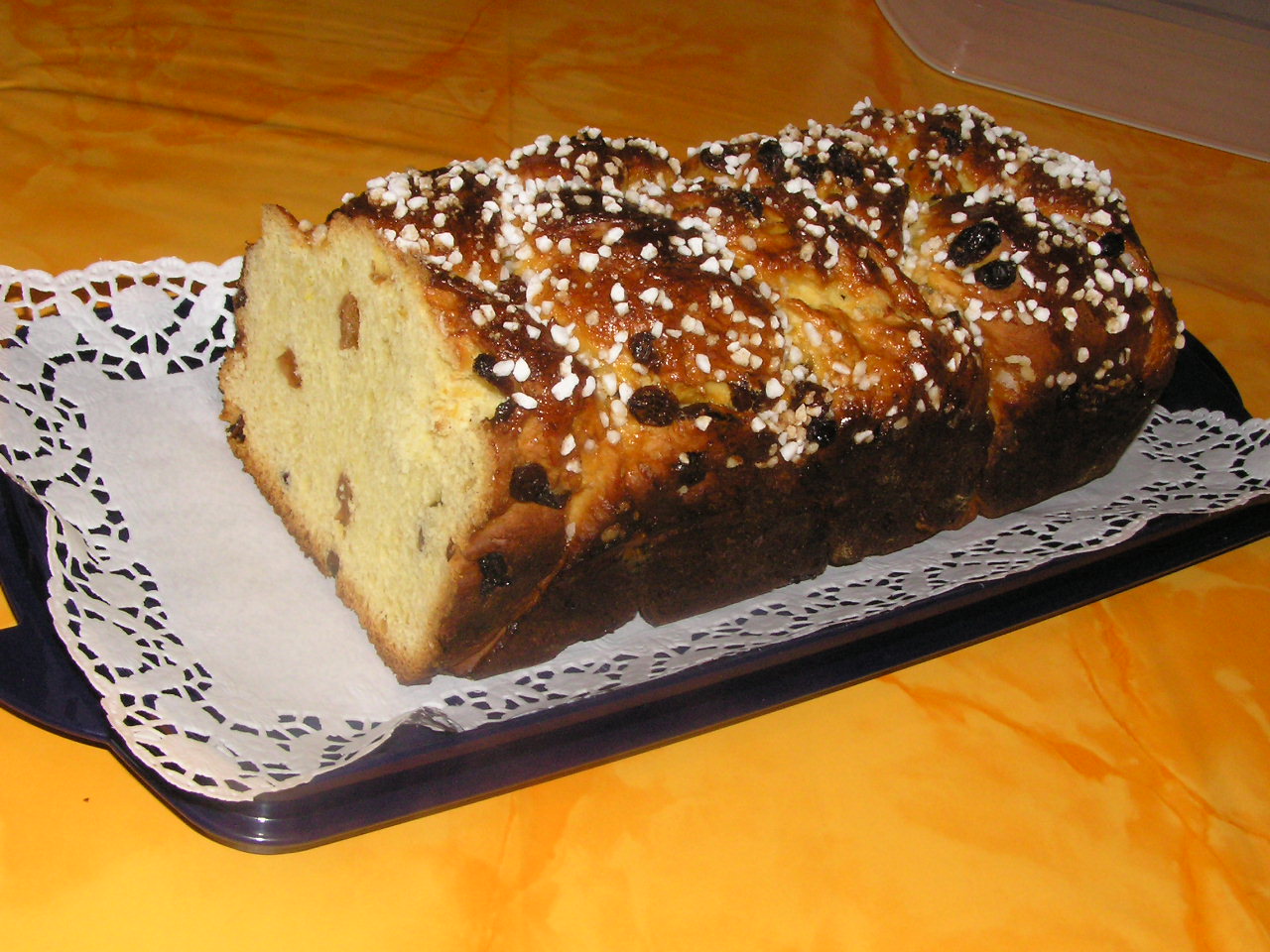 Cozonac
🇷🇴 Romania and 4 moreA sweet, enriched bread often filled with nuts or dried fruit, baked for Easter
Sweet or dessert, Tea time, Snacks
Cozonac
🇷🇴 Romania and 4 moreA sweet, enriched bread often filled with nuts or dried fruit, baked for Easter
Sweet or dessert, Tea time, Snacks
 Pörkölt
🇭🇺 Hungary and 4 moreHungarian stew of meat, paprika and onion, simmered with vegetables
Stew or curry, Lunch, Dinner
Pörkölt
🇭🇺 Hungary and 4 moreHungarian stew of meat, paprika and onion, simmered with vegetables
Stew or curry, Lunch, Dinner
 Fisherman's soupFish or seafood
🇭🇺 Hungary and 2 moreSpicy paprika-rich fish soup from Hungary and the Pannonian Plain
Soup, Dinner
Fisherman's soupFish or seafood
🇭🇺 Hungary and 2 moreSpicy paprika-rich fish soup from Hungary and the Pannonian Plain
Soup, Dinner
 KačamakVegetarian
🇹🇷 Turkey and 5 moreCornmeal porridge from the Balkans, often enriched with cheese or potatoes
Main dish
KačamakVegetarian
🇹🇷 Turkey and 5 moreCornmeal porridge from the Balkans, often enriched with cheese or potatoes
Main dish
 ÇılbırVegetarian
🇹🇷 Turkey and 4 morePoached eggs served over garlicky yogurt with spiced melted butter
Main dish
ÇılbırVegetarian
🇹🇷 Turkey and 4 morePoached eggs served over garlicky yogurt with spiced melted butter
Main dish
 Stuffed squash
🇹🇷 Turkey and 5 moreSquash or zucchini filled with rice and sometimes meat, simmered or baked
Main dish, Lunch, Dinner
Stuffed squash
🇹🇷 Turkey and 5 moreSquash or zucchini filled with rice and sometimes meat, simmered or baked
Main dish, Lunch, Dinner