
Tartiflette
Potato casserole with Reblochon cheese, lardons and onion from the French Alps
Tartiflette is a baked potato dish from Savoy in the French Alps. It combines sliced potatoes, Reblochon cheese, lardons (small strips of pork), and onions, sometimes with a splash of white wine. Often served after skiing, it is known for its hearty, warming character and Alpine roots.
- Made with potatoes, Reblochon cheese, lardons and onions
- Originates from Savoy in the French Alps
- Inspired by a traditional gratin called péla
- Popular as an après-ski meal
- Croziflette is a pasta-based variation
What is Tartiflette?
Tartiflette is a baked casserole from the Savoy region, made with sliced potatoes, Reblochon cheese, lardons (which are small pieces of pork fat or bacon), and onions. The dish is rich and creamy, with the cheese melting into the potatoes and lardons to create a soft, golden crust. Sometimes, a little white wine is added for extra flavor. Tartiflette is known for its hearty, filling nature, making it especially popular in cold weather.
Where does Tartiflette come from?
The dish comes from Savoy in the French Alps, a region where potatoes have long been a staple. The name 'tartiflette' likely comes from local dialect words for potato. While the idea was inspired by a traditional gratin called péla, tartiflette in its current form only became popular in the 1980s. Its rise is linked to ski resorts and a campaign by the producers of Reblochon cheese to promote their product. Earlier mentions of similar dishes date back to the early 18th century.
How is Tartiflette made?
To make tartiflette, sliced potatoes are layered with sautéed onions and lardons in a baking dish. Reblochon cheese, a soft cow's milk cheese from the region, is sliced and placed on top. Sometimes, white wine is poured over the mixture. The dish is then baked until the cheese melts and forms a golden, bubbling crust, and the potatoes are tender.

How and when is Tartiflette eaten?
Tartiflette is often eaten as a main meal, especially in the evening after a day outdoors. It is strongly associated with après-ski dining in the Alps, where it is served hot and shared among friends or family. The dish is usually eaten straight from the baking dish, sometimes accompanied by a green salad or pickles to cut through its richness.
Kinds of Tartiflette
A well-known variation is croziflette, which swaps out the potatoes for small, square buckwheat or wheat pasta called crozets, also from Savoy. Another version, morbiflette, uses Morbier cheese instead of Reblochon. These adaptations keep the spirit of the original but offer different textures and flavors.
What Tartiflette means
Tartiflette is closely tied to the culture of the French Alps and is seen as a symbol of regional hospitality and warmth. Its popularity grew with the rise of ski tourism and the promotion of Reblochon cheese. The dish is now a staple in Alpine restaurants and is often chosen for gatherings, reflecting its reputation for bringing people together.
Questions people ask about Tartiflette
What is tartiflette made of?
Tartiflette is made with sliced potatoes, Reblochon cheese, lardons (small strips of pork), and onions. Sometimes, a splash of white wine is added before baking.
Where does tartiflette come from?
Tartiflette comes from the Savoy region in the French Alps. It is a modern dish inspired by traditional Alpine cooking.
Is tartiflette vegetarian?
No, tartiflette contains lardons, which are pieces of pork. The traditional version is not vegetarian.
How is tartiflette served?
Tartiflette is usually served hot as a main dish, often after skiing or in cold weather. It is commonly shared at the table, sometimes with salad or pickles.
Are there variations of tartiflette?
Yes, croziflette replaces potatoes with small buckwheat pasta called crozets, and morbiflette uses Morbier cheese instead of Reblochon.
Good reading and sources
- How to cook the perfect tartifletteThe Guardian, Article
- Croziflette baked pasta with blue cheeseBBC, Recipe
The facts on this page come from the Wikipedia article "Tartiflette", written by its contributors and used under the CC BY-SA 4.0 licence, and from its Wikidata record (CC0). Thali rewrote the text in its own words, with AI assistance, and compares every page with the article to make sure no passage is copied. It may be reused under the same CC BY-SA 4.0 licence with a link back.
It may contain mistakes, and it is not dietary or allergy advice: recipes differ from cook to cook. If something is wrong, tell us. Last refreshed 2026-10-03.
More from France
All the food of France RatatouilleVegan
🇫🇷 FranceA Provençal stew of summer vegetables cooked in olive oil
Main dish, Lunch, Dinner
RatatouilleVegan
🇫🇷 FranceA Provençal stew of summer vegetables cooked in olive oil
Main dish, Lunch, Dinner
 French toast
🇫🇷 France and 5 moreBread soaked in egg and milk, pan-fried and served sweet or savoury
Main dish, Breakfast, Snacks
Blood sausageMeat
🇫🇷 France and 5 moreA sausage made with animal blood, fillers and spices, cooked or dried until firm
Main dish, Lunch, Dinner
French toast
🇫🇷 France and 5 moreBread soaked in egg and milk, pan-fried and served sweet or savoury
Main dish, Breakfast, Snacks
Blood sausageMeat
🇫🇷 France and 5 moreA sausage made with animal blood, fillers and spices, cooked or dried until firm
Main dish, Lunch, Dinner
 Pancake
🇺🇸 United States and 5 moreFlat cakes made from batter, cooked on a griddle or pan and served sweet or savoury
Main dish, Breakfast, Snacks
Pancake
🇺🇸 United States and 5 moreFlat cakes made from batter, cooked on a griddle or pan and served sweet or savoury
Main dish, Breakfast, Snacks
Its cousins elsewhere
All main dishes Rocoto rellenoMeat
🇵🇪 PeruPeruvian stuffed rocoto peppers baked with meat and cheese
Main dish, Lunch, Dinner
Rocoto rellenoMeat
🇵🇪 PeruPeruvian stuffed rocoto peppers baked with meat and cheese
Main dish, Lunch, Dinner
 Seafood boil
🇺🇸 United States and 1 moreShellfish and sides cooked together for a communal feast
Main dish, Lunch, Dinner
Seafood boil
🇺🇸 United States and 1 moreShellfish and sides cooked together for a communal feast
Main dish, Lunch, Dinner
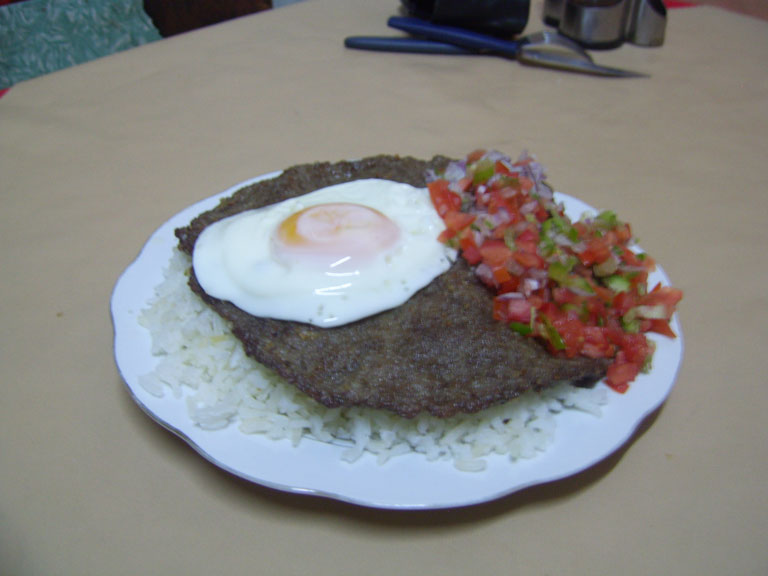 SilpanchoMeatSillp'anchu
🇧🇴 BoliviaLayered Bolivian meal with rice, potatoes, breaded meat, and fried eggs
Main dish, Lunch, Dinner
SilpanchoMeatSillp'anchu
🇧🇴 BoliviaLayered Bolivian meal with rice, potatoes, breaded meat, and fried eggs
Main dish, Lunch, Dinner
 Misalमिसळ
🇮🇳 IndiaSpicy sprouted bean curry layered with toppings, served hot with bread
Main dish, Breakfast, Snacks
Misalमिसळ
🇮🇳 IndiaSpicy sprouted bean curry layered with toppings, served hot with bread
Main dish, Breakfast, Snacks