
Trileçe
Sponge cake soaked in three kinds of milk and finished with caramel
Trileçe is a soaked sponge cake popular across the Balkans and Turkey, made by steeping baked pastry in three kinds of milk. Finished with a glaze of caramel or fruit sauce, this sweet dessert is enjoyed throughout Southeastern Europe.
- A Balkan sponge cake soaked in three kinds of milk until it reaches a pudding-like softness.
- Its name traces back to the Spanish tres leches, meaning three milks.
- One origin theory claims Latin American soap operas in Albania inspired local bakers.
- Bakers in Istanbul often prepare it with cow, sheep, and goat milks.
What is Trileçe?
Trileçe is an airy sponge cake drenched in dairy liquids and finished with a sweet glaze. Deriving its name from the Spanish phrase for three milks, the confection adapts Latin American tres leches to southeastern European tastes. Bakers saturate the baked pastry until it turns remarkably soft, yielding an almost pudding-like bite that remains lighter than its Western Hemisphere relative. A dark golden caramel coating traditionally spreads across the crown, balancing the moist, dairy-rich crumb beneath. Some presentations instead feature whipped dairy foam or vibrant berry toppings such as fresh blueberries and sliced strawberries, occasionally dusted with ground cinnamon.
Where does Trileçe come from?
How this sweet reached southeastern Europe remains an open question with several competing accounts. A widespread tale credits Latin American telenovelas broadcast across Albania, which allegedly inspired local cooks to recreate the drenched cakes shown on television. Another account points to mid-twentieth-century tin packaging for concentrated milk that printed dessert directions on its labels. A third narrative credits Italian culinary professional Renata Casadei, who cooked at Tirana's Piazza restaurant and reportedly brought the idea back from the Dominican Republic during the early 2000s. From Albanian bakeries, the treat quickly journeyed into Turkey, across Bosnia and Herzegovina, and throughout neighboring Balkan territories, eventually reaching parts of the Arab world.
How is Trileçe made?
Preparation begins with a standard airy sponge pastry base, baked until fully set. While the cake cools, cooks mix three distinct milk products: thick sweetened condensed milk, unsweetened evaporated milk, and ordinary whole dairy milk. This liquid blend is washed slowly over the porous sponge, which drinks in the dairy until it achieves a succulent, custardy softness without completely collapsing. Once saturated, the dessert receives its crowning layer. Pastry cooks usually spread a layer of amber caramel over the top surface. Alternatively, chilled whipped cream may be applied before or in place of caramel, sometimes accompanied by fruit coulis or fresh berries.


How and when is Trileçe eaten?
Trileçe serves as a dessert course throughout the Balkan peninsula and across modern Turkey. Diners encounter it in neighborhood patisseries, coffeehouses, and traditional restaurants. The moist, syrupy sponge is sliced into rectangular portions and served on plates, often accompanied by fruit garnishes like strawberries or a swirl of sweet fruit drizzle. Because of its cool, soaked crumb and rich caramel cap, it provides a sweet counterpoint at the conclusion of a sit-down meal or alongside an afternoon beverage.
Kinds of Trileçe
Bakers adapt the soaking liquid and decorative toppings according to local preferences. In Albania, traditional preparation sometimes combines the milks of cows, goats, and water buffaloes, though modern urban kitchens frequently rely on plain cow's milk stirred with cream. Istanbul bakers, working where processed canned milk is less familiar, often turn to a fresh trio of sheep, goat, and cow milks. While the Latin American original highlights fresh whipped cream and sliced fruit, Balkan bakeries favor rich caramel coatings, occasionally slipping whipped cream underneath or finishing the slice with blueberries, berry sauces, or cinnamon.
What Trileçe means
Given its cross-cultural influences, food writers frequently classify trileçe as a work of fusion cuisine. Its rapid embrace across Southeastern Europe transformed the Latin American recipe into a defining sweet across Albania, Turkey, Bosnia and Herzegovina, Serbia, and Kosovo. From Turkey, the dish continued to travel, gaining admirers across segments of the Arab world. The confection shows how international media, global travel, and local baking adjustments can establish a shared regional fondness across multiple national borders.
Questions people ask about Trileçe
What is trileçe made of?
Trileçe is made from a sponge cake saturated with three dairy types: condensed milk, evaporated milk, and whole milk. It is typically finished with caramel or whipped cream, and can be garnished with fresh berries or cinnamon.
Where does trileçe come from?
Its exact origins are disputed. Theories include Albanian chefs reverse-engineering Latin American cakes seen on soap operas, canned milk recipes from the 1940s, or chef Renata Casadei bringing it to Tirana from the Dominican Republic in the 2000s.
How does trileçe differ from Latin American tres leches?
Trileçe is generally lighter than the Latin American version due to the dairy products used. While tres leches usually has fruit and cream on top, trileçe typically features a layer of caramel or fruit sauce.
What regional milk variations exist?
Albanian cooks sometimes combine milk from cows, goats, and water buffaloes, or use cow milk with cream. In Istanbul, where condensed milk is less popular, bakers frequently use cow, sheep, and goat milks.
Good reading and sources
The facts on this page come from the Wikipedia article "Trileçe", written by its contributors and used under the CC BY-SA 4.0 licence, and from its Wikidata record (CC0). EveryThali rewrote the text in its own words, with AI assistance, and compares every page with the article to make sure no passage is copied. It may be reused under the same CC BY-SA 4.0 licence with a link back.
It may contain mistakes, and it is not dietary or allergy advice: recipes differ from cook to cook. If something is wrong, tell us. Last refreshed 2026-10-04.
More from Albania
All the food of Albania BaklavaVegetarianباقلوا
🇹🇷 Turkey and 5 moreThin pastry filled with nuts and soaked in sweet syrup
Sweet or dessert, Tea time, Snacks
BaklavaVegetarianباقلوا
🇹🇷 Turkey and 5 moreThin pastry filled with nuts and soaked in sweet syrup
Sweet or dessert, Tea time, Snacks
 Kaymak
🇹🇷 Turkey and 5 moreThick, creamy dairy spread made from slowly simmered milk
Sauce, pickle or ferment, Breakfast, Snacks
Kaymak
🇹🇷 Turkey and 5 moreThick, creamy dairy spread made from slowly simmered milk
Sauce, pickle or ferment, Breakfast, Snacks
 AshureVeganAşure
🇹🇷 Turkey and 3 moreSweet porridge of grains, dried fruits and nuts shared for festivals and remembrance
Sweet or dessert
AshureVeganAşure
🇹🇷 Turkey and 3 moreSweet porridge of grains, dried fruits and nuts shared for festivals and remembrance
Sweet or dessert
 Tres leches cakeVegetarianTres Leches
🇲🇽 Mexico and 5 moreAiry sponge cake soaked in three types of milk and topped with cream
Sweet or dessert, Tea time, Snacks
Tres leches cakeVegetarianTres Leches
🇲🇽 Mexico and 5 moreAiry sponge cake soaked in three types of milk and topped with cream
Sweet or dessert, Tea time, Snacks
Its cousins elsewhere
All sweets and desserts KakigōriVegetarianかき氷
🇯🇵 JapanJapanese shaved ice dessert topped with sweet syrups and often condensed milk
Sweet or dessert, Snacks
KakigōriVegetarianかき氷
🇯🇵 JapanJapanese shaved ice dessert topped with sweet syrups and often condensed milk
Sweet or dessert, Snacks
 Ice cream
🇺🇸 United States and 5 moreA frozen dessert made from sweetened, flavoured milk or cream
Sweet or dessert, Snacks
Ice cream
🇺🇸 United States and 5 moreA frozen dessert made from sweetened, flavoured milk or cream
Sweet or dessert, Snacks
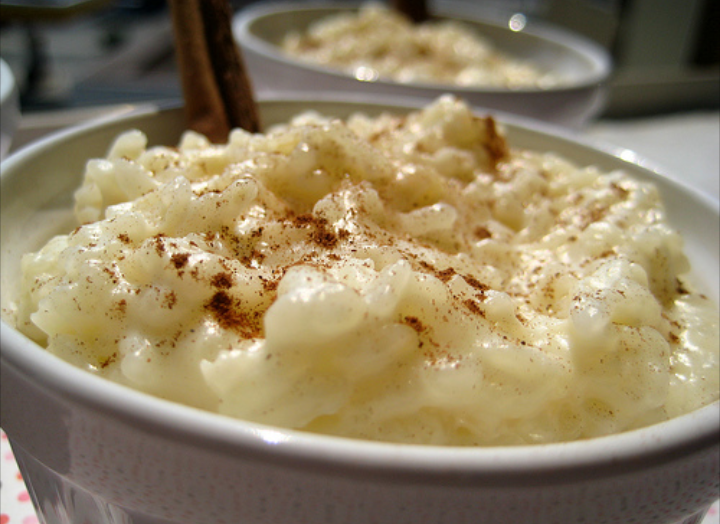 Rice pudding
🇮🇳 India and 4 moreSweetened rice cooked in milk, found in many forms worldwide
Sweet or dessert, Breakfast, Lunch
Rice pudding
🇮🇳 India and 4 moreSweetened rice cooked in milk, found in many forms worldwide
Sweet or dessert, Breakfast, Lunch
 MohanthalVegetarian
🇮🇳 IndiaFudge-like sweet of gram flour, ghee and sugar from western India
Sweet or dessert
MohanthalVegetarian
🇮🇳 IndiaFudge-like sweet of gram flour, ghee and sugar from western India
Sweet or dessert