
Tripas à moda do Porto
Beef tripe stew with beans, carrots and rice from Porto
Tripas à moda do Porto is a traditional dish from Porto, Portugal, made with beef tripe, white beans, carrots and rice. Known across Portugal as dobrada, it is closely tied to the city's history and is considered a local specialty.
- Traditional stew from Porto made with beef tripe and beans
- Linked to a legend from the 15th century
- Known across Portugal as dobrada
- Includes carrots, rice, and often sausage
- Porto locals are nicknamed 'tripeiros' after this dish
What is Tripas à moda do Porto?
Tripas à moda do Porto is a hearty stew featuring beef tripe, which is the edible lining of a cow's stomach. The dish combines the tripe with white beans, carrots, and rice, and often includes sausage and other meats. Its appearance is rustic, with tender pieces of tripe and vegetables in a thick, savory sauce. The flavor is rich and meaty, with the beans and carrots adding sweetness and texture.
Where does Tripas à moda do Porto come from?
This dish is deeply linked to the city of Porto. According to local legend, it dates back to 1415, when the people of Porto gave all their best meat to ships departing for the conquest of Ceuta, keeping only the animal innards for themselves. Out of necessity, they created a dish using tripe and bread. This act of sacrifice is said to have given Porto's residents the nickname 'tripeiros', or tripe eaters. Over time, the stew evolved to include beans, carrots and rice.
How is Tripas à moda do Porto made?
To prepare Tripas à moda do Porto, beef tripe is cleaned and cooked until tender. It is then simmered with white beans, sliced carrots, and sometimes sausage or other cuts of meat. Rice is usually served alongside or incorporated into the stew. The ingredients are cooked together to allow the flavors to meld, resulting in a thick, satisfying dish.

How and when is Tripas à moda do Porto eaten?
This stew is typically served hot, making it a popular choice for lunch or dinner. It is considered an everyday food in Porto and across Portugal, often enjoyed as a main course. The dish is usually eaten with bread or rice, and is commonly found in traditional restaurants and family kitchens.
Kinds of Tripas à moda do Porto
Across Portugal, the dish is often called simply dobrada. While the basic ingredients remain the same, some versions may include different types of sausage or additional vegetables. The way rice is served can also vary, either mixed into the stew or offered on the side.
What Tripas à moda do Porto means
Tripas à moda do Porto is a symbol of Porto's identity and resilience. The story of its origin is celebrated locally, and the dish is a point of pride for residents. It has inspired poetry, such as a work by Álvaro de Campos, one of Fernando Pessoa's literary alter egos. The nickname 'tripeiros' is still used to refer to people from Porto.
Questions people ask about Tripas à moda do Porto
What is Tripas à moda do Porto made of?
It is made with beef tripe, white beans, carrots, rice, and often sausage or other meats. These ingredients are simmered together to make a thick stew.
Where does Tripas à moda do Porto come from?
This dish comes from Porto, a city in northern Portugal. It is considered a traditional specialty of the city and is also known throughout the country.
What does Tripas à moda do Porto taste like?
The stew has a rich, meaty flavor from the tripe and sausage, with sweetness and texture from the beans and carrots. It is hearty and savory.
When is Tripas à moda do Porto usually eaten?
It is typically served hot for lunch or dinner as a main course, both in restaurants and at home.
Why are people from Porto called 'tripeiros'?
According to legend, during preparations for the conquest of Ceuta in 1415, Porto's people gave away all their best meat to sailors and kept only the tripe, creating this dish. This earned them the nickname 'tripeiros'.
Good reading and sources
The facts on this page come from the Wikipedia article "Tripas à moda do Porto", written by its contributors and used under the CC BY-SA 4.0 licence, and from its Wikidata record (CC0). Thali rewrote the text in its own words, with AI assistance, and compares every page with the article to make sure no passage is copied. It may be reused under the same CC BY-SA 4.0 licence with a link back.
It may contain mistakes, and it is not dietary or allergy advice: recipes differ from cook to cook. If something is wrong, tell us. Last refreshed 2026-10-03.
More from Portugal
All the food of Portugal Cataplana
🇵🇹 PortugalSeafood and meat stew cooked in a sealed metal vessel from Portugal's Algarve
Main dish, Lunch, Dinner
Cataplana
🇵🇹 PortugalSeafood and meat stew cooked in a sealed metal vessel from Portugal's Algarve
Main dish, Lunch, Dinner
 ChorizoMeat
🇪🇸 Spain and 5 moreA seasoned pork sausage from the Iberian Peninsula, made in many regional styles
Sausage or cured food, Breakfast, Lunch
ChorizoMeat
🇪🇸 Spain and 5 moreA seasoned pork sausage from the Iberian Peninsula, made in many regional styles
Sausage or cured food, Breakfast, Lunch
 Empanada
🇪🇸 Spain and 5 morePastry turnovers filled with meat, cheese, or vegetables, baked or fried
Pie or savoury pastry, Lunch, Dinner
Empanada
🇪🇸 Spain and 5 morePastry turnovers filled with meat, cheese, or vegetables, baked or fried
Pie or savoury pastry, Lunch, Dinner
 VindalooMeat
🇮🇳 India and 2 moreA spicy curry of meat, vinegar and chili from Goa, now found worldwide
Main dish, Lunch, Dinner
VindalooMeat
🇮🇳 India and 2 moreA spicy curry of meat, vinegar and chili from Goa, now found worldwide
Main dish, Lunch, Dinner
Its cousins elsewhere
All main dishes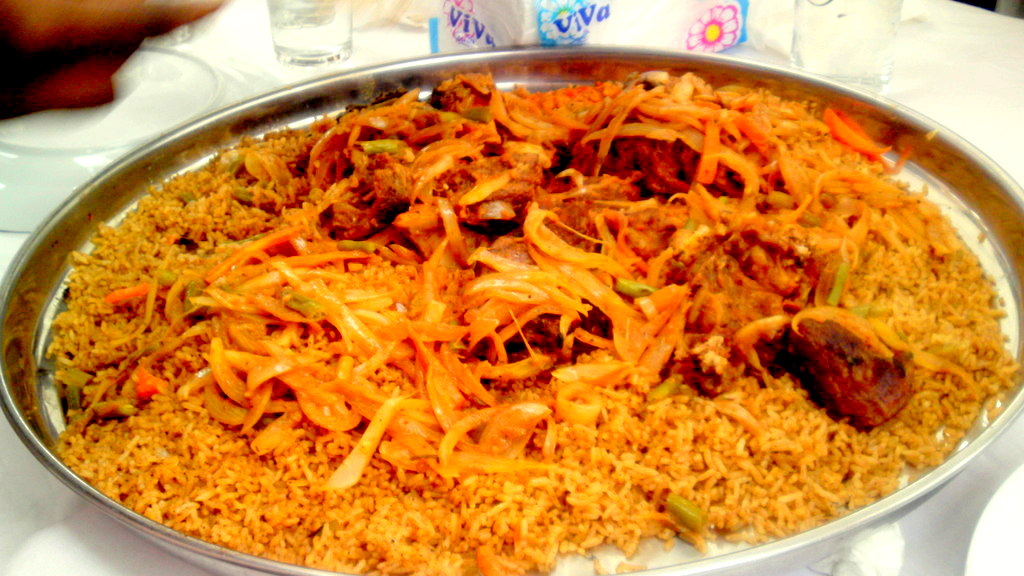 Riz grasMeat
🇧🇫 Burkina Faso and 4 moreWest African rice cooked with meat and vegetables, served hot
Main dish, Lunch, Dinner
Riz grasMeat
🇧🇫 Burkina Faso and 4 moreWest African rice cooked with meat and vegetables, served hot
Main dish, Lunch, Dinner
 Kebabكَبَاب
🇹🇷 Turkey and 5 moreGrilled or roasted meat, often on skewers, found across the Middle East and beyond
Main dish, Lunch, Dinner
Kebabكَبَاب
🇹🇷 Turkey and 5 moreGrilled or roasted meat, often on skewers, found across the Middle East and beyond
Main dish, Lunch, Dinner
 Pilaf
🇺🇿 Uzbekistan and 5 moreRice cooked in stock with spices, meat or vegetables, with each grain kept separate
Main dish, Lunch, Dinner
Pilaf
🇺🇿 Uzbekistan and 5 moreRice cooked in stock with spices, meat or vegetables, with each grain kept separate
Main dish, Lunch, Dinner
 Biryani
🇮🇳 India and 5 moreRice and spiced meat or vegetables layered and cooked together
Main dish, Lunch, Dinner
Biryani
🇮🇳 India and 5 moreRice and spiced meat or vegetables layered and cooked together
Main dish, Lunch, Dinner