Sacred and ceremonial meals
The Japanese tea ceremony
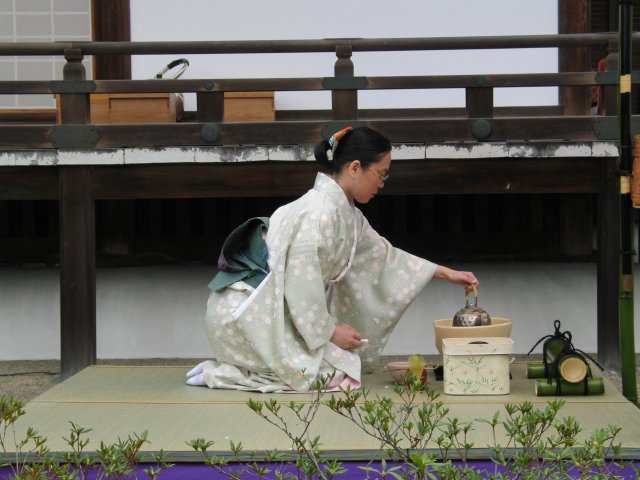
Chanoyu, the Way of Tea: a host prepares powdered green tea for guests with exact, practised movements in a small, plain room.
Presented by ClearTrust Free for cooks, travellers and the curious.
The Japanese tea ceremony is called chanoyu, hot water for tea, or chado, the Way of Tea. A host whisks powdered green tea, matcha, and serves it to a few guests. Every movement, object and word is considered. Behind the form are four ideals: harmony, respect, purity and tranquillity.
What it is
A tea gathering can be short or long. A simple one, a chakai, offers a sweet and a bowl of thin, frothy tea and lasts under an hour. A full formal gathering, a chaji, lasts about four hours. It includes the laying of charcoal, a light kaiseki meal, a break in the garden, a bowl of thick tea shared by all the guests, and then thin tea. The room is small and almost bare, with a hanging scroll and a few seasonal flowers.
Where it comes from
Tea drinking came to Japan from China with Buddhist monks, and powdered tea was at first used in Zen monasteries. In the sixteenth century the tea master Sen no Rikyu gave the practice the form and spirit it still has. He favoured a tiny hut, rough local pottery and simple food over costly display, an aesthetic known as wabi. His descendants founded the main schools of tea, which continue to teach today. Students train for many years.
How it works
Guests enter, admire the scroll and the kettle, and sit on the tatami floor. The sweet is eaten first, before the tea, to prepare the mouth for its bitterness. The host cleans each tool in front of the guests, scoops tea into a bowl, adds hot water and whisks. The bowl is placed before a guest with its best side facing them. The guest bows, lifts it, turns it so as not to drink from the front, drinks, wipes the rim and admires the bowl.
How to do it
- Wear clean socks and remove watches and rings that could scratch a bowl.
- Eat the sweet when it is served, before the tea arrives.
- Take the bowl with your right hand and rest it on your left palm.
- Turn it clockwise twice, then drink in a few sips.
- Wipe the rim, turn the bowl back and return it.
Good manners
- Bow to the guest beside you before drinking, to excuse going first.
- Do not step on the borders of the tatami mats.
- Keep conversation to the tea, the utensils and the season.
What is eaten
 MatchaBright green Japanese tea powder made from shade-grown leaves
 WagashiTraditional Japanese sweets made with plant-based ingredients and seasonal themes
 YōkanA Japanese sweet block made from red bean paste, agar, and sugar
 MochiJapanese rice cake made by pounding glutinous rice into a sticky, chewy mass
Also part of it, and being written: Higashi, Namagashi, Kaiseki.
Sources and further reading
- Japanese tea ceremony on Wikipedia
- Urasenke Foundation: The Urasenke tradition of tea
- Japan National Tourism Organization: Tea ceremony
- World History Encyclopedia: Japanese Tea Ceremony
Original text by the Thali desk, written with AI assistance and checked against the sources above. Customs vary from place to place. If we have something wrong, tell us.
Photo credits on this page
The small pictures above come from Wikimedia Commons under free licences. Some are cropped to fit.
- Yōkan: Ocdp, CC0, source
- Wagashi: Ocdp, CC0, source
- Matcha: Evanhoever, CC BY-SA 4.0, source
- Mochi: Kropsoq, CC BY-SA 3.0, source