🇬🇳 The food of Guinea
4 dishes from Guinea, best known first.
Guinean cooking is shaped by local grains like corn and fonio, root vegetables, and tropical plants. Meals often center on shared dishes, eaten by hand, with a range of savory sauces and few sweets. Regional differences and influences from neighboring West African cuisines add variety.
- Guinea produces over 75% of the world's fonio grain.
- Meals are often eaten by hand from a shared dish.
- Bissap is a purple hibiscus drink sometimes flavored with mint.
- Peanut and okra sauces are common accompaniments.
- Desserts are rare in everyday Guinean meals.
The cooking of Guinea
Guinea’s food draws on the crops and traditions of West Africa. Corn and fonio, a tiny grain grown especially in the Fouta Djalon mountains, are central to many meals. Root vegetables such as cassava and sweet potatoes, along with plantains and cocoyams, appear often. Sauces are key, made with peanuts, okra, leafy greens, or beans, and poured over doughs or grains. Meals are usually shared from a large dish, especially in rural areas, and are eaten by hand. Desserts are rare, but drinks made from hibiscus, ginger, or tamarind are common.
Staple foods in Guinea
Corn is widely used, with preparations changing from region to region. Fonio is especially important in mountain areas, where it is a vital crop. Cassava, plantains, cocoyams, sweet potatoes, okra, and peanuts are regular parts of the diet. Hibiscus is used for drinks, and local cheeses and breads also feature.
Sweets and drinks in Guinea
Sweet foods are uncommon, but some, like gateau farine (a round cake) and thiacri (a sweet couscous with milk), are enjoyed. Drinks made from hibiscus flowers (bissap), ginger, and tamarind are popular. Palm wine is drunk in some non-Muslim areas.
From region to region in Guinea
Food varies across Guinea’s regions. In Fouta Djalon, fonio is a staple, while corn dominates elsewhere. The coast, forest, and capital each have their own ways of preparing core ingredients. Some dishes, like attieke with fish and vegetables, show influence from neighboring cuisines. Sauces and grains shift in style and content from one area to another.
At the table in Guinea
In rural Guinea, people often eat together from a single large dish, sitting outside and using their hands. Meals are communal and desserts are not a regular part of the meal. Table manners reflect a focus on sharing and practicality.
The facts in this overview come from the Wikipedia article "Cuisine of Guinea", written by its contributors and used under the CC BY-SA 4.0 licence. Thali rewrote the text in its own words, with AI assistance, and compares every page with the article to make sure no passage is copied. It may be reused under the same CC BY-SA 4.0 licence with a link back.
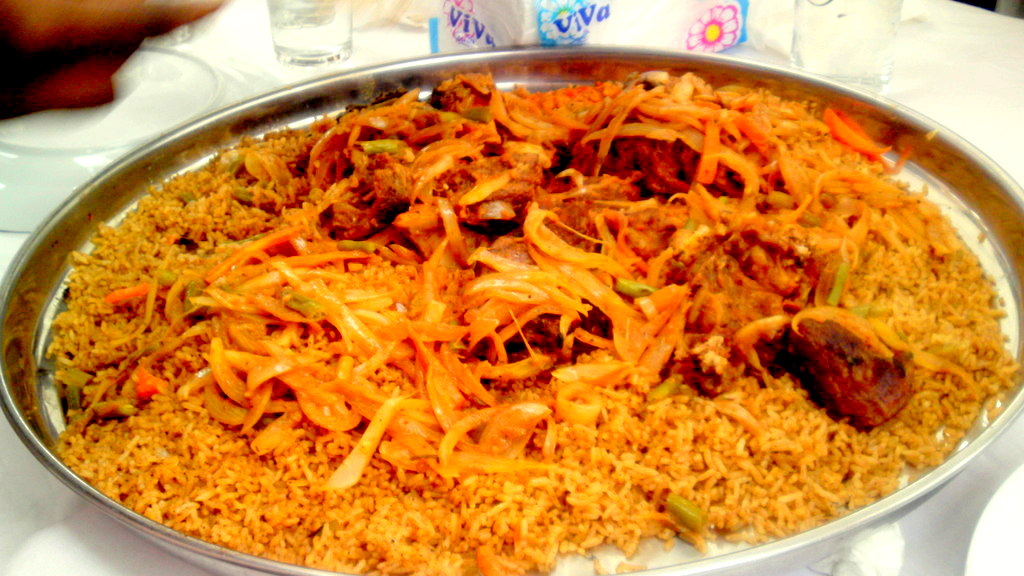 Riz grasMeat
🇧🇫 Burkina Faso and 4 moreWest African rice cooked with meat and vegetables, served hot
Main dish, Lunch, Dinner
Riz grasMeat
🇧🇫 Burkina Faso and 4 moreWest African rice cooked with meat and vegetables, served hot
Main dish, Lunch, Dinner
 Jambalaya
🇺🇸 United States and 5 moreLouisiana rice cooked with meats, vegetables and spices in one pot
Main dish, Lunch, Dinner
Jambalaya
🇺🇸 United States and 5 moreLouisiana rice cooked with meats, vegetables and spices in one pot
Main dish, Lunch, Dinner
 ThieboudienneFish or seafood
🇸🇳 Senegal and 5 moreSenegalese rice and fish cooked together with vegetables and tomato
Main dish
ThieboudienneFish or seafood
🇸🇳 Senegal and 5 moreSenegalese rice and fish cooked together with vegetables and tomato
Main dish
 Domoda
🇸🇳 Senegal and 4 moreA tangy Senegalese stew thickened with flour and served with rice
Stew or curry, Lunch, Dinner
Domoda
🇸🇳 Senegal and 4 moreA tangy Senegalese stew thickened with flour and served with rice
Stew or curry, Lunch, Dinner
Photo credits on this page
The small pictures above come from Wikimedia Commons under free licences. Some are cropped to fit.
- Thieboudienne: KVDP, Public domain, source
- Domoda: T.K. Naliaka, CC BY-SA 4.0, source
- Riz gras: Aboukam, CC BY-SA 4.0, source
- Jambalaya: pelican, CC BY-SA 2.0, source