
Thieboudienne
Senegalese rice and fish cooked together with vegetables and tomato
Thieboudienne is Senegal’s national dish, made by simmering fish, broken rice, tomato, and vegetables together in one pot. It is widely eaten in Senegal and across West Africa, where versions with meat or chicken also exist. The dish is usually served from a communal tray, reflecting the local custom of shared meals.
- Senegal’s national dish, made with rice and fish
- Traditionally eaten from a shared communal tray
- Usually cooked with tomato, vegetables, and broken rice
- Known by many names, including ceebu jën and benechin
- Has influenced jollof rice and other West African dishes
What is Thieboudienne?
Thieboudienne is a one-pot meal of rice and fish, cooked with tomato and a mix of vegetables such as carrots, cabbage, and cassava. The rice is often broken rice, which absorbs the flavors of the tomato sauce and fish. The dish is usually garnished with whole vegetables and sometimes flavored with lime, hot pepper, and peanut oil. The result is a colorful platter with the rice at the base and the fish and vegetables arranged on top. The taste combines the richness of tomato, the savoriness of fish, and the earthiness of root vegetables.
Where does Thieboudienne come from?
Thieboudienne is commonly linked to the city of Saint-Louis in Senegal, where it is said to have emerged in the nineteenth century. Its name comes from Wolof words for rice (ceeb) and fish (jën). The dish has spread from Senegal to neighboring countries, adapting to local tastes and ingredients. Overfishing, especially of white grouper, has affected the traditional preparation. The dish is also called benechin, meaning 'one pot' in Wolof, and has influenced other West African rice dishes, including jollof rice.
How is Thieboudienne made?
To make thieboudienne, fresh or dried fish is cooked with broken rice and a tomato-based sauce. Vegetables such as cabbage, carrot, cassava, pumpkin, turnip, or eggplant are added, along with onions, garlic, parsley, and hot pepper. The ingredients are simmered together so the rice soaks up the flavors. Stock cubes and peanut oil are often used for extra depth. The dish is cooked in a single pot, making it both practical and flavorful.


How and when is Thieboudienne eaten?
Thieboudienne is traditionally served on a large communal tray, with everyone gathered around to eat together. People use their hands or a spoon to take rice from the edges and share the fish and vegetables in the center. This style of eating reflects the Senegalese value of terranga, or hospitality. The dish is a staple of everyday meals and is often shared with family and guests.
Kinds of Thieboudienne
While the classic version uses fish, there are popular variations with meat (tiep yappa) or chicken (tiep ganaar). Each country and region puts its own spin on the dish, changing the mix of vegetables or the cooking method. In Mali, for example, tiep is often made with chicken. In Cameroon, Guinea, and Ivory Coast, similar dishes are called riz gras. The dish has also influenced jollof rice, which is usually made with meat and is well known across West Africa.
What Thieboudienne means
Thieboudienne is a symbol of Senegalese identity and hospitality, and is recognized as the country’s national dish. It is central to family gatherings and social occasions, and its communal serving style is an expression of togetherness. The dish is considered part of the region’s intangible cultural heritage, and its influence can be seen in related dishes throughout West Africa and even in the Americas.
Questions people ask about Thieboudienne
What is thieboudienne made of?
Thieboudienne is made with fish, broken rice, tomato, and a mix of vegetables such as carrots, cabbage, and cassava. It is cooked in one pot with onions, hot pepper, lime, and peanut oil.
Where does thieboudienne come from?
Thieboudienne comes from Senegal, especially the city of Saint-Louis, and is also eaten in many West African countries such as Guinea, Mali, and The Gambia.
How is thieboudienne traditionally served?
It is served in a large communal dish or tray, with rice at the bottom and fish and vegetables arranged on top. People gather around and eat together, using their hands or a spoon.
Are there different versions of thieboudienne?
Yes, besides the classic fish version, there are types with meat (tiep yappa) or chicken (tiep ganaar). Each region may use different vegetables or cooking methods.
What is the connection between thieboudienne and jollof rice?
Jollof rice is thought to have originated from thieboudienne. While thieboudienne is usually made with fish, jollof rice is often made with meat and is popular across West Africa.
Good reading and sources
- Senegalese Fish and Rice (Thiéboudienne)Saveur, Recipe
- Jollof Wars: Who does West Africa's iconic rice dish best?BBC, Article
- Ceebu Jën, a culinary art of SenegalUNESCO, Article
- Thieboudienne on WikipediaEncyclopedia
- More photos on Wikimedia CommonsPhotos
- Wikidata recordOpen data
The facts on this page come from the Wikipedia article "Thieboudienne", written by its contributors and used under the CC BY-SA 4.0 licence, and from its Wikidata record (CC0). Thali rewrote the text in its own words, with AI assistance, and compares every page with the article to make sure no passage is copied. It may be reused under the same CC BY-SA 4.0 licence with a link back.
It may contain mistakes, and it is not dietary or allergy advice: recipes differ from cook to cook. If something is wrong, tell us. Last refreshed 2026-10-03.
More from Senegal
All the food of Senegal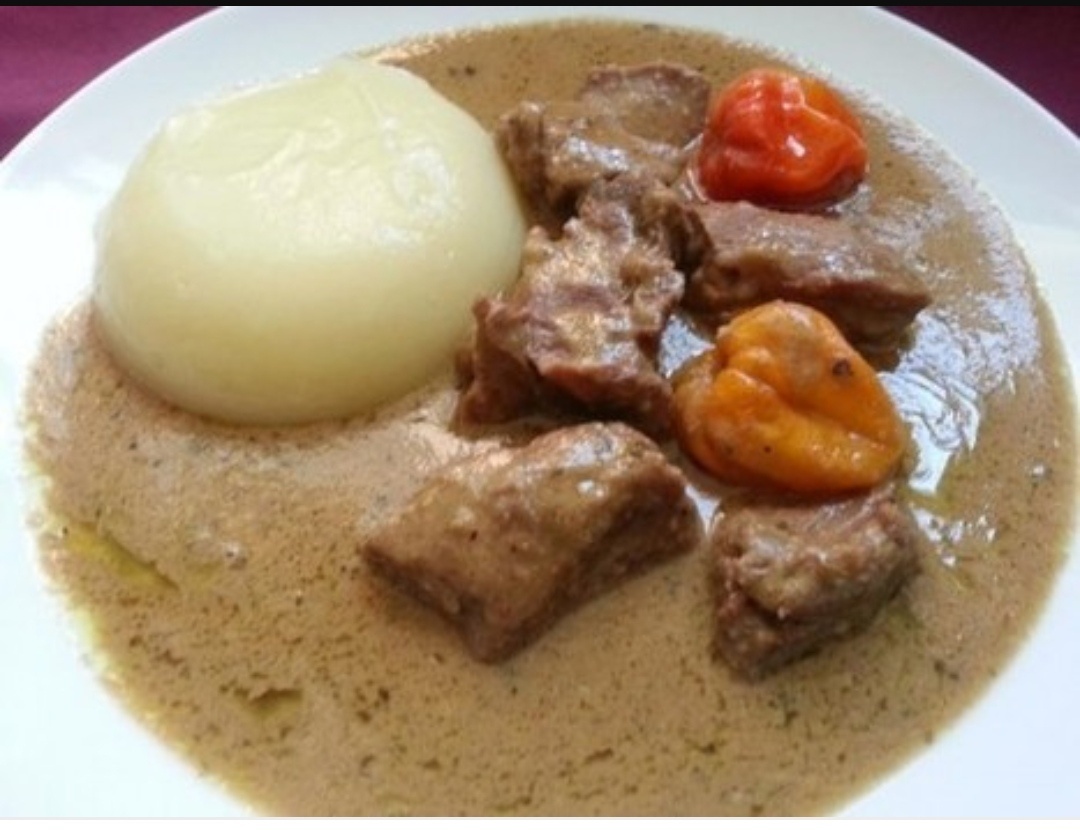 Peanut stew
🇸🇳 Senegal and 5 moreA rich West African stew of meat and vegetables in a spiced peanut sauce
Stew or curry, Lunch, Dinner
Peanut stew
🇸🇳 Senegal and 5 moreA rich West African stew of meat and vegetables in a spiced peanut sauce
Stew or curry, Lunch, Dinner
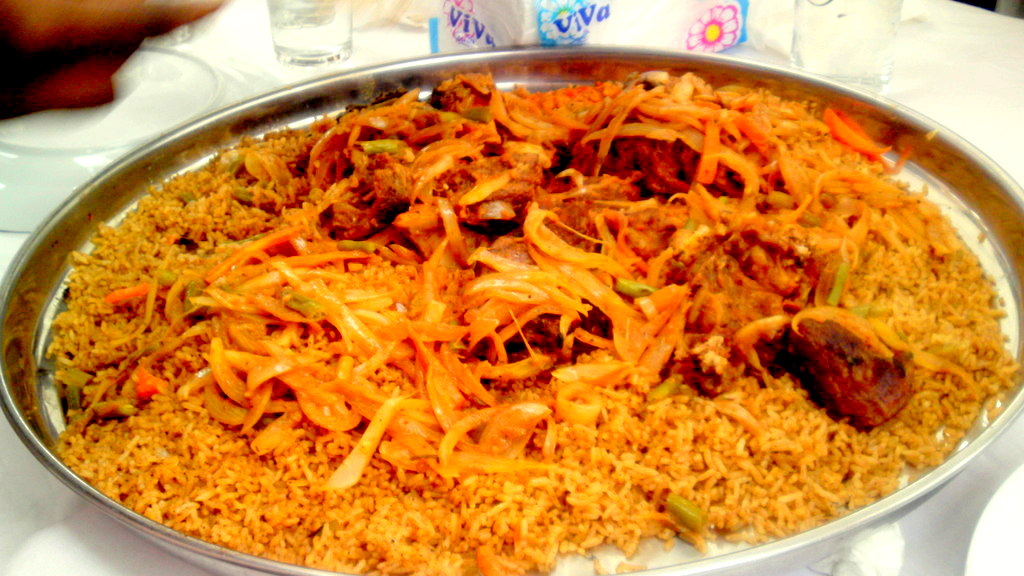 Riz grasMeat
🇧🇫 Burkina Faso and 4 moreWest African rice cooked with meat and vegetables, served hot
Main dish, Lunch, Dinner
Riz grasMeat
🇧🇫 Burkina Faso and 4 moreWest African rice cooked with meat and vegetables, served hot
Main dish, Lunch, Dinner
 Jambalaya
🇺🇸 United States and 5 moreLouisiana rice cooked with meats, vegetables and spices in one pot
Main dish, Lunch, Dinner
Jollof rice
🇸🇳 Senegal and 5 moreWest African rice simmered in tomato, chili and spices, often served with meat or fish
Main dish, Lunch, Dinner
Jambalaya
🇺🇸 United States and 5 moreLouisiana rice cooked with meats, vegetables and spices in one pot
Main dish, Lunch, Dinner
Jollof rice
🇸🇳 Senegal and 5 moreWest African rice simmered in tomato, chili and spices, often served with meat or fish
Main dish, Lunch, Dinner
Its cousins elsewhere
All main dishes EncebolladoFish or seafood
🇪🇨 EcuadorEcuadorian fish stew with onions, cassava and pickled red onion rings
Main dish, Breakfast, Lunch
EncebolladoFish or seafood
🇪🇨 EcuadorEcuadorian fish stew with onions, cassava and pickled red onion rings
Main dish, Breakfast, Lunch
 Kebabكَبَاب
🇹🇷 Turkey and 5 moreGrilled or roasted meat, often on skewers, found across the Middle East and beyond
Main dish, Lunch, Dinner
Kebabكَبَاب
🇹🇷 Turkey and 5 moreGrilled or roasted meat, often on skewers, found across the Middle East and beyond
Main dish, Lunch, Dinner
 Pilaf
🇺🇿 Uzbekistan and 5 moreRice cooked in stock with spices, meat or vegetables, with each grain kept separate
Main dish, Lunch, Dinner
Pilaf
🇺🇿 Uzbekistan and 5 moreRice cooked in stock with spices, meat or vegetables, with each grain kept separate
Main dish, Lunch, Dinner
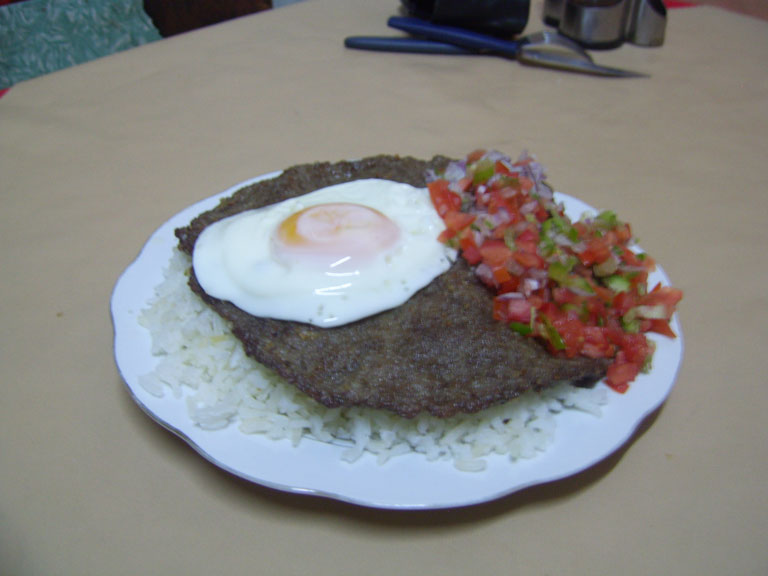 SilpanchoMeatSillp'anchu
🇧🇴 BoliviaLayered Bolivian meal with rice, potatoes, breaded meat, and fried eggs
Main dish, Lunch, Dinner
SilpanchoMeatSillp'anchu
🇧🇴 BoliviaLayered Bolivian meal with rice, potatoes, breaded meat, and fried eggs
Main dish, Lunch, Dinner