
Jambalaya
Louisiana rice cooked with meats, vegetables and spices in one pot
Jambalaya is a rice dish from Louisiana, United States, shaped by African, Spanish, and French influences. It combines meats like sausage, chicken, or seafood with vegetables, rice, and spices, all cooked together. The dish is a staple in Creole, Cajun, and African-American communities, and appears in both everyday meals and festive gatherings.
- Jambalaya blends African, Spanish, and French cooking traditions
- The dish is made by cooking rice, meat, and vegetables together in one pot
- Creole jambalaya uses tomatoes; Cajun jambalaya does not
- The 'trinity' of onion, celery, and bell pepper forms the vegetable base
- Jambalaya is a staple in Louisiana and linked to African-American, Creole, and Cajun cultures
What is Jambalaya?
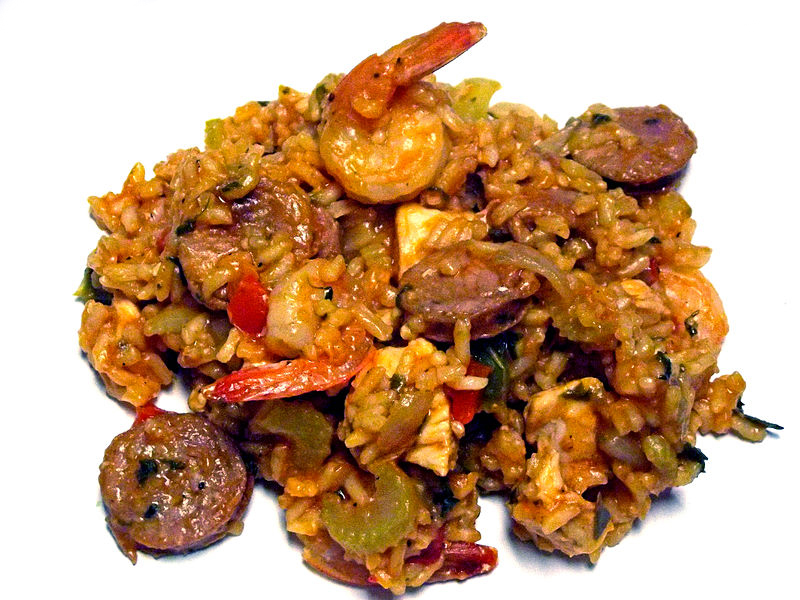
Jambalaya is a one-pot rice dish where meat, vegetables, and spices are cooked together with rice. Typical meats include smoked sausage such as andouille, chicken, and sometimes seafood like shrimp or crawfish. The base is often a mix of onion, celery, and bell pepper, known locally as the 'trinity.' Tomatoes are added in some versions, giving a reddish color. The dish is seasoned with a variety of spices and cooked until the rice absorbs the flavors. The result is a savory, hearty meal that can be moist or dry, depending on the style.
Where does Jambalaya come from?
Jambalaya originated in Louisiana during the colonial period, shaped by the blending of African, Spanish, and French cooking traditions. West African rice dishes like jollof rice, Spanish paella, and French pilau all contributed elements to jambalaya. Enslaved West Africans brought rice-growing knowledge and one-pot cooking techniques, while French and Spanish settlers introduced new ingredients and methods. The dish evolved in African-American, Creole, and Cajun communities, each adapting it to local tastes and available ingredients.
How is Jambalaya made?
To make jambalaya, cooks start by browning meat—often sausage and chicken—in a large pot. They add chopped onion, celery, and bell pepper, sometimes with garlic or other vegetables, and sauté until soft. Tomatoes may be included, especially in Creole versions. Stock and seasonings go in next, followed by uncooked rice. The mixture simmers until the rice is tender and has absorbed the flavors. In some recipes, seafood is added near the end. The dish can be finished on the stovetop or baked.


How and when is Jambalaya eaten?
Jambalaya is served hot as a main course, commonly for lunch or dinner. It is a popular dish at gatherings, festivals, and family meals in Louisiana and among communities with Creole, Cajun, or African-American roots. It is often made in large batches for sharing. Some versions are more soupy, while others are dry and fluffy. The dish is usually eaten on its own, but may be accompanied by bread or a simple salad.
Kinds of Jambalaya
There are two main styles: Creole jambalaya, which includes tomatoes and is common in New Orleans, and Cajun jambalaya, which leaves out tomatoes and has a brown color from caramelized meat and vegetables. African-American versions often use tomatoes and a mix of meats. Ingredients and seasonings vary by region and family tradition. Some cooks add seafood, others stick to chicken and sausage. The texture can range from moist to dry.
What Jambalaya means
Jambalaya is a symbol of Louisiana's diverse heritage, reflecting African, French, and Spanish influences. It is a staple at festivals and social gatherings, and appears in both everyday cooking and special occasions. The dish is closely tied to the identity of Creole, Cajun, and African-American communities. Its name comes from a Provençal word meaning 'mix-up,' fitting for a dish that blends many cultures and ingredients.
Questions people ask about Jambalaya
What is jambalaya made of?
Jambalaya is made with rice, meats such as sausage, chicken, or seafood, and a mix of vegetables like onion, celery, and bell pepper. Tomatoes and a variety of spices are also used, depending on the style.
Where does jambalaya come from?
Jambalaya comes from Louisiana in the United States. It developed from the blending of African, Spanish, and French culinary traditions during the colonial period.
What is the difference between Creole and Cajun jambalaya?
Creole jambalaya, common in New Orleans, includes tomatoes and has a reddish color. Cajun jambalaya, found more in rural Louisiana, does not use tomatoes and is brown from caramelized meats and vegetables.
Is jambalaya always made with meat?
Jambalaya usually includes meat such as sausage, chicken, or seafood, but the exact ingredients can vary by region and family recipe. Some versions may be adapted to be vegetarian.
How is jambalaya typically served?
Jambalaya is served hot as a main dish, often at lunch or dinner. It is popular at gatherings and festivals, and is usually eaten on its own or with bread.
Good reading and sources
- Encyclopaedia BritannicaArticle
- How Enslaved Chefs Helped Shape American CuisineSmithsonian Magazine, Article
The facts on this page come from the Wikipedia article "Jambalaya", written by its contributors and used under the CC BY-SA 4.0 licence, and from its Wikidata record (CC0). Thali rewrote the text in its own words, with AI assistance, and compares every page with the article to make sure no passage is copied. It may be reused under the same CC BY-SA 4.0 licence with a link back.
It may contain mistakes, and it is not dietary or allergy advice: recipes differ from cook to cook. If something is wrong, tell us. Last refreshed 2026-10-03.
More from the United States
All the food of the United States Pizza
🇮🇹 Italy and 4 moreFlatbread topped with tomato, cheese and baked at high heat
Main dish, Lunch, Dinner
Pizza
🇮🇹 Italy and 4 moreFlatbread topped with tomato, cheese and baked at high heat
Main dish, Lunch, Dinner
 HamburgerMeat
🇺🇸 United States and 1 moreA hot ground meat patty in a sliced bun, often with salad and sauces
Main dish, Lunch, Dinner
HamburgerMeat
🇺🇸 United States and 1 moreA hot ground meat patty in a sliced bun, often with salad and sauces
Main dish, Lunch, Dinner
 SpaghettiVegan
🇮🇹 Italy and 2 moreLong, thin pasta strands made from durum wheat and water
Noodle or pasta dish, Lunch, Dinner
SpaghettiVegan
🇮🇹 Italy and 2 moreLong, thin pasta strands made from durum wheat and water
Noodle or pasta dish, Lunch, Dinner
 Hot dogMeat
🇺🇸 United States and 2 moreA sausage in a sliced bun, topped with condiments and eaten hot
Street food, Lunch, Dinner
Hot dogMeat
🇺🇸 United States and 2 moreA sausage in a sliced bun, topped with condiments and eaten hot
Street food, Lunch, Dinner
Its cousins elsewhere
All main dishes Kebabكَبَاب
🇹🇷 Turkey and 5 moreGrilled or roasted meat, often on skewers, found across the Middle East and beyond
Main dish, Lunch, Dinner
Kebabكَبَاب
🇹🇷 Turkey and 5 moreGrilled or roasted meat, often on skewers, found across the Middle East and beyond
Main dish, Lunch, Dinner
 Freekehفريكة
🇵🇸 Palestine and 5 moreRoasted green durum wheat grains, a staple across the eastern Mediterranean
Main dish, Lunch, Dinner
Freekehفريكة
🇵🇸 Palestine and 5 moreRoasted green durum wheat grains, a staple across the eastern Mediterranean
Main dish, Lunch, Dinner
 Riz grasMeat
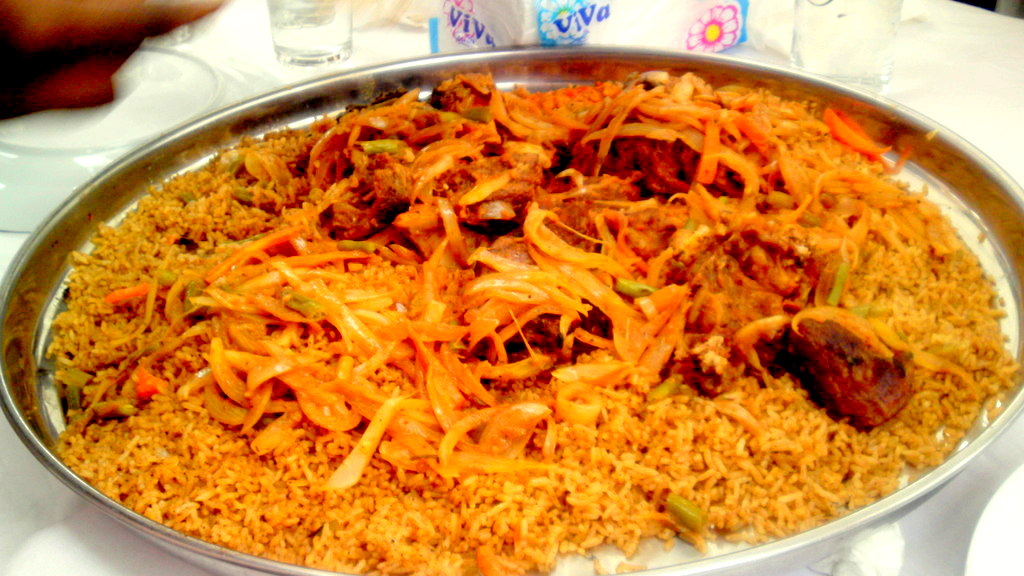
🇧🇫 Burkina Faso and 4 moreWest African rice cooked with meat and vegetables, served hot
Main dish, Lunch, Dinner
Riz grasMeat
🇧🇫 Burkina Faso and 4 moreWest African rice cooked with meat and vegetables, served hot
Main dish, Lunch, Dinner
 Lentil soupVegan
🇪🇬 Egypt and 5 moreA hearty soup made from lentils, often with vegetables and spices
Soup, Lunch, Dinner
Lentil soupVegan
🇪🇬 Egypt and 5 moreA hearty soup made from lentils, often with vegetables and spices
Soup, Lunch, Dinner