
Arepa
Cornmeal flatbread from Colombia and Venezuela, often split and filled
Arepa is a round, flat bread made from ground maize dough or cornmeal, central to the cuisines of Colombia and Venezuela. Eaten since pre-Columbian times, it can be grilled, baked, or fried, and is often split and filled with cheese, meats, or other ingredients. Arepas are enjoyed at any meal and come in many regional varieties.
- Arepas have been eaten in Colombia and Venezuela for thousands of years
- Made from maize flour, water, and salt, and cooked in many ways
- Can be split and filled with cheese, meats, eggs, or vegetables
- Over 75 regional varieties exist in Colombia alone
- A symbol of national identity in both Colombia and Venezuela
What is Arepa?
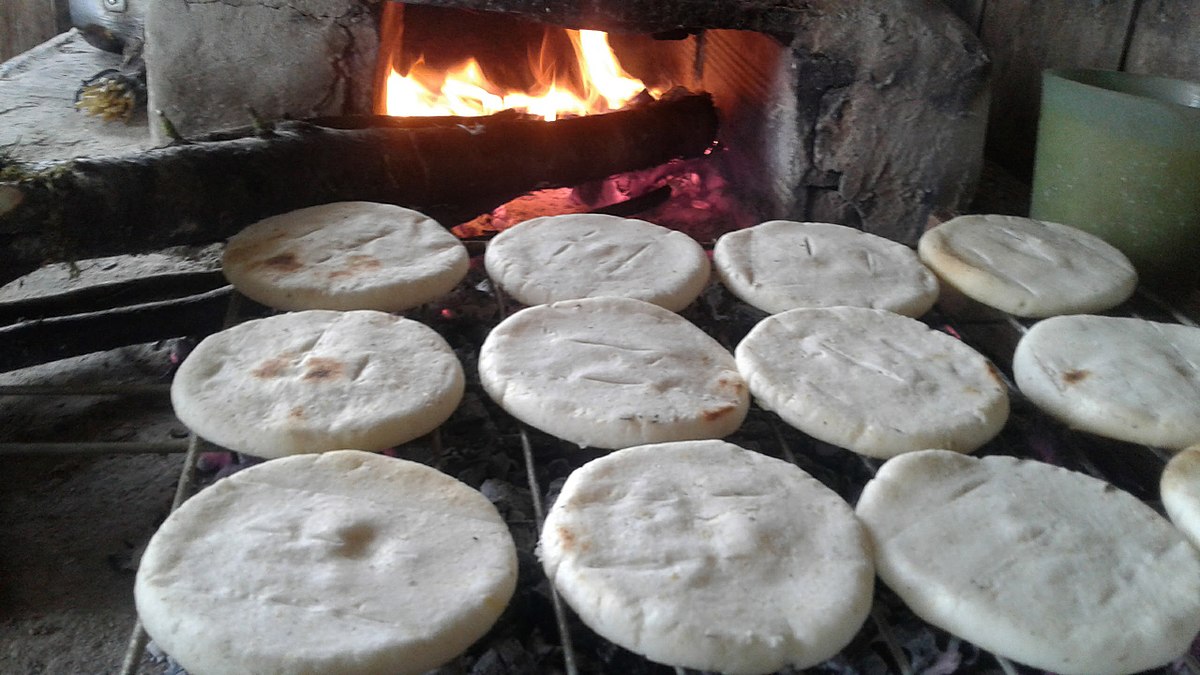
An arepa is a small, thick, round flatbread made from ground maize dough or cornmeal. Its surface is usually golden and slightly crisp, while the inside remains soft. Arepas can be grilled, baked, fried, boiled, or steamed, and are sometimes split open to hold fillings like cheese, meats, eggs, or avocado. The bread itself has a mild corn flavor and varies in size, color, and taste depending on the region and type of maize used. Some arepas are sweetened with sugar and anise, while others are savory. The texture and fillings change from place to place, making arepas a versatile and adaptable food.
Where does Arepa come from?
Arepas have been eaten in northern South America for thousands of years, with archaeological finds showing maize and cooking tools in what is now Colombia and Venezuela. The name comes from 'erepa', meaning cornbread in the Cumanagoto language. The basic method—making a dough from soaked, ground maize—has changed little since pre-Columbian times. Both Colombia and Venezuela claim deep roots for the arepa, and it remains a symbol of indigenous heritage and national identity in both countries. The dish spread to other regions, including Bolivia, Ecuador, and Panama, and has adapted to local tastes.
How is Arepa made?
Traditionally, arepas were made by soaking and grinding maize, but today most people use precooked maize flour, which is mixed with water and salt to form a dough. Sometimes oil, butter, eggs, or milk are added. The dough is shaped into round patties and then cooked—grilled, baked, or fried—until the outside is firm and lightly browned. Some versions use peeled corn, while others use different types of maize or even wheat flour. The cooked arepa can be eaten plain, topped with cheese or butter, or split and filled with various ingredients.


How and when is Arepa eaten?
Arepas are eaten throughout the day, from breakfast to dinner, and can be served as a main dish, a side, or a snack. In Colombia and Venezuela, they are often filled with cheese, meats, eggs, or vegetables, or topped with butter. Arepas are sold by street vendors, in restaurants, and in homes, and are a common part of daily meals. In some regions, they are a breakfast staple, while in others they appear at festivals or special occasions. The way they are eaten and the fillings used vary widely, reflecting local preferences and available ingredients.
Kinds of Arepa
There are dozens of regional and local arepa styles. Colombian varieties include arepa de choclo (sweet corn), arepa de queso (with cheese), and arepa con huevo (with egg). In Venezuela, arepas are often filled with beef, avocado, or cheese, and wheat flour arepas are found in the Andes. Puerto Rican arepas use wheat flour and coconut milk, while Bolivian and Costa Rican versions have their own twists. Some arepas are sweet, others savory, and fillings can range from simple butter to elaborate stews or seafood.
What Arepa means
Arepas are a symbol of national identity in both Colombia and Venezuela, celebrated in festivals and daily life. In Colombia, they are recognized as a cultural symbol and are part of the country's gastronomic heritage. The arepa is also a point of pride in Venezuela, where it is seen as a cornerstone of the diet and sold everywhere from street stalls to specialized restaurants called areperas. Festivals and competitions celebrate the many varieties, and the arepa's indigenous roots are often highlighted as a link to the region's history.
Questions people ask about Arepa
What is an arepa made of?
An arepa is made from ground maize dough or precooked maize flour mixed with water and salt. Sometimes oil, butter, eggs, or milk are added to the dough. The mixture is shaped into round patties and cooked by grilling, baking, or frying.
Where does the arepa come from?
Arepas originated in the region that is now Colombia and Venezuela, with evidence of their preparation dating back thousands of years. Both countries consider the arepa a key part of their culinary heritage.
How are arepas eaten?
Arepas can be eaten plain, topped with cheese or butter, or split and filled with ingredients like meats, cheese, eggs, or avocado. They are enjoyed at any meal—breakfast, lunch, dinner, or as a snack—and are sold by street vendors, in restaurants, and at home.
Are arepas always made from corn?
Most arepas are made from maize flour, but in some regions, like the Venezuelan Andes and Puerto Rico, wheat flour is used instead. The choice of flour and added ingredients varies by region and tradition.
Are there different types of arepas?
Yes, there are many regional varieties. In Colombia alone, there are over 75 styles, including arepa de queso (cheese), arepa de huevo (egg), and arepa de choclo (sweet corn). Venezuelan arepas are often filled with a wide range of ingredients.
Good reading and sources
The facts on this page come from the Wikipedia article "Arepa", written by its contributors and used under the CC BY-SA 4.0 licence, and from its Wikidata record (CC0). Thali rewrote the text in its own words, with AI assistance, and compares every page with the article to make sure no passage is copied. It may be reused under the same CC BY-SA 4.0 licence with a link back.
It may contain mistakes, and it is not dietary or allergy advice: recipes differ from cook to cook. If something is wrong, tell us. Last refreshed 2026-10-03.
More from Colombia
All the food of Colombia Carimañola
🇨🇴 Colombia and 1 moreDeep-fried yuca dough stuffed with meat or cheese
Street food, Breakfast, Snacks
Carimañola
🇨🇴 Colombia and 1 moreDeep-fried yuca dough stuffed with meat or cheese
Street food, Breakfast, Snacks
 Churrochurros
🇪🇸 Spain and 5 moreRidged, deep-fried dough sticks often eaten hot with chocolate or coffee
Sweet or dessert, Breakfast, Snacks
Churrochurros
🇪🇸 Spain and 5 moreRidged, deep-fried dough sticks often eaten hot with chocolate or coffee
Sweet or dessert, Breakfast, Snacks
 Empanada
🇪🇸 Spain and 5 morePastry turnovers filled with meat, cheese, or vegetables, baked or fried
Pie or savoury pastry, Lunch, Dinner
Empanada
🇪🇸 Spain and 5 morePastry turnovers filled with meat, cheese, or vegetables, baked or fried
Pie or savoury pastry, Lunch, Dinner
 CevicheFish or seafood
🇵🇪 Peru and 5 moreRaw fish or shellfish marinated in citrus juice and seasonings
Main dish, Lunch, Dinner
CevicheFish or seafood
🇵🇪 Peru and 5 moreRaw fish or shellfish marinated in citrus juice and seasonings
Main dish, Lunch, Dinner
Its cousins elsewhere
All breads BaguetteVegan
🇫🇷 France and 5 moreLong, thin French bread with a crisp crust and soft interior
Bread, Breakfast, Lunch
BaguetteVegan
🇫🇷 France and 5 moreLong, thin French bread with a crisp crust and soft interior
Bread, Breakfast, Lunch
 ChapatiVeganचपाती
🇮🇳 India and 4 moreUnleavened flatbread cooked on a griddle and served hot with meals
Bread, Breakfast, Lunch
ChapatiVeganचपाती
🇮🇳 India and 4 moreUnleavened flatbread cooked on a griddle and served hot with meals
Bread, Breakfast, Lunch
 PitaVegan
🇪🇬 Egypt and 5 moreRound, leavened flatbread baked from wheat flour, common across the Middle East and Mediterranean
Bread
PitaVegan
🇪🇬 Egypt and 5 moreRound, leavened flatbread baked from wheat flour, common across the Middle East and Mediterranean
Bread