Bibikkan
In its own language: බිබික්කන්
A dark, moist Sri Lankan cake made with coconut, jaggery and spices
Bibikkan is a traditional Sri Lankan cake made from shredded coconut, jaggery from toddy palm sap, semolina or rice flour, and spices. This dark, moist cake is prepared for festive and religious occasions such as Christmas, New Year's Eve, and both Sinhala and Tamil New Year.
- Made with shredded coconut, jaggery, semolina, and spices
- Traditionally served at Christmas and New Year celebrations
- Has Portuguese colonial origins in Sri Lanka
- Known for its dark color and moist texture
What is Bibikkan?
Bibikkan is a dark, moist cake from Sri Lanka, known for its rich coconut flavor and deep brown color. The cake is made by mixing shredded coconut, jaggery (an unrefined palm sugar), semolina or sometimes rice flour, and a blend of spices. The jaggery gives it a caramel-like sweetness and color, while the coconut adds texture. The finished cake is dense and aromatic, often served sliced.
Where does Bibikkan come from?
Bibikkan is thought to have been brought to Sri Lanka by the Portuguese, who colonized coastal areas from the early 16th to mid-17th century. The cake shares similarities with Bebinca from Goa and Bibingka from the Philippines, both coconut-based cakes linked to Portuguese influence. Traditionally, the Mount Lavinia area in Sri Lanka has been known for making Bibikkan, where it is also called Poranu appa.
How is Bibikkan made?
To make Bibikkan, grated or shredded coconut is mixed with jaggery syrup, dry roasted semolina or rice flour, and a blend of spices. The mixture is combined without the need for beating or whisking, making preparation straightforward. The batter is then poured into a pan and baked until set, resulting in a moist, dark cake that is cooled before serving.
How and when is Bibikkan eaten?
Bibikkan is most often prepared for festive times, especially Christmas, New Year's Eve, and the Sinhala and Tamil New Year. It is typically served cooled and sliced, either on its own or as part of a spread of sweets during celebrations. The cake is enjoyed by families and communities during these special occasions.
Kinds of Bibikkan
Some versions of Bibikkan use rice flour instead of semolina, and brown sugar may be used as a substitute for jaggery if needed. These variations can slightly change the texture and sweetness, but the core flavors of coconut and spice remain central to the cake.
What Bibikkan means
Bibikkan holds a special place in Sri Lankan festive life, marking religious and cultural celebrations. Its preparation and sharing are part of the traditions for Christmas and both Sinhala and Tamil New Year. The cake’s Portuguese roots and its local adaptations reflect Sri Lanka’s layered culinary history.
When Bibikkan is on the table
Questions people ask about Bibikkan
What is Bibikkan made of?
Bibikkan is made from shredded coconut, jaggery (from toddy palm sap), semolina or rice flour, and a mixture of spices.
Where does Bibikkan come from?
Bibikkan comes from Sri Lanka and is believed to have been introduced by the Portuguese during their colonial period.
When is Bibikkan usually eaten?
Bibikkan is commonly prepared and enjoyed during festive and religious occasions, especially Christmas, New Year's Eve, and the Sinhala and Tamil New Year.
What does Bibikkan taste like?
Bibikkan has a rich, caramel-like sweetness from jaggery, a pronounced coconut flavor, and aromatic spices, with a dense and moist texture.
Are there variations of Bibikkan?
Yes, some versions use rice flour instead of semolina, and brown sugar may be used in place of jaggery, but the main flavors remain coconut and spice.
Good reading and sources
The facts on this page come from the Wikipedia article "Bibikkan", written by its contributors and used under the CC BY-SA 4.0 licence, and from its Wikidata record (CC0). Thali rewrote the text in its own words, with AI assistance, and compares every page with the article to make sure no passage is copied. It may be reused under the same CC BY-SA 4.0 licence with a link back.
It may contain mistakes, and it is not dietary or allergy advice: recipes differ from cook to cook. If something is wrong, tell us. Last refreshed 2026-10-03.
More from Sri Lanka
All the food of Sri Lanka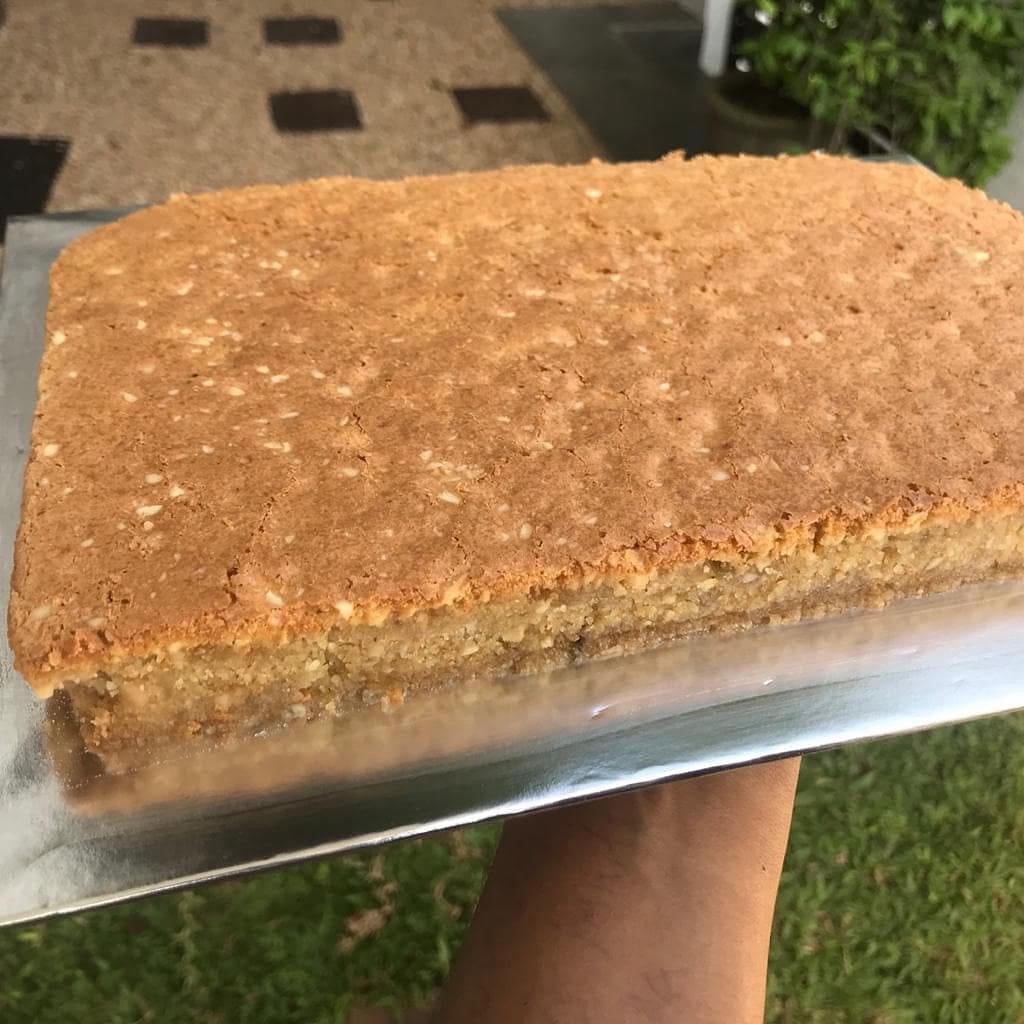 Love cakeVegetarian
🇱🇰 Sri LankaSri Lankan semolina cake with cashews, pumpkin preserve, and aromatic spices
Sweet or dessert
Love cakeVegetarian
🇱🇰 Sri LankaSri Lankan semolina cake with cashews, pumpkin preserve, and aromatic spices
Sweet or dessert
 ModakVegetarian
🇮🇳 India and 5 moreA sweet dumpling with coconut and jaggery, offered in Hindu and Buddhist rituals
Sweet or dessert, Snacks
ModakVegetarian
🇮🇳 India and 5 moreA sweet dumpling with coconut and jaggery, offered in Hindu and Buddhist rituals
Sweet or dessert, Snacks
Its cousins elsewhere
All sweets and desserts Christmas pudding
🇬🇧 United Kingdom and 4 moreSteamed or boiled sweet pudding with dried fruit, served at Christmas dinner
Sweet or dessert, Dinner
Christmas pudding
🇬🇧 United Kingdom and 4 moreSteamed or boiled sweet pudding with dried fruit, served at Christmas dinner
Sweet or dessert, Dinner
 StollenVegetarian
🇩🇪 Germany and 2 moreGerman fruit bread with dried fruit, nuts, spices and a sugar-dusted crust
Sweet or dessert, Tea time, Snacks
StollenVegetarian
🇩🇪 Germany and 2 moreGerman fruit bread with dried fruit, nuts, spices and a sugar-dusted crust
Sweet or dessert, Tea time, Snacks
 Qatayefقطايف
🇪🇬 Egypt and 5 moreSweet stuffed pancakes, folded and filled with nuts or cream, served for Ramadan
Sweet or dessert, Snacks, Tea time
Qatayefقطايف
🇪🇬 Egypt and 5 moreSweet stuffed pancakes, folded and filled with nuts or cream, served for Ramadan
Sweet or dessert, Snacks, Tea time
 MacaroonVegetarian
🇫🇷 France and 5 moreSweet biscuit or small cake made from nuts or coconut and egg whites
Sweet or dessert, Snacks, Tea time
MacaroonVegetarian
🇫🇷 France and 5 moreSweet biscuit or small cake made from nuts or coconut and egg whites
Sweet or dessert, Snacks, Tea time