Pastéis de Bacalhau
Deep-fried Portuguese cakes of salted cod and potato
Pastéis de Bacalhau are Portuguese deep-fried cakes made from salted cod, potato, eggs, parsley, and onion. Shaped with spoons and fried until crisp outside and creamy inside, they are served hot or cold as appetizers or as a meal, often with rice, salad, or olives.
- Made from salted cod, potato, eggs, parsley, and onion
- Shaped with two spoons into oval cakes
- Deep-fried until crisp outside and creamy inside
- Served hot or cold as appetizer or meal
What is Pastéis de Bacalhau?
Pastéis de Bacalhau are small, oval-shaped cakes made by mixing flaked salted cod with mashed potato, eggs, parsley, and onion. The mixture is shaped with two spoons, giving them a distinctive form. They are deep-fried until the outside is golden and crisp, while the inside stays soft and creamy. The flavor combines the mild saltiness of cod with the earthiness of potato and the freshness of herbs. Sometimes a touch of nutmeg is added for extra aroma.
Where does Pastéis de Bacalhau come from?
This dish comes from Portugal, where salted cod (bacalhau) has long been a staple. The tradition of preserving cod by salting and drying made it widely available, and combining it with potatoes and eggs created a filling, affordable food. Pastéis de Bacalhau have become a classic part of Portuguese cooking, enjoyed in homes, restaurants, and as street food. The use of two spoons to shape the cakes is a distinctive technique.
How is Pastéis de Bacalhau made?
To make Pastéis de Bacalhau, dried salted cod is soaked to remove excess salt, then cooked and flaked. Potatoes are boiled and mashed, then mixed with the cod, beaten eggs, chopped parsley, and finely diced onion. The mixture is formed into oval cakes using two spoons. These are deep-fried in hot oil until crisp and golden on the outside. They are drained before serving.
How and when is Pastéis de Bacalhau eaten?
These cod cakes are served hot or cold. They can be eaten as an appetizer before a meal or as a main dish. When served as a meal, they often come with plain or seasoned rice, a simple salad, and olives. Pastéis de Bacalhau are popular at gatherings and can also be found as a snack in cafes and markets. Their crisp shell and creamy center make them appealing at any time of day.
Kinds of Pastéis de Bacalhau
While the basic ingredients remain the same, some cooks add a hint of nutmeg for extra flavor. The cakes may be made larger or smaller, depending on whether they are meant as a snack or a main course. Presentation can vary, but the traditional oval shape made with two spoons is widely recognized. Outside Portugal, similar salt cod fritters appear in other cuisines, sometimes with local twists.
What Pastéis de Bacalhau means
Pastéis de Bacalhau are a beloved part of Portuguese food culture. They are enjoyed at family meals, in restaurants, and as street food. Their presence at gatherings and celebrations shows their popularity. The dish reflects the importance of bacalhau in Portuguese history and daily life, and making them is a skill passed down through generations.
Questions people ask about Pastéis de Bacalhau
What are Pastéis de Bacalhau made of?
They are made from dried and salted cod, potato, eggs, parsley, onion, and olive oil. Sometimes a bit of nutmeg is added for flavor.
Where do Pastéis de Bacalhau come from?
They are a traditional dish from Portugal, where salted cod is a staple ingredient in the cuisine.
How are Pastéis de Bacalhau served?
They can be served hot or cold, either as an appetizer or as a main dish with rice, salad, and olives.
What do Pastéis de Bacalhau taste like?
They have a crisp outer layer and a soft, creamy inside with a mild saltiness from the cod and freshness from herbs.
Are Pastéis de Bacalhau vegetarian?
No, they contain salted cod, which is fish, along with potato, eggs, and herbs.
Good reading and sources
- Bolinhos de bacalhau on WikipediaEncyclopedia
- More photos on Wikimedia CommonsPhotos
- Wikidata recordOpen data
The facts on this page come from the Wikipedia article "Bolinhos de bacalhau", written by its contributors and used under the CC BY-SA 4.0 licence, and from its Wikidata record (CC0). Thali rewrote the text in its own words, with AI assistance, and compares every page with the article to make sure no passage is copied. It may be reused under the same CC BY-SA 4.0 licence with a link back.
It may contain mistakes, and it is not dietary or allergy advice: recipes differ from cook to cook. If something is wrong, tell us. Last refreshed 2026-10-03.
More from Portugal
All the food of Portugal Cataplana
🇵🇹 PortugalSeafood and meat stew cooked in a sealed metal vessel from Portugal's Algarve
Main dish, Lunch, Dinner
Cataplana
🇵🇹 PortugalSeafood and meat stew cooked in a sealed metal vessel from Portugal's Algarve
Main dish, Lunch, Dinner
 Churrochurros
🇪🇸 Spain and 5 moreRidged, deep-fried dough sticks often eaten hot with chocolate or coffee
Sweet or dessert, Breakfast, Snacks
Churrochurros
🇪🇸 Spain and 5 moreRidged, deep-fried dough sticks often eaten hot with chocolate or coffee
Sweet or dessert, Breakfast, Snacks
 ChorizoMeat
🇪🇸 Spain and 5 moreA seasoned pork sausage from the Iberian Peninsula, made in many regional styles
Sausage or cured food, Breakfast, Lunch
ChorizoMeat
🇪🇸 Spain and 5 moreA seasoned pork sausage from the Iberian Peninsula, made in many regional styles
Sausage or cured food, Breakfast, Lunch
 Empanada
🇪🇸 Spain and 5 morePastry turnovers filled with meat, cheese, or vegetables, baked or fried
Pie or savoury pastry, Lunch, Dinner
Empanada
🇪🇸 Spain and 5 morePastry turnovers filled with meat, cheese, or vegetables, baked or fried
Pie or savoury pastry, Lunch, Dinner
Its cousins elsewhere
All main dishes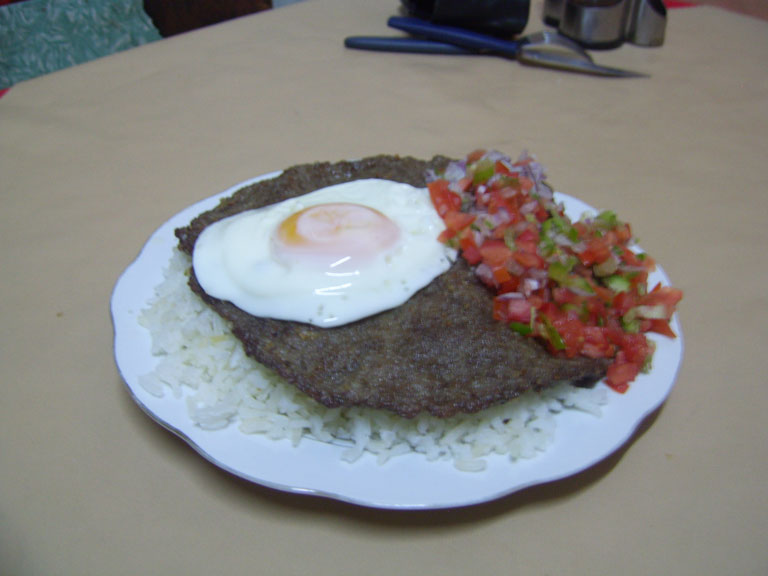 SilpanchoMeatSillp'anchu
🇧🇴 BoliviaLayered Bolivian meal with rice, potatoes, breaded meat, and fried eggs
Main dish, Lunch, Dinner
SilpanchoMeatSillp'anchu
🇧🇴 BoliviaLayered Bolivian meal with rice, potatoes, breaded meat, and fried eggs
Main dish, Lunch, Dinner
 Börek
🇹🇷 Turkey and 5 moreFlaky pastry filled with cheese, meat or vegetables, baked or fried
Pie or savoury pastry, Breakfast, Lunch
Börek
🇹🇷 Turkey and 5 moreFlaky pastry filled with cheese, meat or vegetables, baked or fried
Pie or savoury pastry, Breakfast, Lunch
 ShakshukaVegetarian
🇹🇳 Tunisia and 5 moreEggs poached in a spiced tomato and pepper sauce from North Africa
Main dish, Breakfast, Dinner
ShakshukaVegetarian
🇹🇳 Tunisia and 5 moreEggs poached in a spiced tomato and pepper sauce from North Africa
Main dish, Breakfast, Dinner
 Shchiщи
🇷🇺 Russia and 1 moreRussian cabbage soup, made with fresh or fermented cabbage
Soup, Lunch, Dinner
Shchiщи
🇷🇺 Russia and 1 moreRussian cabbage soup, made with fresh or fermented cabbage
Soup, Lunch, Dinner