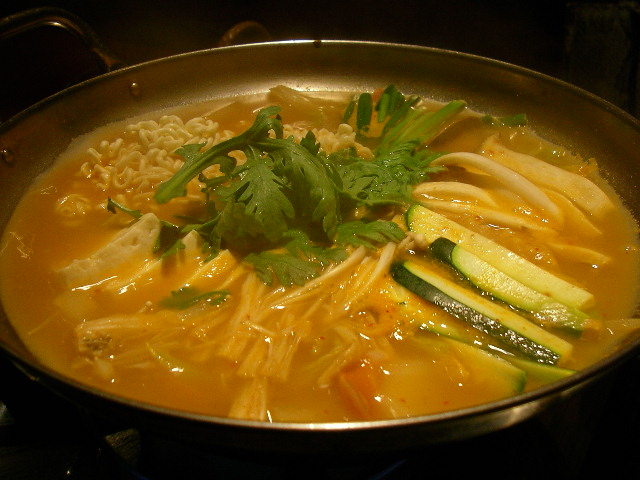
Budae-jjigae
In its own language: 부대찌개
A spicy Korean stew with sausages, Spam, kimchi and instant noodles
Budae-jjigae is a Korean stew that brings together sausages, Spam, kimchi, instant noodles, and other ingredients in a spicy broth. Originating in South Korea after the Korean War, it was first made with surplus foods from U.S. military bases. Today, it is a popular comfort food and is often shared at the table among friends or family.
- Created after the Korean War using U.S. military surplus foods
- Commonly includes Spam, sausage, kimchi, and instant noodles
- Often cooked and shared at the table in a large pot
- Uijeongbu is famous for its budae-jjigae restaurants
- Now a popular comfort food in South Korea
What is Budae-jjigae?
Budae-jjigae is a hearty Korean stew that mixes both local and Western ingredients. It usually includes sausages, Spam, ham, baked beans, kimchi (fermented vegetables), instant noodles, gochujang (a spicy red pepper paste), and American cheese. The stew is cooked in a large pot and often shared at the table. The broth is spicy and rich, with the flavors of preserved meats, tangy kimchi, and creamy melted cheese blending together. The dish is flexible, with restaurants and home cooks adding other items like tofu, mushrooms, or vegetables according to taste.
Where does Budae-jjigae come from?
Budae-jjigae was created in South Korea during a period of poverty following the Korean War. Food was scarce, and people made use of surplus canned and processed foods from U.S. military bases, such as Spam and sausages. The dish grew out of these circumstances, combining these new ingredients with traditional Korean flavors like kimchi and gochujang. Its exact birthplace is uncertain, but Uijeongbu is one city that claims to have first made it. Over time, budae-jjigae shifted from a survival food to a beloved comfort dish, especially after Spam became widely available in 1987.
How is Budae-jjigae made?
To make budae-jjigae, a broth is prepared, often using water or a meat or fish-based stock. A seasoning paste with gochujang, soy sauce, and sugar is added for flavor. Chopped meats like sausage, ham, Spam, and sometimes bacon are combined with kimchi, baked beans, instant noodles, and cheese. The ingredients are simmered together in a large pot, with noodles added either before or after the broth boils. The stew is commonly cooked and served at the table, allowing diners to add extra ingredients as they eat.


How and when is Budae-jjigae eaten?
Budae-jjigae is usually enjoyed as a shared meal, with a group gathered around a simmering pot. It is popular for lunch or dinner and is often eaten as an accompaniment to alcoholic drinks (anju). In restaurants, the dish is served with a set of base ingredients, and diners can order extra items to add. Its spicy, savory, and slightly creamy flavor makes it a favorite comfort food, especially in colder weather. It is eaten with rice and sometimes side dishes like pickled vegetables.
Kinds of Budae-jjigae
There are many versions of budae-jjigae. Some restaurants use tomato soup as a base or create stir-fried versions without broth. Johnson-tang, a variant named after U.S. President Lyndon B. Johnson, uses napa cabbage instead of kimchi and always includes cheese. Uijeongbu and Songtan styles differ in their use of gochujang and vegetables. Vegan versions exist, and some cooks substitute or leave out processed meats. Instant meal kits and home meal replacements are now available for easy preparation.
What Budae-jjigae means
Budae-jjigae reflects a period of hardship in Korean history, but today it is a symbol of resilience and creativity. It is a staple in many Korean restaurants, especially in Uijeongbu, which has a street dedicated to the dish. Chains like Nolboo have made it widely accessible. While its origins were humble, budae-jjigae is now a beloved part of South Korea’s food culture, enjoyed for its communal nature and adaptability.
Questions people ask about Budae-jjigae
What is budae-jjigae made of?
Budae-jjigae is made with a mix of sausages, ham, Spam, baked beans, kimchi, instant noodles, gochujang (spicy pepper paste), and American cheese. Other ingredients like tofu, vegetables, and mushrooms are sometimes added.
Where did budae-jjigae originate?
Budae-jjigae originated in South Korea after the Korean War, when people used surplus foods from U.S. military bases. The city of Uijeongbu is especially known for the dish.
Is budae-jjigae always spicy?
Budae-jjigae is usually spicy because of gochujang and kimchi, but the level of heat can be adjusted. Some versions use milder broths or less pepper paste.
Is budae-jjigae vegetarian or vegan?
Traditional budae-jjigae contains meat and processed meats, but vegan and vegetarian versions exist, using plant-based broth and omitting animal products.
How is budae-jjigae typically served?
It is often cooked and served in a large pot at the table, with diners sharing from the same pot. Extra ingredients can be added during the meal.
Good reading and sources
- The Korean Comfort Food at the Intersection of War and PeaceEater, Article
- How a South Korean comfort food went globalBBC, Article
The facts on this page come from the Wikipedia article "Budae-jjigae", written by its contributors and used under the CC BY-SA 4.0 licence, and from its Wikidata record (CC0). Thali rewrote the text in its own words, with AI assistance, and compares every page with the article to make sure no passage is copied. It may be reused under the same CC BY-SA 4.0 licence with a link back.
It may contain mistakes, and it is not dietary or allergy advice: recipes differ from cook to cook. If something is wrong, tell us. Last refreshed 2026-10-03.
More from South Korea
All the food of South Korea KabochaVeganカボチャ
🇯🇵 Japan and 5 moreA sweet, dense winter squash with edible skin, used in Japanese and Asian cooking
Main dish, Lunch, Dinner
KabochaVeganカボチャ
🇯🇵 Japan and 5 moreA sweet, dense winter squash with edible skin, used in Japanese and Asian cooking
Main dish, Lunch, Dinner
 Bibimbap비빔밥
🇰🇷 South Korea and 1 moreKorean rice bowl with mixed vegetables, meat, egg and chili paste
Main dish, Lunch, Dinner
Bibimbap비빔밥
🇰🇷 South Korea and 1 moreKorean rice bowl with mixed vegetables, meat, egg and chili paste
Main dish, Lunch, Dinner
 Udonうどん / 饂飩
🇯🇵 Japan and 4 moreThick wheat noodles served hot or cold in Japanese cooking
Noodle or pasta dish, Lunch, Dinner
Udonうどん / 饂飩
🇯🇵 Japan and 4 moreThick wheat noodles served hot or cold in Japanese cooking
Noodle or pasta dish, Lunch, Dinner
Its cousins elsewhere
All soups Pot-au-feu
🇫🇷 FranceFrench boiled meat and vegetable stew served in two courses
Stew or curry, Lunch, Dinner
Pot-au-feu
🇫🇷 FranceFrench boiled meat and vegetable stew served in two courses
Stew or curry, Lunch, Dinner
 Sour rye soup
🇵🇱 Poland and 3 moreA tangy soup made from fermented cereals, common in Central and Eastern Europe
Soup, Lunch, Dinner
Sour rye soup
🇵🇱 Poland and 3 moreA tangy soup made from fermented cereals, common in Central and Eastern Europe
Soup, Lunch, Dinner
 EscudellaMeat
🇪🇸 SpainCatalan and Valencian soup with meat, vegetables, and a large spiced meatball
Soup, Lunch, Dinner
EscudellaMeat
🇪🇸 SpainCatalan and Valencian soup with meat, vegetables, and a large spiced meatball
Soup, Lunch, Dinner
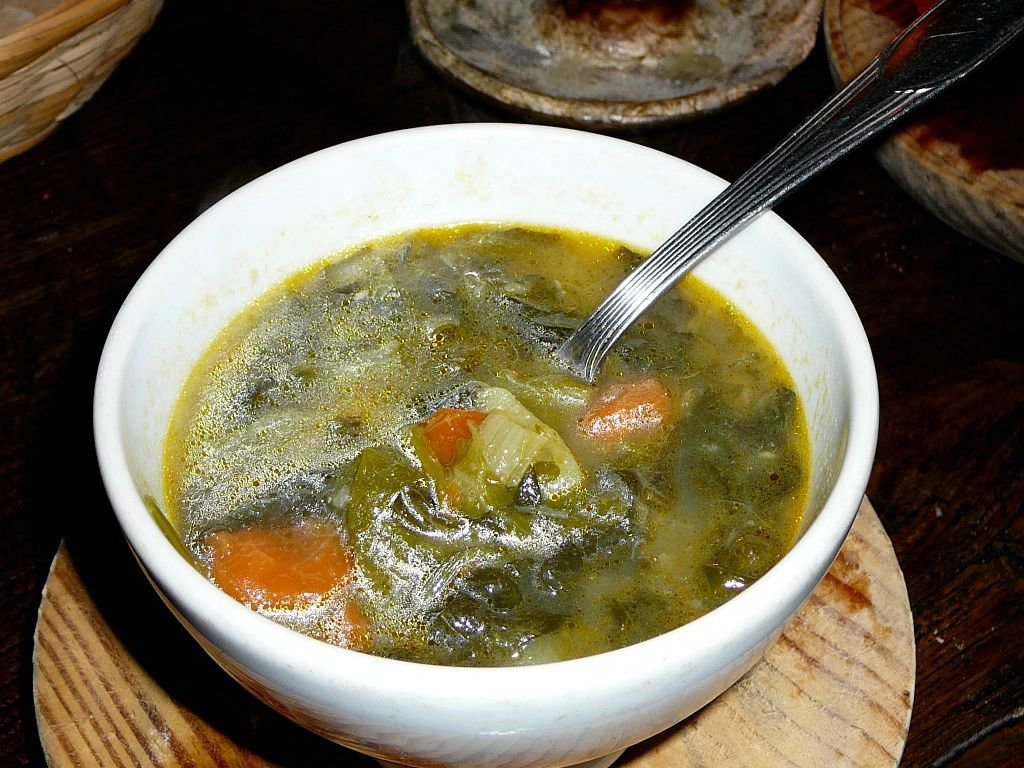 Caldo galegoMeat
🇪🇸 SpainHearty Galician soup with greens, potatoes, beans and pork
Soup, Lunch, Dinner
Caldo galegoMeat
🇪🇸 SpainHearty Galician soup with greens, potatoes, beans and pork
Soup, Lunch, Dinner