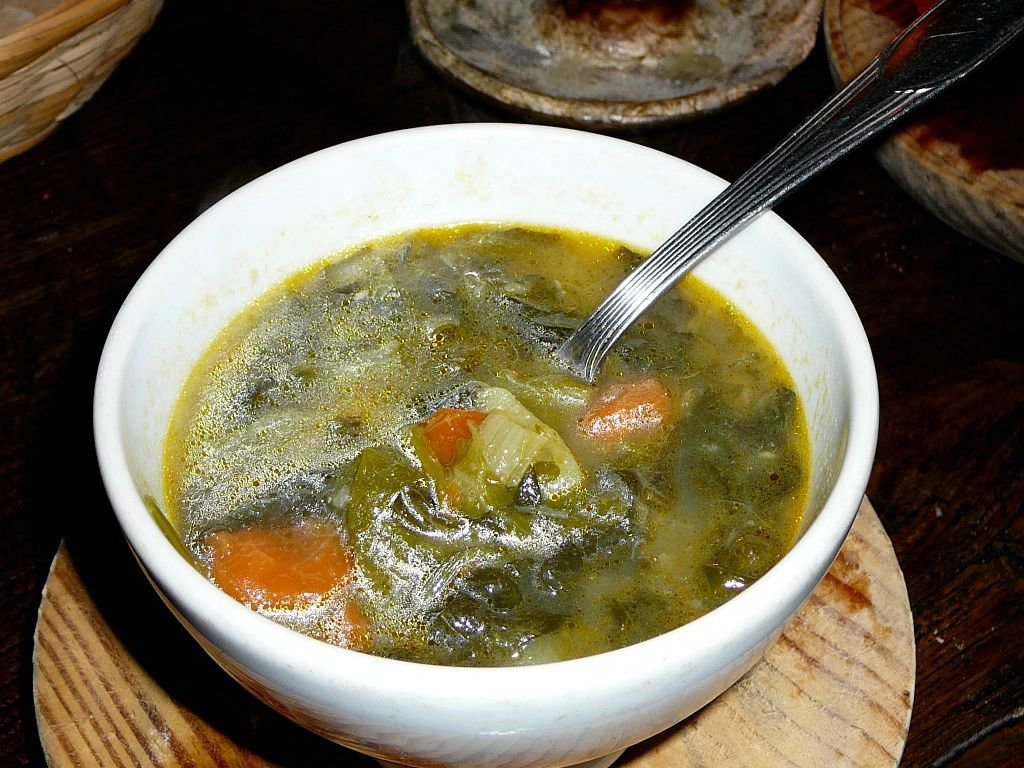
Caldo galego
Hearty Galician soup with greens, potatoes, beans and pork
Caldo galego is a traditional soup from Galicia, Spain, made with greens such as cabbage or turnip tops, potatoes, white beans, and fatty pork. Served hot, it is a staple at lunch and sometimes dinner, often enjoyed as a starter in earthen bowls.
- Traditional soup from Galicia, Spain
- Made with greens, potatoes, beans, and pork
- Often served hot in earthen bowls
- Related to Portuguese caldo verde
- Has several local variations
What is Caldo galego?
Caldo galego is a rustic soup from Galicia in northwest Spain. Its base is a mix of leafy greens—often cabbage, collard greens, turnip greens, or rapini—combined with potatoes and white beans. Pork fat or lard gives it richness, and pieces of pork, chorizo, ham, or bacon add depth and a savory note. The soup is thick and hearty, with a pale greenish color from the greens. It is warming and filling, with a mild earthy flavor from the vegetables and a smoky, meaty undertone from the pork.
Where does Caldo galego come from?
This soup comes from Galicia, a region in Spain known for its green landscape and cool climate. Caldo galego is considered a local version of Portugal’s caldo verde, but with the addition of beans and turnip greens. It reflects the region’s use of seasonal vegetables and pork products, which are common in Galician cooking. The dish has been a staple for generations, evolving with what was available in home gardens and farms.
How is Caldo galego made?
To make caldo galego, greens such as cabbage, collards, or turnip tops are chopped and simmered with potatoes and white beans. Lard or pork fat is added for richness, and pieces of pork, chorizo, ham, or bacon are often included for extra flavor. The soup is cooked until the vegetables are tender and the flavors meld. It is traditionally ladled into cuncas, which are small earthenware bowls.

How and when is Caldo galego eaten?
Caldo galego is usually served hot as a first course at lunch, which is the main meal of the day in Spain, and sometimes at dinner. It is a common everyday dish, especially in colder months. The soup is often enjoyed with bread and served in earthen bowls, adding to its rustic feel. It is eaten at home and in local restaurants across Galicia.
Kinds of Caldo galego
There are several local versions of caldo galego, depending on what is in season. Caldo branco is a variation that uses chickpeas along with beans. Caldo de castañas is made with chestnuts, giving it a slightly sweet flavor. Other versions, such as caldo chirlo or vigueiro, reflect local preferences or ingredient availability.
What Caldo galego means
Caldo galego is a symbol of Galician home cooking and is closely tied to the region’s rural traditions. It is a comforting dish that brings families together, especially during colder weather. Serving it in cuncas, or earthen bowls, is a nod to local custom. The soup’s simplicity and reliance on local produce make it a point of pride in Galician cuisine.
Questions people ask about Caldo galego
What is caldo galego made of?
Caldo galego is made with greens such as cabbage or turnip tops, potatoes, white beans, and fatty pork. It often includes chorizo, ham, or bacon for extra flavor.
Where does caldo galego come from?
Caldo galego comes from Galicia, a region in northwest Spain. It is a traditional part of Galician cuisine.
How is caldo galego served?
It is served hot, usually as a starter at lunch or dinner, and traditionally in small earthen bowls called cuncas.
Are there different versions of caldo galego?
Yes, variations include caldo branco with chickpeas and beans, and caldo de castañas with chestnuts. Other versions use different greens or local ingredients.
Is caldo galego vegetarian?
No, it typically contains pork fat and pieces of pork, chorizo, ham, or bacon, making it a meat-based soup.
Good reading and sources
The facts on this page come from the Wikipedia article "Caldo galego", written by its contributors and used under the CC BY-SA 4.0 licence, and from its Wikidata record (CC0). Thali rewrote the text in its own words, with AI assistance, and compares every page with the article to make sure no passage is copied. It may be reused under the same CC BY-SA 4.0 licence with a link back.
It may contain mistakes, and it is not dietary or allergy advice: recipes differ from cook to cook. If something is wrong, tell us. Last refreshed 2026-10-03.
More from Spain
All the food of Spain GazpachoVegan
🇪🇸 Spain and 1 moreChilled soup of blended raw vegetables, served cold in Spain and Portugal
Soup, Lunch, Dinner
GazpachoVegan
🇪🇸 Spain and 1 moreChilled soup of blended raw vegetables, served cold in Spain and Portugal
Soup, Lunch, Dinner
 Avgolemonoαυγολέμονο
🇬🇷 Greece and 4 moreGreek soup or sauce thickened with egg and lemon
Soup, Lunch, Dinner
Avgolemonoαυγολέμονο
🇬🇷 Greece and 4 moreGreek soup or sauce thickened with egg and lemon
Soup, Lunch, Dinner
 SalmorejoVegetariansalmorejo cordobés
🇪🇸 SpainThick cold tomato and bread soup from Córdoba, Andalusia
Soup, Lunch, Dinner
SalmorejoVegetariansalmorejo cordobés
🇪🇸 SpainThick cold tomato and bread soup from Córdoba, Andalusia
Soup, Lunch, Dinner
 AjoblancoVegan
🇪🇸 SpainChilled Andalusian soup of almonds, bread, garlic and olive oil
Soup, Lunch, Dinner
AjoblancoVegan
🇪🇸 SpainChilled Andalusian soup of almonds, bread, garlic and olive oil
Soup, Lunch, Dinner
Its cousins elsewhere
All soups Cabbage soup
🇷🇺 Russia and 4 moreA hot soup made with cabbage or sauerkraut, common in Eastern and Central Europe
Soup, Lunch, Dinner
Cabbage soup
🇷🇺 Russia and 4 moreA hot soup made with cabbage or sauerkraut, common in Eastern and Central Europe
Soup, Lunch, Dinner
 Boil upMeatKōhua kai
🇳🇿 New ZealandA Māori soup of meat, greens, root vegetables and dumplings boiled together
Soup, Lunch, Dinner
Boil upMeatKōhua kai
🇳🇿 New ZealandA Māori soup of meat, greens, root vegetables and dumplings boiled together
Soup, Lunch, Dinner
 NilagaMeat
🇵🇭 PhilippinesPhilippine soup of boiled beef or pork with vegetables
Soup, Lunch, Dinner
NilagaMeat
🇵🇭 PhilippinesPhilippine soup of boiled beef or pork with vegetables
Soup, Lunch, Dinner
 Shchiщи
🇷🇺 Russia and 1 moreRussian cabbage soup, made with fresh or fermented cabbage
Soup, Lunch, Dinner
Shchiщи
🇷🇺 Russia and 1 moreRussian cabbage soup, made with fresh or fermented cabbage
Soup, Lunch, Dinner