
Bush bread
Australian Aboriginal flatbread baked in campfire ashes from ground wild seeds
Bush bread is an ancient Australian staple prepared by Aboriginal women from wild seeds, nuts, or tubers crushed into meal and moistened into dough. Baked directly in campfire embers or consumed raw, it supplied vital protein and carbohydrates across diverse landscapes.
- Archaeologists have discovered Australian seed-grinding stones as old as fifty thousand years.
- Making flour was traditionally shared women's work using wooden coolamon vessels and grinding slabs.
- In the Kimberley, women gathered seeds already husked and collected outside harvester ant nests.
- Cycad palm seeds required up to five days of water leaching to wash away dangerous toxins before baking.
What is Bush bread?
Bush bread covers the wide family of flatbreads and cakes crafted across Australia by Aboriginal communities. Made without commercial leavening, it relies on wild grains, legumes, tree nuts, or starchy underground stems. Once mixed with water into a thick paste, the dough is either shaped into modest buns, flattened, or turned into larger round loaves. The finished loaf has a firm, charred exterior from its contact with hearth embers and a dense interior packed with sustained carbohydrate and protein value.
Where does Bush bread come from?
Indigenous Australians have created seedcakes for tens of millennia, as proven by grinding millstones dating back as far as fifty thousand years. Handed down across generations, this sustenance formed a core element of desert and woodland survival. Gathering and processing raw botanicals was historically women's collaborative labour. Following European settlement and the widespread availability of commercially bagged wheat flour, the laborious traditional milling routines dwindled, though women continued making classic seed loaves in Central Australia into the twentieth century.
How is Bush bread made?
Preparation begins by beating ripe grasses or seedpods with sticks, or scooping seeds cleaned by harvester ants. Women separate chaff by shaking grain inside a wooden dish called a coolamon. They then pulverise the dry grains or soaked seeds on a flat stone slab to yield coarse flour. Blended with water, the meal forms a dough. This paste is placed right into burning ashes and glowing embers to bake through, although cooks occasionally ate the moist dough unbaked or baked loaves to carry during long expeditions.
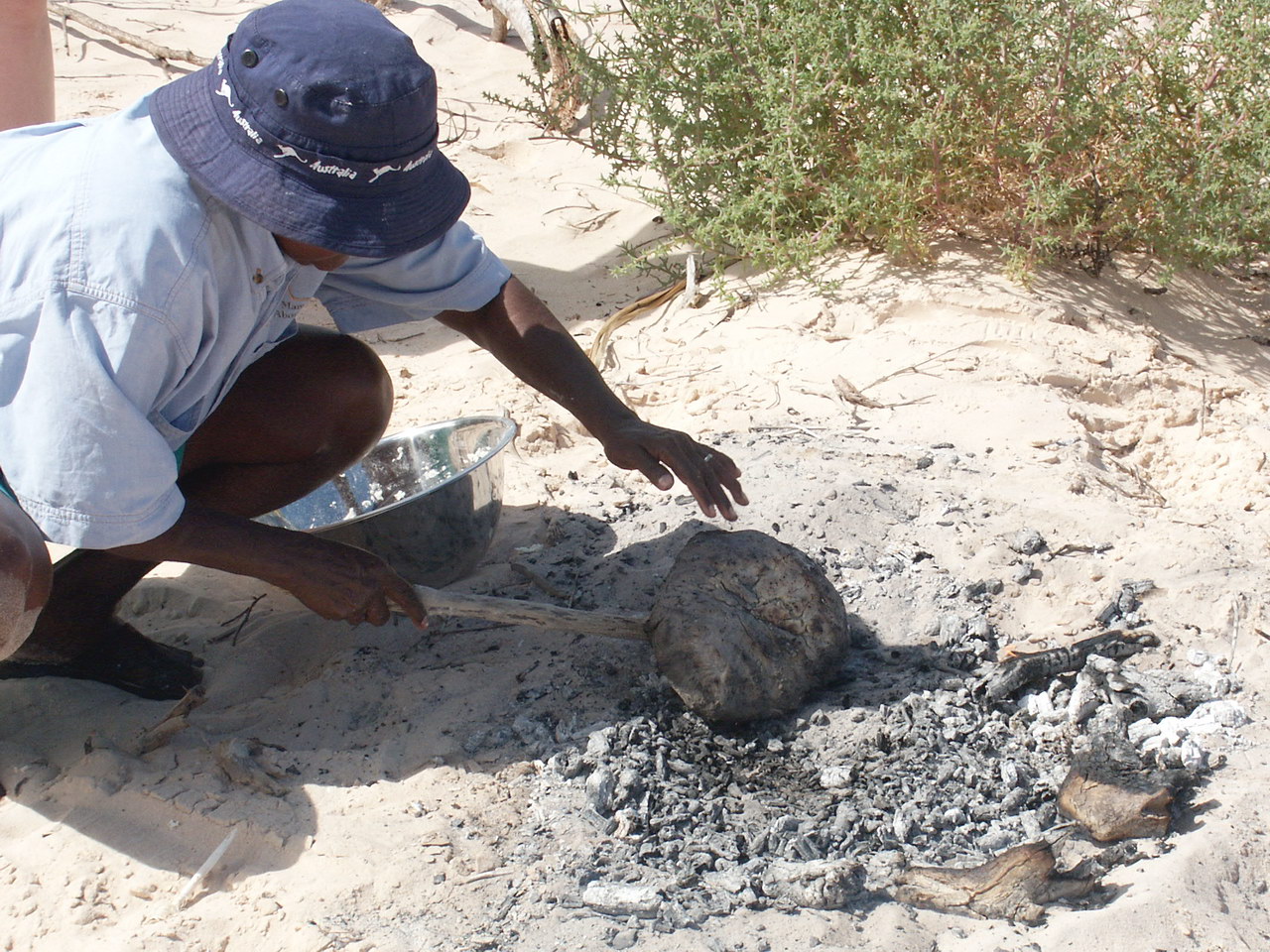
How and when is Bush bread eaten?
Aboriginal groups relied on these loaves as an everyday nutritional anchor during seasonal foraging rounds. When journeys were imminent, baking the bread helped keep the food stable on the trail. In the nineteenth century, European expeditioners such as Burke and Wills were given similar loaves made of crushed nardoo sporocarps by the Yandruwandha people, but the explorers fell fatally ill, likely because they did not know how to remove natural plant toxins before baking.
Kinds of Bush bread
Recipes reflect the local flora. Desert groups gather spinifex, native millet, pigwig, and acacia beans such as mulga. Northern communities in the Top End grind water lily seeds, lotus roots, or taro, and detoxify cycad seeds through prolonged water baths before forming loaves. In subtropical Queensland, mountain people turned bunya pine nuts into bread, while acacia seeds often required roasting before dry grinding.
What Bush bread means
The custom of baking in open coals survives today in modern campfire dampers and small buns known as johnny cakes. Beyond simple nourishment, the craft embodied deep ecological and chemical knowledge held by women, who understood how to safely extract nourishment from poisonous botanicals, anticipate ant harvesting cycles, and sustain balanced nutrition across demanding desert and wetland habitats.
Questions people ask about Bush bread
What is bush bread made of?
It is made of wild seeds, grains, roots, or nuts ground on stones and mixed with water. Typical varieties include native millet, kangaroo grass, wattleseed, lotus roots, and bunya pine seeds.
Where does bush bread come from?
It originates across the varied lands of Australia, developed tens of thousands of years ago by diverse Aboriginal Australian communities.
How is bush bread cooked?
A simple dough made of crushed seeds and water is shaped into buns or loaves, then buried directly inside hot camp ashes and embers to bake.
What is the difference between bush bread and damper?
Damper is usually the term used for breads made by non-Indigenous settlers using milled wheat flour, though it borrowed the traditional technique of baking in campfire coals.
Good reading and sources
The facts on this page come from the Wikipedia article "Bush bread", written by its contributors and used under the CC BY-SA 4.0 licence, and from its Wikidata record (CC0). EveryThali rewrote the text in its own words, with AI assistance, and compares every page with the article to make sure no passage is copied. It may be reused under the same CC BY-SA 4.0 licence with a link back.
It may contain mistakes, and it is not dietary or allergy advice: recipes differ from cook to cook. If something is wrong, tell us. Last refreshed 2026-10-04.
More from Australia
All the food of Australia Scone
🇬🇧 United Kingdom and 5 moreA quick bread, sweet or savoury, served with tea in Britain and beyond
Bread, Tea time, Breakfast
Scone
🇬🇧 United Kingdom and 5 moreA quick bread, sweet or savoury, served with tea in Britain and beyond
Bread, Tea time, Breakfast
 Hot cross bunVegetarian
🇬🇧 United Kingdom and 3 moreA sweet, spiced bun with a cross on top, eaten at Easter
Bread, Breakfast, Snacks
Hot cross bunVegetarian
🇬🇧 United Kingdom and 3 moreA sweet, spiced bun with a cross on top, eaten at Easter
Bread, Breakfast, Snacks
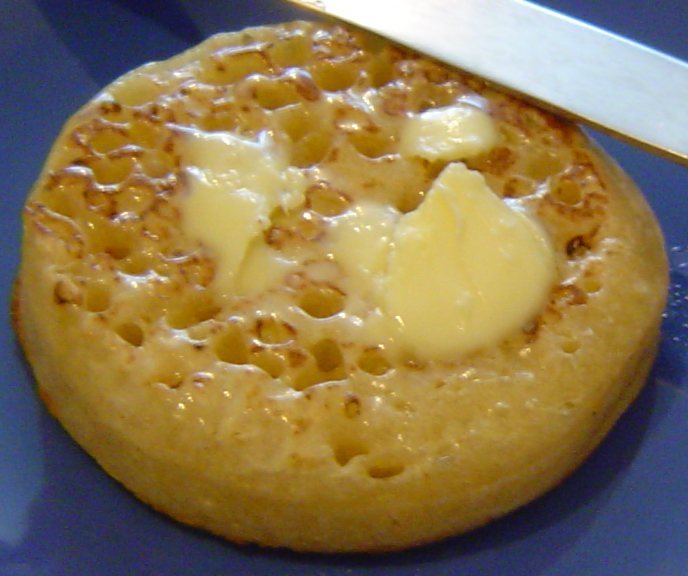 CrumpetVegetarian
🇬🇧 United Kingdom and 5 moreRound, spongy griddle bread with a porous top, often eaten toasted with butter
Bread, Breakfast, Snacks
DamperVegan
🇦🇺 AustraliaSimple wheat bread baked in campfire ashes, a staple of Australia's bush history
Bread
CrumpetVegetarian
🇬🇧 United Kingdom and 5 moreRound, spongy griddle bread with a porous top, often eaten toasted with butter
Bread, Breakfast, Snacks
DamperVegan
🇦🇺 AustraliaSimple wheat bread baked in campfire ashes, a staple of Australia's bush history
Bread
Its cousins elsewhere
All breads CrispbreadVegan
🇸🇪 Sweden and 4 moreA dry, flat rye bread that keeps for months and is eaten across the Nordic countries
Bread, Breakfast, Lunch
Naanनान
🇮🇳 India and 5 moreLeavened flatbread baked in a tandoor or on a pan, soft and spotted with golden brown
Bread, Lunch, Dinner
CrispbreadVegan
🇸🇪 Sweden and 4 moreA dry, flat rye bread that keeps for months and is eaten across the Nordic countries
Bread, Breakfast, Lunch
Naanनान
🇮🇳 India and 5 moreLeavened flatbread baked in a tandoor or on a pan, soft and spotted with golden brown
Bread, Lunch, Dinner
 BaguetteVegan
🇫🇷 France and 5 moreLong, thin French bread with a crisp crust and soft interior
Bread, Breakfast, Lunch
BaguetteVegan
🇫🇷 France and 5 moreLong, thin French bread with a crisp crust and soft interior
Bread, Breakfast, Lunch
 ChapatiVeganचपाती
🇮🇳 India and 4 moreUnleavened flatbread cooked on a griddle and served hot with meals
Bread, Breakfast, Lunch
ChapatiVeganचपाती
🇮🇳 India and 4 moreUnleavened flatbread cooked on a griddle and served hot with meals
Bread, Breakfast, Lunch