Caramelized pork and eggs
Vietnamese pork and eggs braised in coconut juice and caramel sauce
Caramelized pork and eggs, known as thịt kho tàu in Vietnam, is a dish of pork and boiled eggs slowly braised in coconut juice and caramel sauce. Eaten daily across Vietnam, it is especially important during Tết, the Vietnamese New Year, when it is offered to ancestors before being shared by the family.
- Braised pork and eggs in coconut juice and caramel sauce
- A traditional offering for ancestors during Tết
- Eaten daily and at special occasions across Vietnam
- Similar dishes found in Cambodia and Laos
- Distinct for its sweet-salty flavor and glossy brown sauce
What is Caramelized pork and eggs?
Caramelized pork and eggs is a Vietnamese dish made with chunks of pork and whole boiled eggs, all simmered together in coconut juice and a caramel sauce. The pork is usually marinated first, then cooked until tender, while the eggs soak up the sweet, salty, and savory flavors of the braising liquid. The finished stew is glossy and brown, with a balance of sweetness from the coconut and caramel, and saltiness from fish sauce. It is a familiar sight on Vietnamese tables.
Where does Caramelized pork and eggs come from?
The origins of thịt kho tàu are debated. One story links it to Vietnamese fishermen, who prepared the dish for long sea journeys because it kept well. Another view connects the name 'tàu' to Chinese immigrants, suggesting the dish was adapted from a Fujianese pork and egg stew called tau yu bak, but with Vietnamese ingredients like coconut juice and fish sauce. A third explanation claims 'tàu' describes the dish’s sweet-salty taste in the dialect of southwestern Vietnam. All agree the dish is Vietnamese in character.
How is Caramelized pork and eggs made?
To make caramelized pork and eggs, pork is cut into pieces and marinated, then simmered with boiled eggs in a mixture of coconut juice, fish sauce, and caramel sauce (nước màu). The caramel sauce gives the dish its deep color and a hint of bitterness to balance the sweetness. The coconut juice acts as the main braising liquid, infusing the meat and eggs with a subtle, sweet flavor. The stew is cooked slowly until the pork is soft and the eggs are tinted brown.
How and when is Caramelized pork and eggs eaten?
This dish is eaten as a main course and is common at any meal in Vietnam, from breakfast to dinner. During Tết, the Vietnamese New Year, it is prepared in large batches and first offered to ancestors on family altars before being served to everyone. It is typically enjoyed with steamed rice, and sometimes with pickled vegetables to cut through the richness. The dish is shared among family, symbolizing togetherness and respect for tradition.
Kinds of Caramelized pork and eggs
There are several variations of this dish in Vietnam. Some versions use black pepper (thịt kho tiêu), others add fish sauce (thịt kho nước mắm), or use fermented soybean paste (thịt kho tương). In Cambodia and Laos, similar dishes exist under different names, but the Vietnamese version is distinct for its use of coconut juice and caramel sauce. Each region and household may adjust the sweetness, saltiness, or spices to taste.
What Caramelized pork and eggs means
Caramelized pork and eggs is more than just a daily food in Vietnam; it is a central part of Tết celebrations. The dish is prepared in advance and offered to ancestors, reflecting the importance of family and tradition. Its presence at the New Year table is seen as a way to honor the past and bring the family together. The dish’s popularity has spread to neighboring countries, but it remains a symbol of Vietnamese home cooking and festive life.
When Caramelized pork and eggs is on the table
Questions people ask about Caramelized pork and eggs
What is caramelized pork and eggs made of?
It is made with pork, boiled eggs, coconut juice, caramel sauce, and fish sauce, all simmered together until the meat is tender and the eggs are flavored and colored by the sauce.
Where does caramelized pork and eggs come from?
This dish comes from Vietnam, where it is known as thịt kho tàu. It is also found in similar forms in Cambodia and Laos, but the Vietnamese version uses coconut juice and caramel sauce.
When is caramelized pork and eggs usually eaten?
It is eaten as an everyday meal in Vietnam, but is especially important during Tết, the Vietnamese New Year, when it is prepared in large quantities and offered to ancestors before being served to the family.
How is caramelized pork and eggs served?
It is typically served with steamed rice, sometimes with pickled vegetables, and shared among family members at any meal of the day.
What makes the Vietnamese version unique?
The Vietnamese version is distinct for using coconut juice as the braising liquid and caramel sauce for color and flavor, giving it a sweet-salty taste and glossy brown appearance.
Good reading and sources
- Caramelized pork and eggs on WikipediaEncyclopedia
- More photos on Wikimedia CommonsPhotos
- Wikidata recordOpen data
The facts on this page come from the Wikipedia article "Caramelized pork and eggs", written by its contributors and used under the CC BY-SA 4.0 licence, and from its Wikidata record (CC0). Thali rewrote the text in its own words, with AI assistance, and compares every page with the article to make sure no passage is copied. It may be reused under the same CC BY-SA 4.0 licence with a link back.
It may contain mistakes, and it is not dietary or allergy advice: recipes differ from cook to cook. If something is wrong, tell us. Last refreshed 2026-10-03.
More from Vietnam
All the food of Vietnam Mu kropMeat
🇹🇭 Thailand and 4 moreThai-style fried pork belly with a crunchy golden skin
Main dish, Lunch, Dinner
Mu kropMeat
🇹🇭 Thailand and 4 moreThai-style fried pork belly with a crunchy golden skin
Main dish, Lunch, Dinner
 Phophở
🇻🇳 Vietnam and 5 moreVietnamese rice noodle soup with beef or chicken in aromatic broth
Soup, Breakfast, Lunch
Phophở
🇻🇳 Vietnam and 5 moreVietnamese rice noodle soup with beef or chicken in aromatic broth
Soup, Breakfast, Lunch
 Pâté
🇫🇷 France and 5 moreA smooth or coarse spread made from minced meat, liver, or vegetables
Sauce, pickle or ferment
Pâté
🇫🇷 France and 5 moreA smooth or coarse spread made from minced meat, liver, or vegetables
Sauce, pickle or ferment
Its cousins elsewhere
All main dishes AspicMeat
🇫🇷 France and 5 moreMeat or fish set in savoury gelatin, served cold as an appetizer or festive dish
Main dish, Lunch, Dinner
AspicMeat
🇫🇷 France and 5 moreMeat or fish set in savoury gelatin, served cold as an appetizer or festive dish
Main dish, Lunch, Dinner
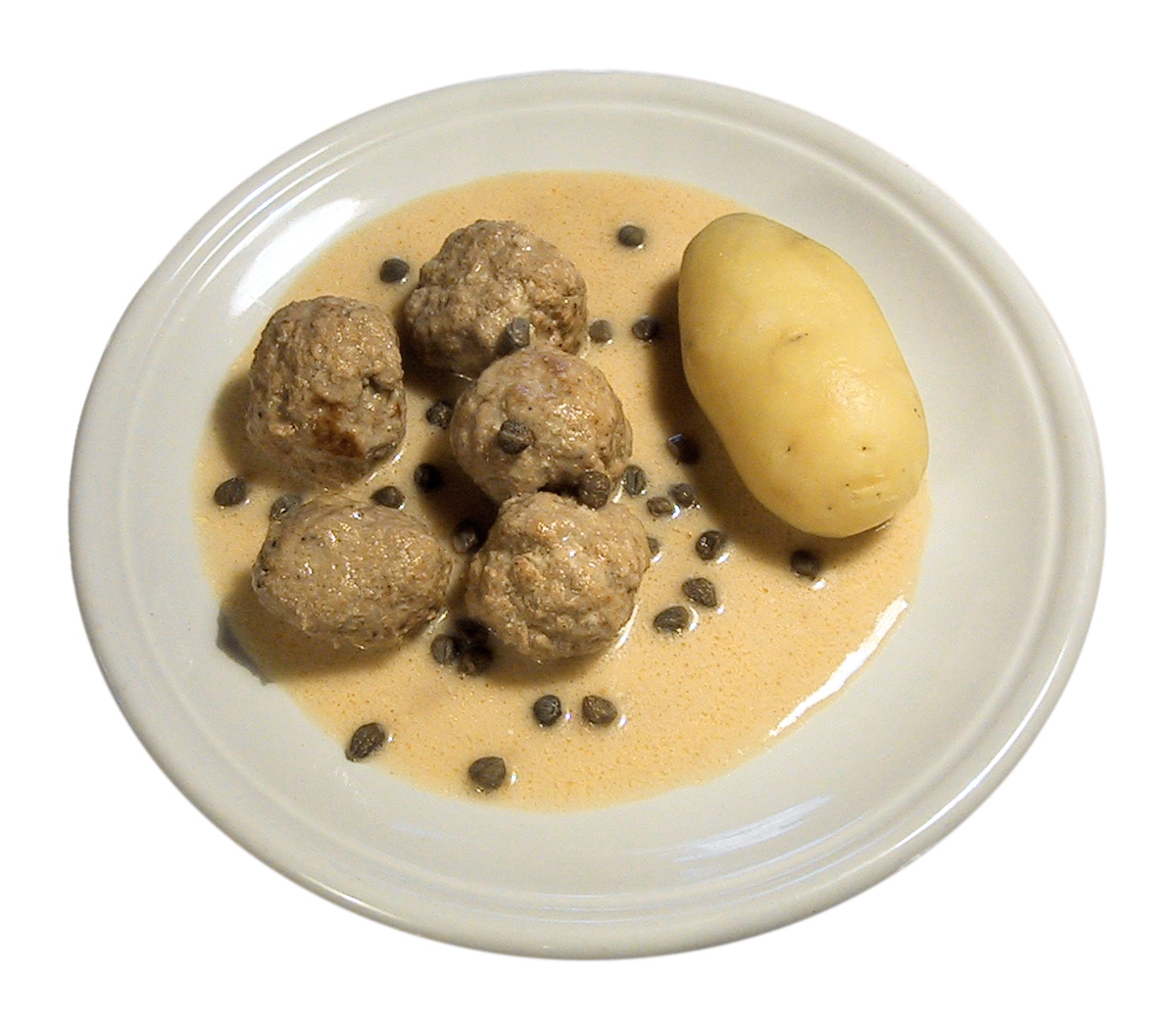 Königsberger KlopseMeat
🇩🇪 Germany and 1 moreGerman meatballs in a creamy white sauce with capers
Main dish, Lunch, Dinner
Königsberger KlopseMeat
🇩🇪 Germany and 1 moreGerman meatballs in a creamy white sauce with capers
Main dish, Lunch, Dinner
 BotifarraMeat
🇪🇸 Spain and 6 moreA family of pork sausages central to Catalan and Latin American cooking
Sausage or cured food, Lunch, Dinner
BotifarraMeat
🇪🇸 Spain and 6 moreA family of pork sausages central to Catalan and Latin American cooking
Sausage or cured food, Lunch, Dinner
 Migas
🇪🇸 Spain and 2 moreA dish of leftover bread or tortillas, cooked with savoury ingredients
Main dish, Breakfast, Lunch
Migas
🇪🇸 Spain and 2 moreA dish of leftover bread or tortillas, cooked with savoury ingredients
Main dish, Breakfast, Lunch