
Aspic
Meat or fish set in savoury gelatin, served cold as an appetizer or festive dish
Aspic is a savoury jelly made by setting meat, fish, vegetables, or eggs in gelatin-rich stock. It is eaten cold and appears in many European and Asian cuisines, often as a festive or winter dish. Pork, beef, or fish are common bases, with the jelly protecting and flavouring the ingredients inside.
- Aspic sets meat, fish, or vegetables in a savoury gelatin jelly
- It is served cold, often at festive meals like Christmas or New Year
- Pork, beef, or fish stock provides the natural gelatin for the jelly
- Aspic protects and preserves the food inside
- Many countries have their own traditional versions
What is Aspic?
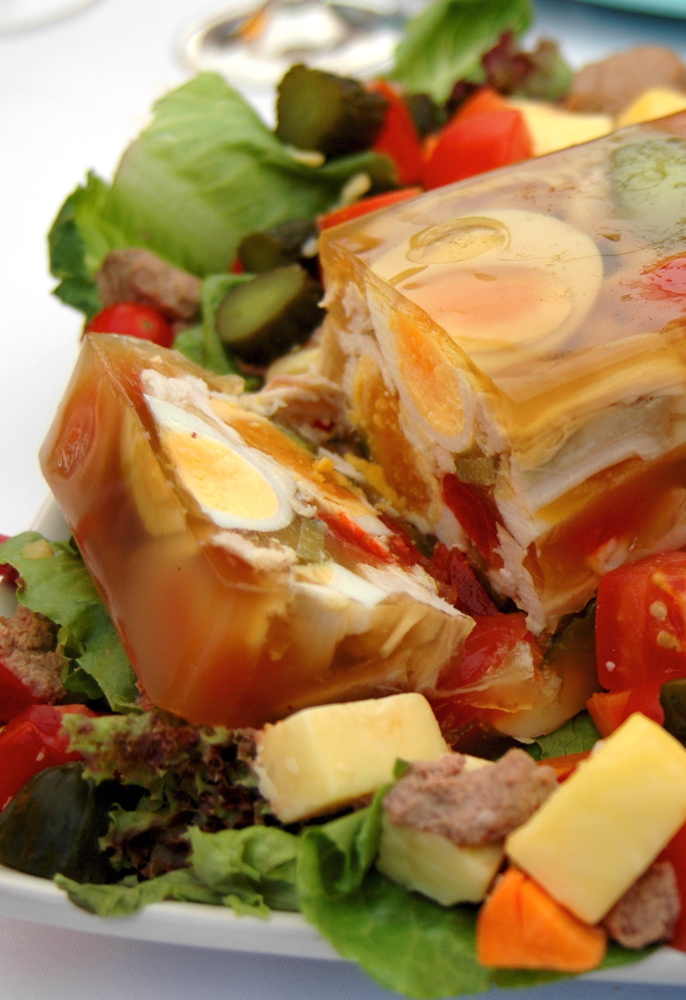
Aspic is a dish where meat, fish, vegetables, or eggs are set in a savoury jelly made from gelatin-rich stock. The jelly can be clear or amber and is often shaped in a mold. Inside, you might find pieces of pork, beef, poultry, seafood, or even vegetables and eggs. The jelly protects the food and keeps it fresh. Aspic can be soft or firm, and sometimes it is used to glaze or decorate other foods, giving them a glossy look.
Where does Aspic come from?
Aspic has deep roots in European and Asian cooking. Early forms were described as far back as the 9th century in Iraq, and by the Middle Ages, cooks in Europe had learned to turn meat broth into jelly. French chefs refined aspic in the 19th century, using it both as a sauce and a way to present cold dishes. The dish spread widely, with each region adapting it to local tastes and ingredients. Aspic became especially popular in Central and Eastern Europe, where cold winters and festive traditions encouraged its use.
How is Aspic made?
To make aspic, cooks simmer meat, bones, or fish with water to extract gelatin, then strain and clarify the broth. The cooked meat or other fillings are arranged in a mold, and the warm, liquid stock is poured over them. The dish is then cooled until it sets into a firm jelly. Pork trotters, beef bones, or fish heads are often used for their high gelatin content. Sometimes, extra gelatin is added to help the aspic hold its shape, especially for fish or poultry versions.


How and when is Aspic eaten?
Aspic is served cold, often sliced or cut into cubes. It appears as a starter, side, or even a main dish at festive meals, especially in winter. In Russia, Ukraine, and Romania, it is traditional at Christmas and New Year, while in Vietnam it is eaten at Lunar New Year. It may be eaten with horseradish, mustard, pickles, or bread. In some countries, aspic is a common part of open sandwiches or cold buffets.
Kinds of Aspic
Many countries have their own versions of aspic. In Russia and Ukraine, kholodets is made with pork or beef and served at holidays. Romanian piftie uses pig's trotter and garlic. In Serbia, pihtije may include pork, chicken, or lamb. Fish aspic is common in Vietnam and among Newars in Nepal. Some versions are delicately set, while others are firm enough to slice. Ingredients and spices vary widely by region.
What Aspic means
Aspic is closely tied to winter and festive celebrations in many cultures. It is often made for Christmas, Easter, and New Year, marking special occasions with its elaborate appearance. In some places, it is a symbol of hospitality and culinary skill, as making clear, well-set aspic takes time and care. The dish also serves a practical purpose, preserving food before refrigeration was common.
When Aspic is on the table
Questions people ask about Aspic
What is aspic made of?
Aspic is made by simmering meat, bones, or fish to extract gelatin, then setting pieces of meat, fish, vegetables, or eggs in the resulting savoury jelly.
Where does aspic come from?
Aspic has roots in medieval Europe and Asia, with early mentions in Iraq and China, and later refinement in French cuisine. It is now traditional in many Central and Eastern European countries.
Is aspic always made with pork?
No, aspic can be made with pork, beef, poultry, fish, or even seafood. The key is using ingredients that provide enough gelatin to set the jelly.
When is aspic usually eaten?
Aspic is often eaten at festive times such as Christmas, Easter, and New Year, but it can also be served as an appetizer or snack at any time.
How is aspic served?
Aspic is served cold, sliced or cut into cubes, sometimes with mustard, horseradish, pickles, or bread, depending on local custom.
Good reading and sources
The facts on this page come from the Wikipedia article "Aspic", written by its contributors and used under the CC BY-SA 4.0 licence, and from its Wikidata record (CC0). Thali rewrote the text in its own words, with AI assistance, and compares every page with the article to make sure no passage is copied. It may be reused under the same CC BY-SA 4.0 licence with a link back.
It may contain mistakes, and it is not dietary or allergy advice: recipes differ from cook to cook. If something is wrong, tell us. Last refreshed 2026-10-03.
More from France
All the food of France RatatouilleVegan
🇫🇷 FranceA Provençal stew of summer vegetables cooked in olive oil
Main dish, Lunch, Dinner
RatatouilleVegan
🇫🇷 FranceA Provençal stew of summer vegetables cooked in olive oil
Main dish, Lunch, Dinner
 French toast
🇫🇷 France and 5 moreBread soaked in egg and milk, pan-fried and served sweet or savoury
Main dish, Breakfast, Snacks
Blood sausageMeat
🇫🇷 France and 5 moreA sausage made with animal blood, fillers and spices, cooked or dried until firm
Main dish, Lunch, Dinner
French toast
🇫🇷 France and 5 moreBread soaked in egg and milk, pan-fried and served sweet or savoury
Main dish, Breakfast, Snacks
Blood sausageMeat
🇫🇷 France and 5 moreA sausage made with animal blood, fillers and spices, cooked or dried until firm
Main dish, Lunch, Dinner
 Pancake
🇺🇸 United States and 5 moreFlat cakes made from batter, cooked on a griddle or pan and served sweet or savoury
Main dish, Breakfast, Snacks
Pancake
🇺🇸 United States and 5 moreFlat cakes made from batter, cooked on a griddle or pan and served sweet or savoury
Main dish, Breakfast, Snacks
Its cousins elsewhere
All main dishes Tofu skin roll
🇨🇳 ChinaTofu skin wrapped around a savoury filling, served steamed or fried as dim sum
Main dish, Lunch, Dinner
Tofu skin roll
🇨🇳 ChinaTofu skin wrapped around a savoury filling, served steamed or fried as dim sum
Main dish, Lunch, Dinner
 Adobo
🇵🇭 PhilippinesMeat, seafood, or vegetables simmered in vinegar, soy sauce, garlic and spices
Main dish, Lunch, Dinner
Adobo
🇵🇭 PhilippinesMeat, seafood, or vegetables simmered in vinegar, soy sauce, garlic and spices
Main dish, Lunch, Dinner
 YakinikuMeat焼肉
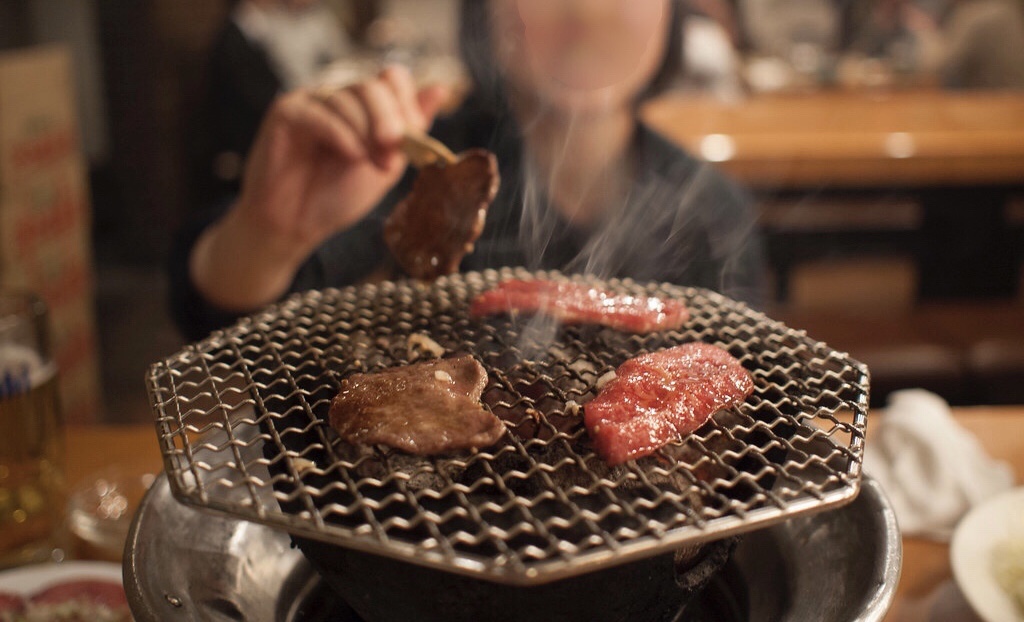
🇯🇵 Japan and 2 moreJapanese grilled meat cooked at the table and dipped in savoury sauces
Main dish, Dinner, Lunch
YakinikuMeat焼肉
🇯🇵 Japan and 2 moreJapanese grilled meat cooked at the table and dipped in savoury sauces
Main dish, Dinner, Lunch
 Kushikatsu串カツ
🇯🇵 JapanDeep-fried skewers of meat, seafood, and vegetables from Japan
Street food, Lunch, Dinner
Kushikatsu串カツ
🇯🇵 JapanDeep-fried skewers of meat, seafood, and vegetables from Japan
Street food, Lunch, Dinner