
Ghormeh sabzi
In its own language: قرمه سبزی
Persian stew of herbs, beans, dried lime and lamb, served with saffron rice
Ghormeh sabzi is a Persian stew made with sautéed herbs, kidney beans, dried lime, and lamb. It is widely eaten in Iran and considered the national dish. The stew is served with Persian saffron rice and sometimes with flatbread, salad, or yoghurt-cucumber dip.
- Considered the national dish of Iran
- Made with sautéed herbs, lamb, kidney beans, and dried lime
- Usually served with Persian saffron rice
- Has a history of at least 2,500 years
- First Iranian dish eaten in outer space
What is Ghormeh sabzi?
Ghormeh sabzi is a stew from Iran that brings together a mix of sautéed green herbs—mainly parsley, leeks, green onions, and coriander—flavored with dried fenugreek leaves. Lamb pieces and red kidney beans simmer in the herb mixture, along with dried Persian lime, which adds a distinct sour note. The stew is seasoned with turmeric and sometimes saffron. It is usually served with Persian saffron rice, and sometimes with crispy rice (tahdig), flatbread, or side dishes like yoghurt-cucumber dip. The dish is aromatic, with a deep herbal flavor balanced by the tang of dried lime.
Where does Ghormeh sabzi come from?
Ghormeh sabzi is part of the Persian khoresh tradition, a group of stews central to Iranian cooking. It is considered one of the oldest Persian stews, with a history estimated at least 2,500 years. The dish reflects ancient Persian culinary traditions that combine meat, herbs, beans, and sour flavors. Persian cookery, including ghormeh sabzi, was further refined during the Safavid and Qajar periods, periods known for developing the use of souring agents like dried lime and verjuice in stews.
How is Ghormeh sabzi made?
To make ghormeh sabzi, a combination of fresh herbs—parsley, leeks, green onions, and coriander—is finely chopped and sautéed. Dried fenugreek leaves are added for their unique aroma. Lamb is browned and then simmered with the herb mixture, red kidney beans, onions, turmeric, and pierced dried Persian lime. The stew cooks slowly until the flavors blend and the meat is tender. It is served hot, most often with Persian steamed saffron rice and sometimes with tahdig, the crispy rice from the bottom of the pot.

How and when is Ghormeh sabzi eaten?
Ghormeh sabzi is eaten as a main course, typically for lunch or dinner. It is most often paired with Persian saffron rice, but can also be enjoyed with flatbread. Common accompaniments include shirazi salad, made from cucumbers, tomatoes, onions, and herbs, and mast-o-khiar, a yoghurt and cucumber dip. The stew is a staple of family meals and gatherings in Iran, and is popular both at home and in restaurants.
Kinds of Ghormeh sabzi
The main differences in ghormeh sabzi recipes come from the type of beans and meat used. The classic version throughout Iran uses red kidney beans, while in southern Iran, black-eyed beans are sometimes preferred. While the original recipe does not include other greens, some cooks may substitute with local bitter greens like kale or mustard greens if needed. The dish can also be made with different cuts of lamb or beef.
What Ghormeh sabzi means
Ghormeh sabzi is widely seen as the national dish of Iran and holds a special place in Persian culinary heritage. It is a symbol of home and tradition for many Iranians, including those living abroad. The stew is celebrated by the Iranian diaspora with an International Ghormeh Sabzi Appreciation Day. Its cultural importance is highlighted by its selection as the first Iranian dish served in outer space.
Questions people ask about Ghormeh sabzi
What is ghormeh sabzi made of?
Ghormeh sabzi is made from sautéed herbs (parsley, leeks, green onions, coriander, dried fenugreek), lamb, red kidney beans, onions, dried Persian lime, and turmeric.
Where does ghormeh sabzi come from?
Ghormeh sabzi comes from Iran and is a traditional dish in Persian cuisine, considered the national dish.
How is ghormeh sabzi usually served?
It is served hot, most often with Persian saffron rice, and sometimes with crispy rice (tahdig), flatbread, salad, or yoghurt-cucumber dip.
Are there different versions of ghormeh sabzi?
Yes, the main variations are in the type of beans and meat used. Most use red kidney beans, but black-eyed beans are used in southern Iran.
What does the dried lime do in ghormeh sabzi?
Dried Persian lime adds a distinct sour flavor and aroma to the stew, balancing the richness of the herbs and meat.
Good reading and sources
- Ghormeh sabzi on WikipediaEncyclopedia
- More photos on Wikimedia CommonsPhotos
- Wikidata recordOpen data
The facts on this page come from the Wikipedia article "Ghormeh sabzi", written by its contributors and used under the CC BY-SA 4.0 licence, and from its Wikidata record (CC0). Thali rewrote the text in its own words, with AI assistance, and compares every page with the article to make sure no passage is copied. It may be reused under the same CC BY-SA 4.0 licence with a link back.
It may contain mistakes, and it is not dietary or allergy advice: recipes differ from cook to cook. If something is wrong, tell us. Last refreshed 2026-10-03.
More from Iran
All the food of Iran Kebabكَبَاب
🇹🇷 Turkey and 5 moreGrilled or roasted meat, often on skewers, found across the Middle East and beyond
Main dish, Lunch, Dinner
Kebabكَبَاب
🇹🇷 Turkey and 5 moreGrilled or roasted meat, often on skewers, found across the Middle East and beyond
Main dish, Lunch, Dinner
 Pilaf
🇺🇿 Uzbekistan and 5 moreRice cooked in stock with spices, meat or vegetables, with each grain kept separate
Main dish, Lunch, Dinner
Pilaf
🇺🇿 Uzbekistan and 5 moreRice cooked in stock with spices, meat or vegetables, with each grain kept separate
Main dish, Lunch, Dinner
 Khoresh bademjanخورش بادمجان
🇮🇷 IranPersian stew of eggplant, tomato, lamb, and tart fruit, served with rice
Stew or curry, Lunch, Dinner
Khoresh bademjanخورش بادمجان
🇮🇷 IranPersian stew of eggplant, tomato, lamb, and tart fruit, served with rice
Stew or curry, Lunch, Dinner
 Kabab koobidehMeatکباب کوبیده
🇮🇷 IranIranian skewered kebab of ground lamb or beef mixed with onion and spices
Main dish, Lunch, Dinner
Kabab koobidehMeatکباب کوبیده
🇮🇷 IranIranian skewered kebab of ground lamb or beef mixed with onion and spices
Main dish, Lunch, Dinner
Its cousins elsewhere
All main dishes UsbanMeatعصبان
🇹🇳 Tunisia and 2 moreNorth African sausage stuffed with rice, lamb, liver, herbs and spices
Main dish, Lunch, Dinner
UsbanMeatعصبان
🇹🇳 Tunisia and 2 moreNorth African sausage stuffed with rice, lamb, liver, herbs and spices
Main dish, Lunch, Dinner
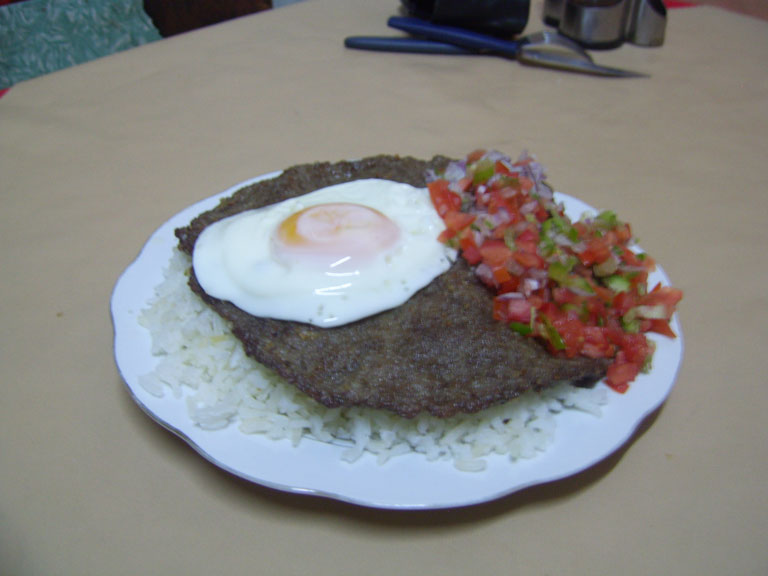 SilpanchoMeatSillp'anchu
🇧🇴 BoliviaLayered Bolivian meal with rice, potatoes, breaded meat, and fried eggs
Main dish, Lunch, Dinner
SilpanchoMeatSillp'anchu
🇧🇴 BoliviaLayered Bolivian meal with rice, potatoes, breaded meat, and fried eggs
Main dish, Lunch, Dinner
 BarbacoaMeat
🇲🇽 Mexico and 3 moreMeat slow-cooked in a pit lined with agave or banana leaves
Main dish, Lunch, Dinner
BarbacoaMeat
🇲🇽 Mexico and 3 moreMeat slow-cooked in a pit lined with agave or banana leaves
Main dish, Lunch, Dinner