
Ghugni
In its own language: ঘুগনি
Curried peas or chickpeas, often served with bread or snacks in eastern India and Nepal
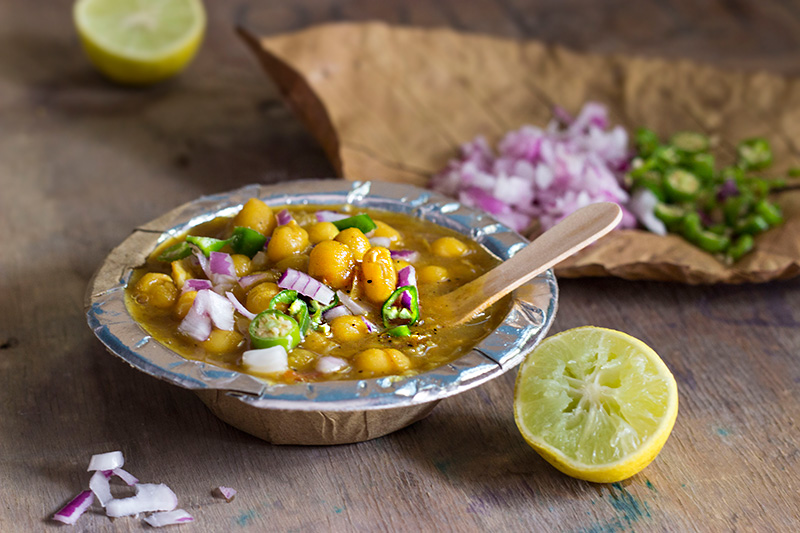
Ghugni is a curry made from dried peas or chickpeas, popular in eastern India, Nepal, and Bangladesh. The dish is flavored with spices and sometimes coconut, and is commonly eaten for breakfast with bread, puri, or local snacks, but can also be a main meal at lunch or dinner.
- Made from dried peas or chickpeas, simmered in a spiced gravy
- Popular in eastern India, Nepal, and Bangladesh
- Eaten hot, often with puri, bread, or puffed rice
- Can be made with or without onion and garlic
- Some versions include minced meat for flavor
What is Ghugni?
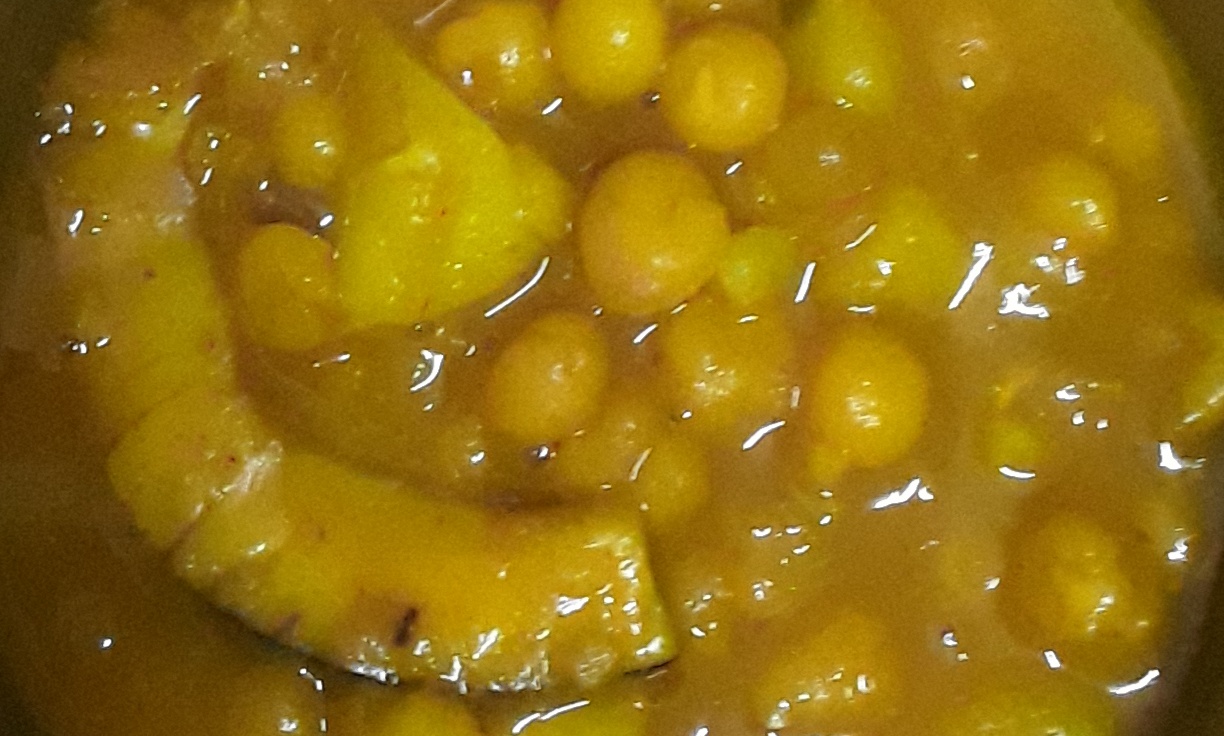
Ghugni is a stew or curry made mainly from dried peas or chickpeas, cooked with a mix of Indian spices. The peas are soaked, boiled, and then simmered in a gravy that may include coconut, ginger, garlic, cumin, turmeric, and tamarind. The dish has a hearty texture and can be mild or spicy, depending on the region and cook. Ghugni is often garnished with cilantro and sometimes served with puffed rice or fried snacks. In some areas, it is made without onion or garlic, especially for those who avoid these ingredients.
Where does Ghugni come from?
Ghugni is especially popular in eastern India, including Odisha, West Bengal, Jharkhand, Bihar, and Uttar Pradesh, as well as in Bangladesh and Nepal. The dish has long been a staple in these regions, appearing in both home kitchens and street stalls. While its precise origins are not detailed, it is deeply rooted in the local food traditions of these areas and has spread to neighboring countries and diaspora communities. The name and preparation vary by language and region.
How is Ghugni made?
To make ghugni, dried peas or chickpeas are first soaked overnight and then boiled until soft. These are cooked in a spiced gravy, which may include coconut, ginger and garlic pastes, cumin, turmeric, and tamarind for tang. Some versions add onion, while others leave it out. The finished curry can be topped with fresh cilantro. In some places, meat such as minced goat or chicken is added for extra flavor, but the basic dish is plant-based.

How and when is Ghugni eaten?
Ghugni is commonly eaten for breakfast, especially with puri (a deep-fried bread), toasted bread, or local snacks like upma, chakuli, idli, samosa, bara, or pithas. In some regions, it is paired with puffed rice or dhuska, a deep-fried rice-lentil bread. It is also enjoyed as a main meal at lunch or dinner. The dish is popular at home and as street food, and is served hot.
Kinds of Ghugni
There are many local versions of ghugni. In Bengal, dry white peas are used, while Bihar favors green chickpeas or fresh green peas, sometimes pan-fried in mustard oil with cumin and green chili. Some recipes include meat, especially in Kolkata, where 'mangsher ghugni' (meat keema ghugni) is well known. The choice of peas, spices, and accompaniments varies by region and personal taste.
What Ghugni means
Ghugni is a familiar part of daily life in eastern India and neighboring regions. It is a staple breakfast or snack, often sold by street vendors and served at home. In Odisha, it is a regular companion to local snacks, and in Bengal, it is a common pairing with puri. The dish is flexible, fitting into both vegetarian and non-vegetarian diets, and is enjoyed across communities.
Questions people ask about Ghugni
What is ghugni made of?
Ghugni is made from dried peas or chickpeas, cooked in a gravy with Indian spices, and sometimes coconut, ginger, garlic, cumin, turmeric, and tamarind paste.
Where does ghugni come from?
Ghugni is popular in eastern India, especially in Odisha, West Bengal, Jharkhand, Bihar, and Uttar Pradesh, and is also found in Nepal and Bangladesh.
Is ghugni vegetarian?
Most ghugni is vegetarian, but some versions include minced meat such as goat, lamb, or chicken, especially in Kolkata.
How is ghugni usually served?
It is served hot, often with puri (fried bread), toasted bread, puffed rice, or local snacks like upma, idli, or samosa.
When is ghugni eaten?
Ghugni is commonly eaten for breakfast, but can also be a main course at lunch or dinner.
Good reading and sources
The facts on this page come from the Wikipedia article "Ghugni", written by its contributors and used under the CC BY-SA 4.0 licence, and from its Wikidata record (CC0). Thali rewrote the text in its own words, with AI assistance, and compares every page with the article to make sure no passage is copied. It may be reused under the same CC BY-SA 4.0 licence with a link back.
It may contain mistakes, and it is not dietary or allergy advice: recipes differ from cook to cook. If something is wrong, tell us. Last refreshed 2026-10-03.
More from India
All the food of India Kebabكَبَاب
🇹🇷 Turkey and 5 moreGrilled or roasted meat, often on skewers, found across the Middle East and beyond
Main dish, Lunch, Dinner
Kebabكَبَاب
🇹🇷 Turkey and 5 moreGrilled or roasted meat, often on skewers, found across the Middle East and beyond
Main dish, Lunch, Dinner
 Samosa
🇮🇳 India and 5 moreFried or baked pastry with a spiced filling, shaped into triangles or cones
Pie or savoury pastry, Snacks, Lunch
Samosa
🇮🇳 India and 5 moreFried or baked pastry with a spiced filling, shaped into triangles or cones
Pie or savoury pastry, Snacks, Lunch
 Biryani
🇮🇳 India and 5 moreRice and spiced meat or vegetables layered and cooked together
Main dish, Lunch, Dinner
Biryani
🇮🇳 India and 5 moreRice and spiced meat or vegetables layered and cooked together
Main dish, Lunch, Dinner
 French toast
🇫🇷 France and 5 moreBread soaked in egg and milk, pan-fried and served sweet or savoury
Main dish, Breakfast, Snacks
French toast
🇫🇷 France and 5 moreBread soaked in egg and milk, pan-fried and served sweet or savoury
Main dish, Breakfast, Snacks
Its cousins elsewhere
All main dishes Lablabiلبلابي
🇹🇳 Tunisia and 1 moreTunisian chickpea soup poured over torn bread and topped with bold garnishes
Soup, Breakfast, Lunch
Lablabiلبلابي
🇹🇳 Tunisia and 1 moreTunisian chickpea soup poured over torn bread and topped with bold garnishes
Soup, Breakfast, Lunch
 RechtaMeatرشتة
🇩🇿 Algeria and 1 moreAlgerian handmade noodles served with chicken and vegetables in a spiced sauce
Main dish, Lunch, Dinner
RechtaMeatرشتة
🇩🇿 Algeria and 1 moreAlgerian handmade noodles served with chicken and vegetables in a spiced sauce
Main dish, Lunch, Dinner
 KebapcheMeatкебапче
🇧🇬 BulgariaGrilled minced meat shaped like a sausage, a staple in Bulgaria
Grill or roast, Lunch, Dinner
Ta'ameyaVeganطعمية
🇪🇬 EgyptEgyptian fritters of fava beans and herbs, deep-fried and eaten in pita sandwiches
Street food, Breakfast, Lunch
KebapcheMeatкебапче
🇧🇬 BulgariaGrilled minced meat shaped like a sausage, a staple in Bulgaria
Grill or roast, Lunch, Dinner
Ta'ameyaVeganطعمية
🇪🇬 EgyptEgyptian fritters of fava beans and herbs, deep-fried and eaten in pita sandwiches
Street food, Breakfast, Lunch