
Harissa
In its own language: هَرِيسَة
Hot chili paste blended with spices and olive oil, central to Tunisian cooking
Harissa is a spicy paste from Tunisia, made by pounding roasted red peppers, Baklouti chilis, garlic, caraway, coriander, cumin, and olive oil. It is used widely in Tunisian dishes and has spread to neighboring countries. Harissa is eaten daily and also celebrated at festivals, especially in Nabeul, where much of it is produced.
- Harissa is made from roasted red peppers, spices, and olive oil.
- Nabeul is the main center for harissa production in Tunisia.
- Tunisia is the top exporter of prepared harissa worldwide.
- UNESCO recognizes harissa as part of Tunisia’s cultural heritage.
- Baklouti peppers give Tunisian harissa its distinctive mild heat.
What is Harissa?
Harissa is a fiery paste made by crushing roasted red peppers and Baklouti chilis with garlic and spices, then mixing in olive oil. The blend often includes caraway, coriander, and cumin, giving it a deep, aromatic flavor. The color is a vibrant red, and the texture is thick and spreadable. It delivers a strong heat, but the peppers used in Tunisia are often milder than some other varieties. The taste is both spicy and earthy, with a hint of smokiness from the roasted peppers.
Where does Harissa come from?
The use of chili peppers in Tunisia began after they were brought from the Americas during the Columbian exchange, likely arriving in the 16th century under Spanish rule. Harissa was first made in the Cape Bon Peninsula, where the climate suited pepper cultivation. Nabeul became the main center for its production. Over time, harissa became a staple in Tunisian kitchens and spread to neighboring countries. UNESCO has recognized the making and sharing of harissa as part of Tunisia’s cultural heritage.
How is Harissa made?
To make harissa, red peppers and Baklouti chilis are roasted, then pounded or ground together with garlic and spices such as caraway, coriander, and cumin. Olive oil is added to blend the mixture and preserve it. Some recipes include fermented onion or lemon juice for extra depth. The paste can be made by hand using a mortar and pestle, or prepared in larger batches for sale in jars or tubes.

How and when is Harissa eaten?
Harissa is used in many ways across North Africa and beyond. In Tunisia, it is stirred into stews with meat or fish, added to couscous, or used to flavor soups like lablabi. It can be spread on bread, mixed into salads, or served as a condiment alongside grilled meats and vegetables. In Algeria, it is common in soups and as a rub for eggplant or meat. In Israel and Libya, similar chili pastes are used in sandwiches and with egg dishes.
Kinds of Harissa
Harissa recipes differ by region and household. Some versions add fermented onion or lemon juice. In Morocco, people often prefer a milder, less seasoned paste to adapt it to various dishes. In Libya, a similar sauce called filfel chuma is popular, made with both sweet and hot peppers and garlic. Prepared harissa is available in jars, cans, and tubes, and the flavor can differ from homemade versions.
What Harissa means
Harissa is considered a symbol of Tunisian food culture and is often called the country’s main condiment. The city of Nabeul holds an annual festival to celebrate harissa and the Baklouti pepper harvest, featuring traditional preparation and local crafts. Tunisia is the world’s leading exporter of harissa. Its importance is recognized internationally, with UNESCO listing the making and sharing of harissa as part of Tunisia’s intangible cultural heritage.
Questions people ask about Harissa
What is harissa made of?
Harissa is made by blending roasted red peppers, Baklouti chilis, garlic, caraway, coriander, cumin, and olive oil. Some recipes may include fermented onion or lemon juice.
Where does harissa come from?
Harissa originated in Tunisia, especially in the Cape Bon Peninsula and the city of Nabeul, where peppers are widely grown and the paste is traditionally produced.
How is harissa used in cooking?
Harissa is added to stews, couscous, soups, and used as a condiment for meats, vegetables, and bread. It can also be stirred into salads or served as a side sauce.
Is harissa very spicy?
Harissa is spicy, but the Baklouti peppers used in Tunisia are milder than some other chili varieties, giving the paste a moderate, balanced heat.
Is harissa vegan?
Yes, harissa is vegan. It contains only plant-based ingredients: peppers, spices, garlic, and olive oil.
Good reading and sources
The facts on this page come from the Wikipedia article "Harissa", written by its contributors and used under the CC BY-SA 4.0 licence, and from its Wikidata record (CC0). Thali rewrote the text in its own words, with AI assistance, and compares every page with the article to make sure no passage is copied. It may be reused under the same CC BY-SA 4.0 licence with a link back.
It may contain mistakes, and it is not dietary or allergy advice: recipes differ from cook to cook. If something is wrong, tell us. Last refreshed 2026-10-03.
More from Tunisia
All the food of Tunisia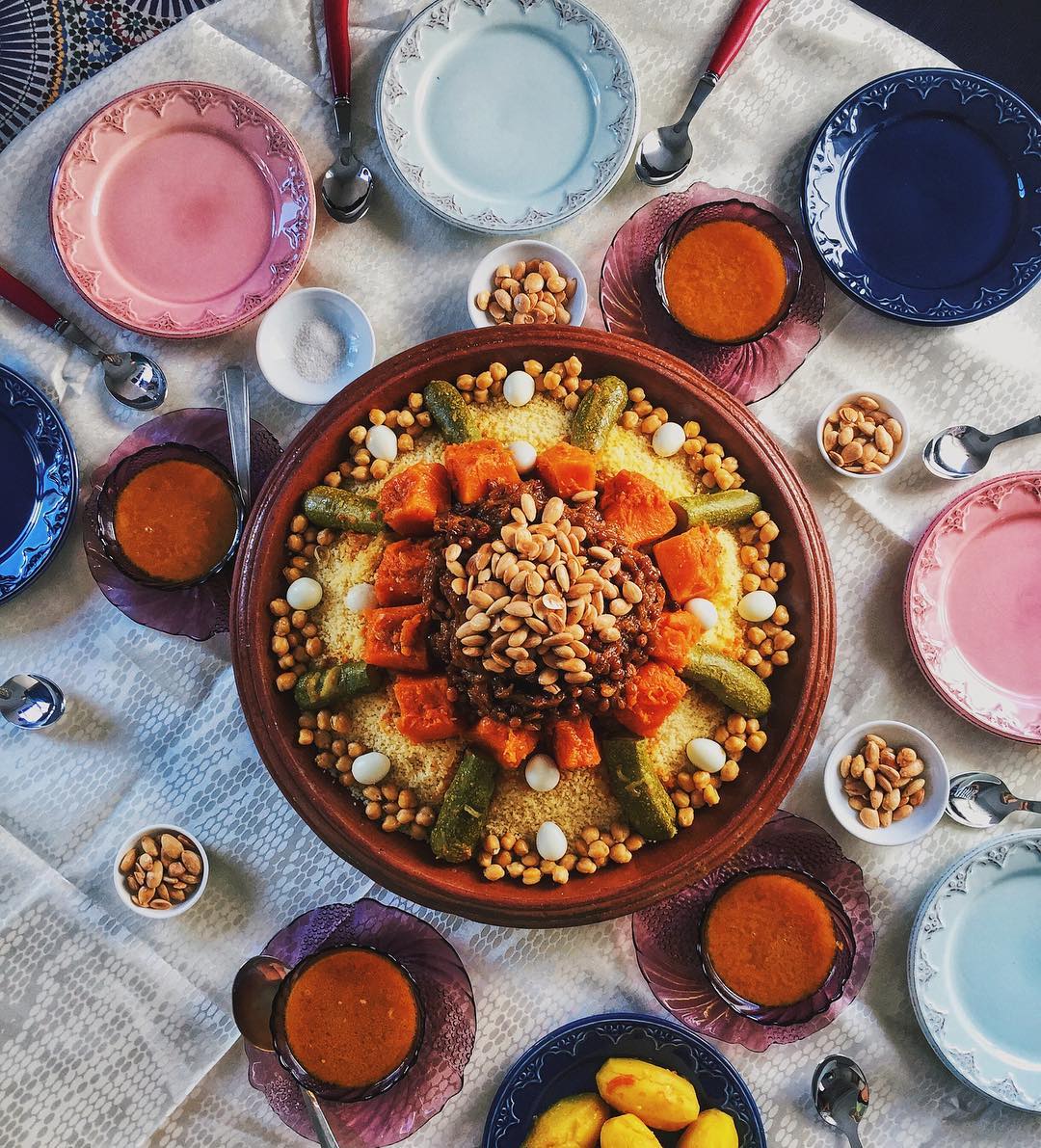 Couscousseksu
🇩🇿 Algeria and 4 moreSteamed semolina granules served with stew or vegetables across North Africa
Main dish, Lunch, Dinner
Couscousseksu
🇩🇿 Algeria and 4 moreSteamed semolina granules served with stew or vegetables across North Africa
Main dish, Lunch, Dinner
 RechtaMeatرشتة
🇩🇿 Algeria and 1 moreAlgerian handmade noodles served with chicken and vegetables in a spiced sauce
Main dish, Lunch, Dinner
RechtaMeatرشتة
🇩🇿 Algeria and 1 moreAlgerian handmade noodles served with chicken and vegetables in a spiced sauce
Main dish, Lunch, Dinner
 Freekehفريكة
🇵🇸 Palestine and 5 moreRoasted green durum wheat grains, a staple across the eastern Mediterranean
Main dish, Lunch, Dinner
Freekehفريكة
🇵🇸 Palestine and 5 moreRoasted green durum wheat grains, a staple across the eastern Mediterranean
Main dish, Lunch, Dinner
 ShakshukaVegetarian
🇹🇳 Tunisia and 5 moreEggs poached in a spiced tomato and pepper sauce from North Africa
Main dish, Breakfast, Dinner
ShakshukaVegetarian
🇹🇳 Tunisia and 5 moreEggs poached in a spiced tomato and pepper sauce from North Africa
Main dish, Breakfast, Dinner
Its cousins elsewhere
All sauces, pickles and ferments MuhammaraVeganمحمرة
🇸🇾 Syria and 2 moreSyrian red pepper and walnut dip with pomegranate molasses
Sauce, pickle or ferment, Lunch, Dinner
MuhammaraVeganمحمرة
🇸🇾 Syria and 2 moreSyrian red pepper and walnut dip with pomegranate molasses
Sauce, pickle or ferment, Lunch, Dinner
 HummusVegan
🇸🇾 Syria and 5 moreMashed chickpeas blended with tahini, lemon, and garlic, served as a dip or spread
Sauce, pickle or ferment, Breakfast, Lunch
HummusVegan
🇸🇾 Syria and 5 moreMashed chickpeas blended with tahini, lemon, and garlic, served as a dip or spread
Sauce, pickle or ferment, Breakfast, Lunch
 PestoVegetarian
🇮🇹 Italy and 2 moreA basil, pine nut and cheese paste from Genoa, used to dress pasta
Sauce, pickle or ferment
PestoVegetarian
🇮🇹 Italy and 2 moreA basil, pine nut and cheese paste from Genoa, used to dress pasta
Sauce, pickle or ferment
 TzatzikiVegetarianτζατζίκι
🇬🇷 Greece and 5 moreStrained yogurt mixed with cucumber, garlic and herbs, served cold as a dip or sauce
Sauce, pickle or ferment, Lunch, Dinner
TzatzikiVegetarianτζατζίκι
🇬🇷 Greece and 5 moreStrained yogurt mixed with cucumber, garlic and herbs, served cold as a dip or sauce
Sauce, pickle or ferment, Lunch, Dinner