
Hủ tiếu
Vietnamese noodle dish with pork broth, served as soup or dry
Hủ tiếu is a noodle dish from southern Vietnam, often enjoyed at breakfast but eaten at any time of day. It features a clear broth made from pork bones, a choice of noodles, and a mix of meats, seafood, and fresh herbs. Hủ tiếu can be served in a bowl of soup or with the broth on the side, and is popular in cities like Saigon and Can Tho.
- Can be served as soup or dry with broth on the side
- Uses pork bone broth and a choice of noodles
- Popular street food in southern Vietnam
- Toppings can include pork, shrimp, and fresh herbs
- Inspired by Teochew Chinese noodle dishes
What is Hủ tiếu?
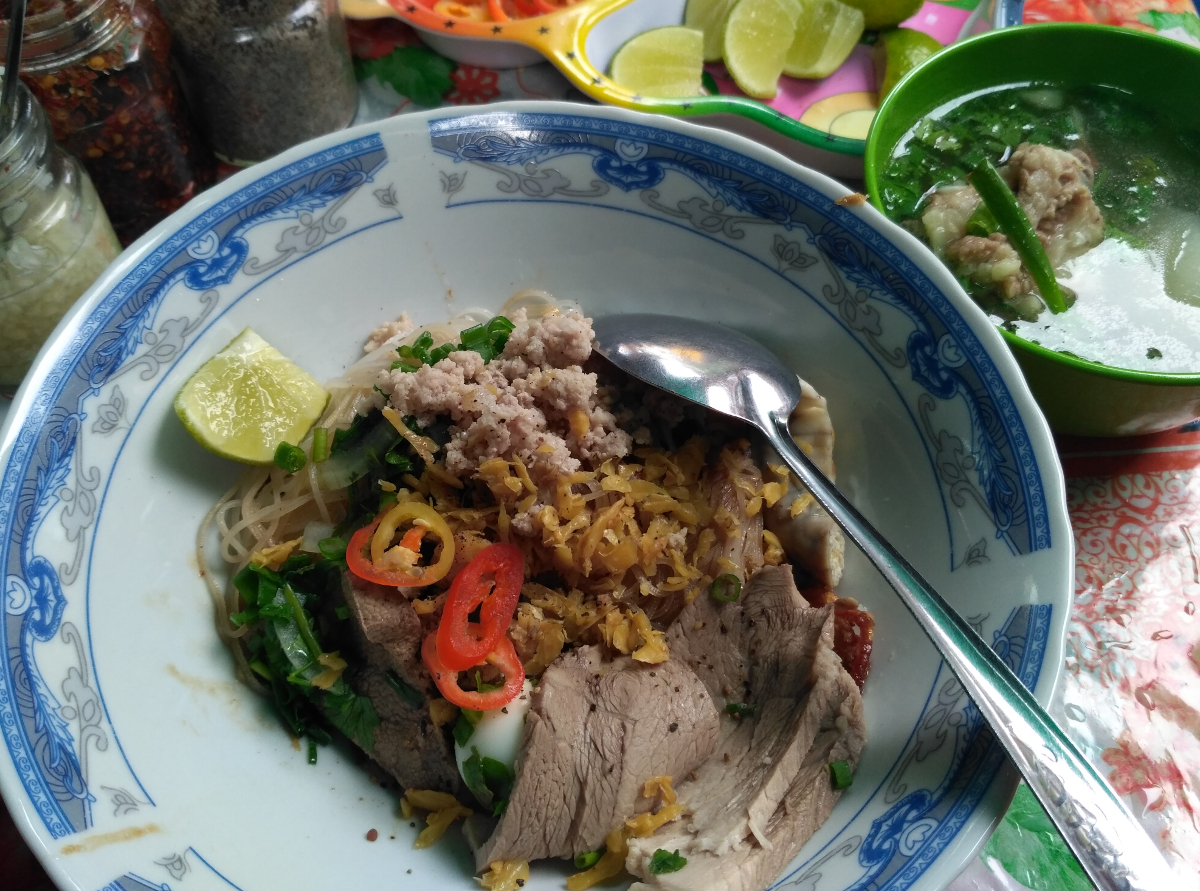
Hủ tiếu is a Vietnamese noodle dish that comes in two main forms: with broth or served dry with broth on the side. The base is a clear, savory soup made from pork bones, sometimes with dried seafood for extra flavor. Diners can choose from different noodles, such as rice, egg, or tapioca-based, each giving a different texture. Toppings are varied and may include sliced pork, ground pork, shrimp, pork liver, and fresh herbs like chives and Chinese celery. The dish is often finished with sautéed garlic and shallots, and diners can add sauces and chili to taste.
Where does Hủ tiếu come from?
Hủ tiếu traces its roots to the Teochew community from Guangdong, China, who brought their noodle traditions to Vietnam. The dish became especially popular in southern Vietnam in the 1960s, with Saigon as a center. The Vietnamese adapted the original Chinese noodles, creating their own version with a firmer, chewier texture. The name hủ tiếu comes from the Teochew dialect, reflecting its Chinese heritage. Over time, the dish has become a staple of Vietnamese street food and home cooking.
How is Hủ tiếu made?
To prepare hủ tiếu, pork bones are simmered to make a clear, flavorful broth, sometimes with dried squid or shrimp for depth. Noodles—rice, egg, or tapioca—are cooked separately, then topped with a mix of meats and seafood, such as sliced pork, ground pork, shrimp, or pork liver. Fresh herbs and sautéed aromatics are added for fragrance. The dish can be served as a soup or with the noodles and toppings dry, accompanied by a bowl of hot broth. A variety of dipping sauces, including soy sauce, vinegar, and chili, are offered on the side.


How and when is Hủ tiếu eaten?
Hủ tiếu is commonly eaten for breakfast but is also enjoyed at lunch and dinner. It is a popular street food, especially in southern Vietnamese cities, where vendors serve it from carts or at markets. Diners may customize their bowl with extra herbs, sauces, or chili. The dish can be eaten alone or with side dishes, and the dry version allows for mixing in sauces to taste. It is a familiar meal for many Vietnamese, found in both casual eateries and home kitchens.
Kinds of Hủ tiếu
Several well-known versions of hủ tiếu exist. Hủ tiếu Nam Vang is inspired by Cambodian kuyteav and often includes a mix of meats and seafood. Hủ tiếu Mỹ Tho uses a special chewy tapioca noodle and features seafood like prawns and cuttlefish. Hủ tiếu Sa Đéc is known for its white rice noodles. Hủ tiếu gõ is a street style where vendors announce their arrival by knocking metal bars together. Each variation reflects local tastes and available ingredients.
What Hủ tiếu means
Hủ tiếu is a symbol of southern Vietnamese food culture and is widely recognized as a comfort food. Its flexibility in toppings and noodles makes it accessible and popular across different communities. The dish has appeared on international television, including MasterChef US and Gordon Ramsay’s travel shows, highlighting its appeal beyond Vietnam. Street vendors, especially those with pushcarts, are a familiar sight in cities, contributing to the lively food scene.
Questions people ask about Hủ tiếu
What is hủ tiếu made of?
Hủ tiếu is made with a clear pork bone broth, a choice of noodles (rice, egg, or tapioca), and various toppings such as pork, shrimp, pork liver, and fresh herbs.
Where does hủ tiếu come from?
Hủ tiếu originated in southern Vietnam, with roots in Teochew Chinese cooking. It became especially popular in Saigon and is now a staple across the region.
How is hủ tiếu served?
It can be served as a noodle soup or with the noodles and toppings dry, accompanied by a bowl of hot broth. Diners can add sauces and herbs to taste.
What kinds of noodles are used in hủ tiếu?
The dish may include rice noodles, egg noodles, or chewy noodles made from tapioca, each offering a different texture.
Is hủ tiếu eaten at a particular meal?
While often eaten for breakfast, hủ tiếu is also enjoyed at lunch and dinner throughout southern Vietnam.
Good reading and sources
- Hu tieu, a Vietnamese dish spiced with prosperity and climate changeThe Guardian, Article
- Hu tieu lowdown: The Chinese-Vietnamese-Cambodian noodles you need to know betterLos Angeles Times, Article
The facts on this page come from the Wikipedia article "Hủ tiếu", written by its contributors and used under the CC BY-SA 4.0 licence, and from its Wikidata record (CC0). Thali rewrote the text in its own words, with AI assistance, and compares every page with the article to make sure no passage is copied. It may be reused under the same CC BY-SA 4.0 licence with a link back.
It may contain mistakes, and it is not dietary or allergy advice: recipes differ from cook to cook. If something is wrong, tell us. Last refreshed 2026-10-03.
More from Vietnam
All the food of Vietnam Mu kropMeat
🇹🇭 Thailand and 4 moreThai-style fried pork belly with a crunchy golden skin
Main dish, Lunch, Dinner
Mu kropMeat
🇹🇭 Thailand and 4 moreThai-style fried pork belly with a crunchy golden skin
Main dish, Lunch, Dinner
 Phophở
🇻🇳 Vietnam and 5 moreVietnamese rice noodle soup with beef or chicken in aromatic broth
Soup, Breakfast, Lunch
Phophở
🇻🇳 Vietnam and 5 moreVietnamese rice noodle soup with beef or chicken in aromatic broth
Soup, Breakfast, Lunch
 Pâté
🇫🇷 France and 5 moreA smooth or coarse spread made from minced meat, liver, or vegetables
Sauce, pickle or ferment
Pâté
🇫🇷 France and 5 moreA smooth or coarse spread made from minced meat, liver, or vegetables
Sauce, pickle or ferment
Its cousins elsewhere
All main dishes PachamancaMeat
🇵🇪 Peru and 1 moreAndean meats and vegetables slow-cooked with hot stones in an earthen oven
Main dish, Lunch, Dinner
PachamancaMeat
🇵🇪 Peru and 1 moreAndean meats and vegetables slow-cooked with hot stones in an earthen oven
Main dish, Lunch, Dinner
 SouvlakiMeatσουβλάκι
🇬🇷 Greece and 1 moreGrilled meat skewers, often served in pita with salad and sauce
Main dish, Lunch, Dinner
SouvlakiMeatσουβλάκι
🇬🇷 Greece and 1 moreGrilled meat skewers, often served in pita with salad and sauce
Main dish, Lunch, Dinner
 Pea soup
🇸🇪 Sweden and 5 moreA thick, hearty soup made from dried peas, found in many world cuisines
Soup, Lunch, Dinner
Pea soup
🇸🇪 Sweden and 5 moreA thick, hearty soup made from dried peas, found in many world cuisines
Soup, Lunch, Dinner
 CassouletMeat
🇫🇷 FranceHearty bean and meat stew from southern France, slow-cooked in a deep earthenware pot
Stew or curry, Lunch, Dinner
CassouletMeat
🇫🇷 FranceHearty bean and meat stew from southern France, slow-cooked in a deep earthenware pot
Stew or curry, Lunch, Dinner