
Huarache
Oblong masa snack topped with beans, salsa, meat, and cheese
Huarache is a Mexican street food from Mexico City, made by shaping masa (corn dough) around a layer of smashed pinto beans, frying it, and topping it with salsa, onions, potato, cilantro, meat, and queso fresco. It is often served with fried cactus (nopales) and is known for its sandal-like shape.
- Shaped like the sole of a sandal
- Created in Mexico City in the 1930s
- Made with masa and smashed pinto beans
- Topped with salsa, meat, and queso fresco
- Often served with fried cactus (nopales)
What is Huarache?
A huarache is a long, oval-shaped Mexican snack made from masa, which is dough ground from corn. Smashed pinto beans are pressed inside the masa before it is shaped and fried. The fried base is then covered with toppings like salsa (red or green), onions, potato, cilantro, and a protein such as ground beef or tongue. Queso fresco, a crumbly fresh cheese, is sprinkled on top. Fried cactus leaves, or nopales, are often served alongside. The dish is named for its resemblance to the sole of a sandal.
Where does Huarache come from?
Huarache was created in Mexico City in the early 1930s by Carmen Gómez Medina, who originally sold tlacoyos at a stall along the La Viga navigation channel. When the channel was covered and the area changed, she moved her business several times, including to the Mercado de Jamaica. The new dish, with its distinct elongated shape, reminded people of the traditional sandal called 'huarache,' giving the food its name. The word comes from Purépecha, and in Nahuatl it is 'kwarachi.'
How is Huarache made?
To make a huarache, masa dough is flattened and filled with a layer of smashed pinto beans. The dough is shaped into a long, oval form, then fried until crisp on the outside. Once cooked, it is topped with salsa, onions, potato, cilantro, and a choice of meat. Queso fresco is added last. Fried cactus leaves (nopales) are a common side. The toppings can vary, but the oblong masa base with beans is essential.
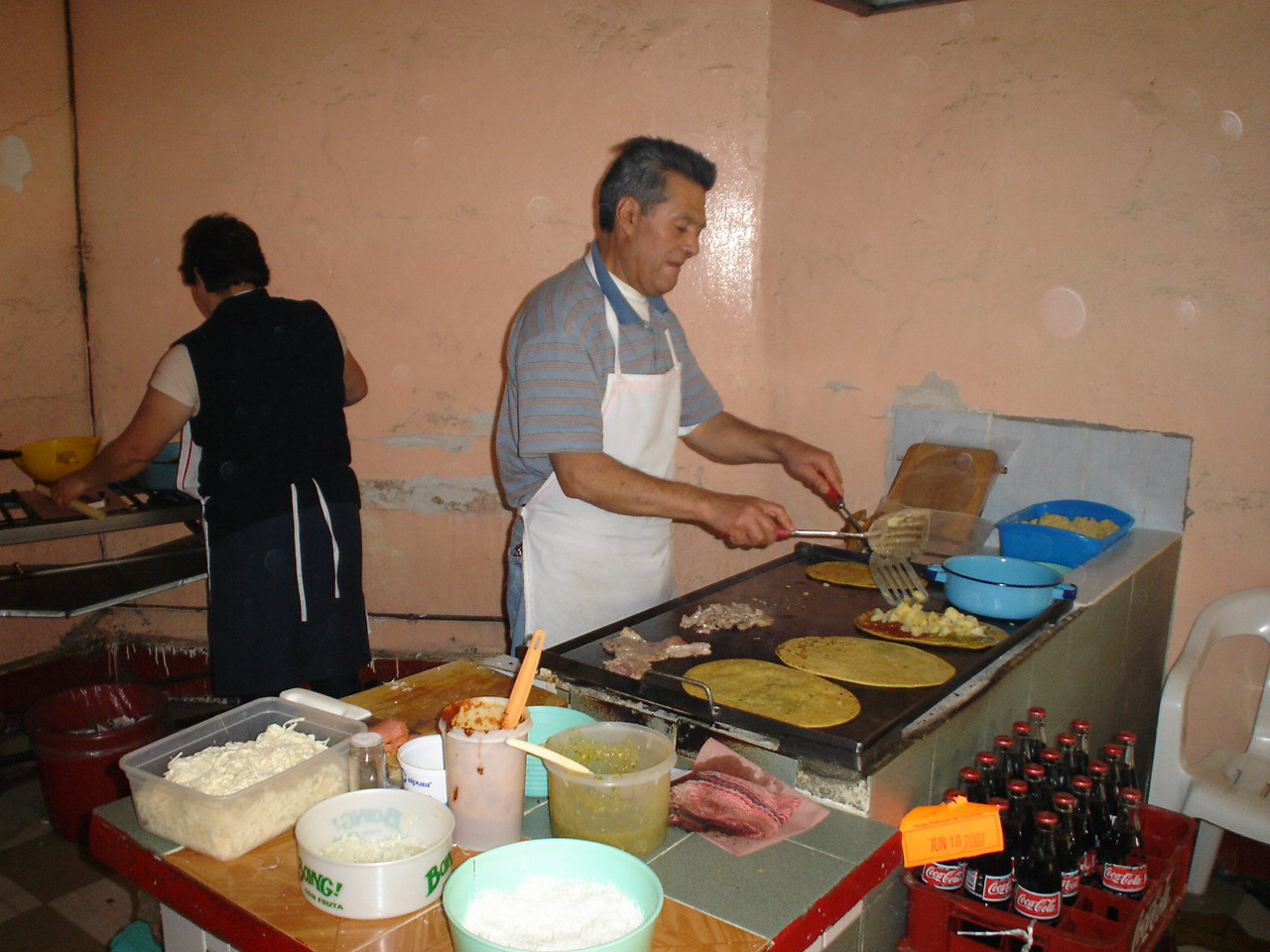
How and when is Huarache eaten?
Huaraches are eaten as a street food or casual meal, usually for lunch, dinner, or as a snack. They are served hot and can be eaten by hand or with a fork, depending on the toppings. The dish is popular in Mexico City, where it is sold at markets and street stalls. It is filling and can be customized with different meats or vegetarian toppings. Fried nopales are a frequent accompaniment.
Kinds of Huarache
While the basic huarache always has a masa and bean base, the toppings can change. Some versions use different meats, such as ground beef or tongue, while others may be vegetarian. The salsa can be red or green, and additional toppings like potato or lettuce are sometimes included. Huaraches are related to sopes and tlacoyos but are set apart by their long, sandal-like shape.
What Huarache means
Huarache is a well-known example of Mexican antojitos, or street snacks, especially in Mexico City. Its name and shape connect it to local culture, referencing the traditional sandal. The dish is not tied to a particular festival or religious occasion but is part of everyday eating, especially in markets and casual settings. Its creation is linked to a specific person and place in Mexico City's food history.
Questions people ask about Huarache
What is a huarache made of?
A huarache is made from masa (corn dough) filled with smashed pinto beans, then fried and topped with salsa, onions, potato, cilantro, meat, and queso fresco. Fried cactus leaves (nopales) are often served alongside.
Where does huarache come from?
Huarache was created in Mexico City in the early 1930s by Carmen Gómez Medina, who sold it at her food stall. Its name comes from its shape, which resembles a traditional sandal.
How is a huarache different from a sope or tlacoyo?
Unlike sopes or tlacoyos, huaraches are long and oval, shaped like a sandal sole. The masa is filled with beans and fried, then topped with various ingredients.
Is huarache always made with meat?
No, huarache can be made with or without meat. While common toppings include ground beef or tongue, vegetarian versions with just beans, cheese, and vegetables are also popular.
When is huarache usually eaten?
Huarache is eaten as a street food or casual meal, typically at lunch, dinner, or as a snack. It is popular in markets and street stalls, especially in Mexico City.
Good reading and sources
- Huarache (food) on WikipediaEncyclopedia
- More photos on Wikimedia CommonsPhotos
- Wikidata recordOpen data
The facts on this page come from the Wikipedia article "Huarache (food)", written by its contributors and used under the CC BY-SA 4.0 licence, and from its Wikidata record (CC0). Thali rewrote the text in its own words, with AI assistance, and compares every page with the article to make sure no passage is copied. It may be reused under the same CC BY-SA 4.0 licence with a link back.
It may contain mistakes, and it is not dietary or allergy advice: recipes differ from cook to cook. If something is wrong, tell us. Last refreshed 2026-10-03.
More from Mexico
All the food of Mexico Taco
🇲🇽 Mexico and 1 moreA folded tortilla filled with meat, beans or vegetables, eaten by hand
Street food, Lunch, Dinner
Blood sausageMeat
🇫🇷 France and 5 moreA sausage made with animal blood, fillers and spices, cooked or dried until firm
Main dish, Lunch, Dinner
Taco
🇲🇽 Mexico and 1 moreA folded tortilla filled with meat, beans or vegetables, eaten by hand
Street food, Lunch, Dinner
Blood sausageMeat
🇫🇷 France and 5 moreA sausage made with animal blood, fillers and spices, cooked or dried until firm
Main dish, Lunch, Dinner
 MolleteVegetarian
🇲🇽 Mexico and 6 moreOpen-faced Mexican sandwich with refried beans and melted cheese
Bread, Breakfast, Snacks
MolleteVegetarian
🇲🇽 Mexico and 6 moreOpen-faced Mexican sandwich with refried beans and melted cheese
Bread, Breakfast, Snacks
 BarbacoaMeat
🇲🇽 Mexico and 3 moreMeat slow-cooked in a pit lined with agave or banana leaves
Main dish, Lunch, Dinner
BarbacoaMeat
🇲🇽 Mexico and 3 moreMeat slow-cooked in a pit lined with agave or banana leaves
Main dish, Lunch, Dinner
Its cousins elsewhere
All street food Samosa
🇮🇳 India and 5 moreFried or baked pastry with a spiced filling, shaped into triangles or cones
Pie or savoury pastry, Snacks, Lunch
Samosa
🇮🇳 India and 5 moreFried or baked pastry with a spiced filling, shaped into triangles or cones
Pie or savoury pastry, Snacks, Lunch
 Börek
🇹🇷 Turkey and 5 moreFlaky pastry filled with cheese, meat or vegetables, baked or fried
Pie or savoury pastry, Breakfast, Lunch
Börek
🇹🇷 Turkey and 5 moreFlaky pastry filled with cheese, meat or vegetables, baked or fried
Pie or savoury pastry, Breakfast, Lunch
 Empanada
🇪🇸 Spain and 5 morePastry turnovers filled with meat, cheese, or vegetables, baked or fried
Pie or savoury pastry, Lunch, Dinner
Empanada
🇪🇸 Spain and 5 morePastry turnovers filled with meat, cheese, or vegetables, baked or fried
Pie or savoury pastry, Lunch, Dinner
 Fatayerفطائر
🇱🇧 Lebanon and 5 moreSmall Levantine pies with savoury fillings, baked in various shapes
Pie or savoury pastry, Snacks, Lunch
Fatayerفطائر
🇱🇧 Lebanon and 5 moreSmall Levantine pies with savoury fillings, baked in various shapes
Pie or savoury pastry, Snacks, Lunch