
Imarti
Deep-fried black gram batter shaped into spirals and soaked in scented sugar syrup
Imarti is a sweet from India made by frying a batter of black gram flour into flower-like rings, then soaking them in a syrup flavored with spices and saffron. It is enjoyed as a dessert or festive treat, and is also popular during iftar in Bangladesh. Imarti stands out for its thicker, less sweet texture compared to jalebi.
- Imarti is made from black gram flour batter, deep-fried and soaked in syrup
- Saffron gives imarti its bright orange color
- The sweet is shaped into small, flower-like rings
- Imarti is popular during iftar in Bangladesh
- It is thicker and less sweet than jalebi
What is Imarti?
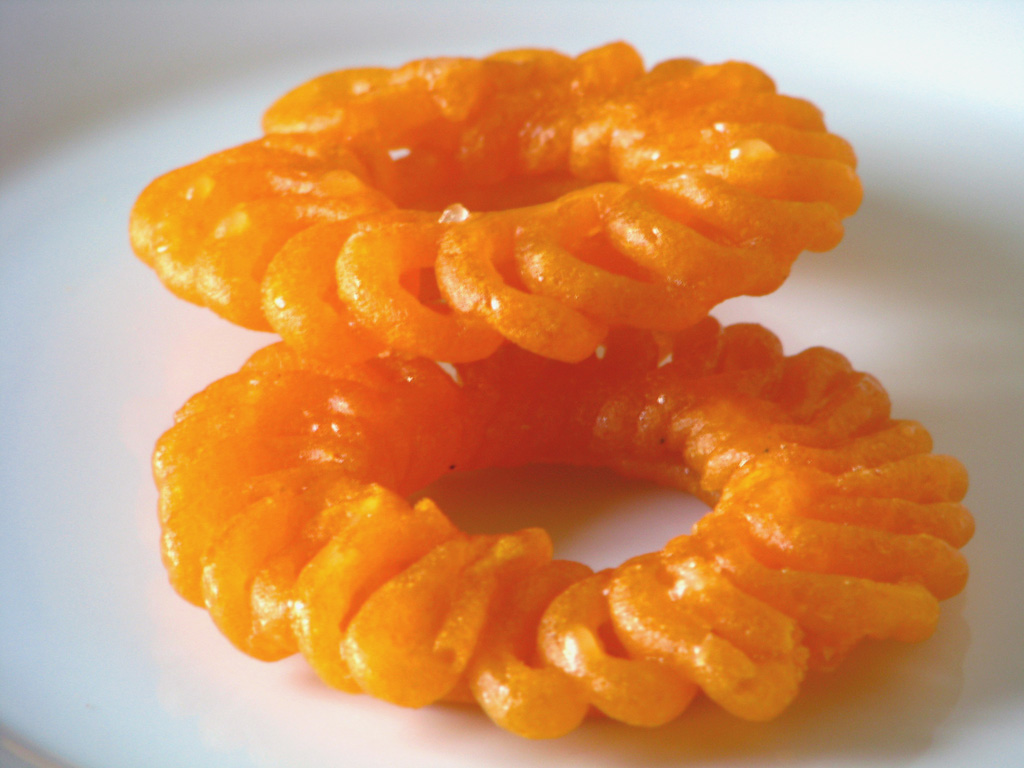
Imarti is a sweet made by piping a thick batter of black gram flour into hot ghee or oil, forming small spirals or flower shapes. Once fried, these rings are soaked in a sugar syrup that is often scented with saffron, cardamom, cloves, camphor, and kewra (a floral essence). The result is a bright orange sweet with a chewy texture and a floral, spiced aroma. Imarti is thicker and less sugary than jalebi, a similar dessert.
Where does Imarti come from?
Imarti comes from the Indian subcontinent, where it has long been a part of festive and everyday meals. The sweet is especially associated with northern India, and certain cities have become known for their versions. Over time, it has spread to other regions, including Bangladesh, where it is commonly eaten to break the fast during Ramadan. The use of black gram flour and intricate shapes set imarti apart from other syrup-soaked sweets.
How is Imarti made?
To make imarti, black gram (urad dal) is soaked and ground into a smooth batter. This batter is piped directly into hot ghee or oil, forming small, circular patterns with a central ring. While the imartis fry, a sugar syrup is prepared and infused with spices and floral essences. Once golden and crisp, the fried shapes are immersed in the syrup, where they absorb the flavors and become slightly plump. They can be served hot, cold, or at room temperature.


How and when is Imarti eaten?
Imarti is usually served as a dessert at the end of a meal, but it can also be enjoyed as a snack. In some places, it is paired with dahi (yogurt) for dipping. During festivals, weddings, and religious gatherings, imartis are often given to guests and shared among family and friends. In Bangladesh, they are a popular choice for iftar, the evening meal that breaks the daily fast during Ramadan.
Kinds of Imarti
Different regions use local varieties of black gram for the batter. In southern India, jangiri parappu is preferred. The syrup can be flavored with various spices, and the color may be deepened with more saffron. While ghee is traditional for frying, some cooks use other oils. The shapes and sizes may also vary, but the flower-like appearance is a common feature.
What Imarti means
Imarti is a symbol of celebration in many parts of India and Bangladesh. It is a common sight at festivals, weddings, and religious events, where it is shared as a gesture of goodwill. The sweet is also linked to local pride in places known for their unique imarti. Its presence at iftar in Bangladesh highlights its role in religious and communal gatherings.
Questions people ask about Imarti
What is imarti made of?
Imarti is made from a batter of black gram flour, which is piped into hot ghee or oil and fried, then soaked in a sugar syrup flavored with saffron, cardamom, cloves, camphor, and kewra.
Where does imarti come from?
Imarti originated in India and is also enjoyed in Bangladesh. It is especially associated with northern India and is a traditional sweet in the Indian subcontinent.
How is imarti different from jalebi?
Imarti is thicker, less sweet, and has a chewier texture than jalebi. While both are syrup-soaked sweets, imarti is made from black gram flour and shaped into flower-like rings.
When is imarti usually eaten?
Imarti is commonly served as a dessert or snack, especially during festivals, weddings, and religious celebrations. In Bangladesh, it is a popular food for iftar during Ramadan.
What does imarti look and taste like?
Imarti is bright orange, shaped like a small flower or spiral, and has a chewy texture. It tastes sweet with floral and spiced notes from saffron, cardamom, and other flavorings.
Good reading and sources
The facts on this page come from the Wikipedia article "Imarti", written by its contributors and used under the CC BY-SA 4.0 licence, and from its Wikidata record (CC0). Thali rewrote the text in its own words, with AI assistance, and compares every page with the article to make sure no passage is copied. It may be reused under the same CC BY-SA 4.0 licence with a link back.
It may contain mistakes, and it is not dietary or allergy advice: recipes differ from cook to cook. If something is wrong, tell us. Last refreshed 2026-10-03.
More from India
All the food of India Ice cream
🇺🇸 United States and 5 moreA frozen dessert made from sweetened, flavoured milk or cream
Sweet or dessert, Snacks
Halvaحَلَاوَة
🇮🇷 Iran and 5 moreDense sweet made from seeds, grains, or vegetables, found across Asia, Africa, and Europe
Sweet or dessert, Snacks, Tea time
Ice cream
🇺🇸 United States and 5 moreA frozen dessert made from sweetened, flavoured milk or cream
Sweet or dessert, Snacks
Halvaحَلَاوَة
🇮🇷 Iran and 5 moreDense sweet made from seeds, grains, or vegetables, found across Asia, Africa, and Europe
Sweet or dessert, Snacks, Tea time
 Candy
🇺🇸 United States and 5 moreSmall sweet treats made mainly from sugar or sweeteners
Sweet or dessert, Snacks
Candy
🇺🇸 United States and 5 moreSmall sweet treats made mainly from sugar or sweeteners
Sweet or dessert, Snacks
 French toast
🇫🇷 France and 5 moreBread soaked in egg and milk, pan-fried and served sweet or savoury
Main dish, Breakfast, Snacks
French toast
🇫🇷 France and 5 moreBread soaked in egg and milk, pan-fried and served sweet or savoury
Main dish, Breakfast, Snacks
Its cousins elsewhere
All sweets and desserts Pumpkin pieVegetarian
🇺🇸 United States and 1 moreSweet pie with spiced pumpkin custard in a pastry shell, served for autumn holidays
Sweet or dessert
Pumpkin pieVegetarian
🇺🇸 United States and 1 moreSweet pie with spiced pumpkin custard in a pastry shell, served for autumn holidays
Sweet or dessert
 GloggGlögg
🇸🇪 Sweden and 2 moreNordic spiced mulled wine, served warm at Christmas
Drink, Tea time, Snacks
GloggGlögg
🇸🇪 Sweden and 2 moreNordic spiced mulled wine, served warm at Christmas
Drink, Tea time, Snacks
 Qatayefقطايف
🇪🇬 Egypt and 5 moreSweet stuffed pancakes, folded and filled with nuts or cream, served for Ramadan
Sweet or dessert, Snacks, Tea time
Qatayefقطايف
🇪🇬 Egypt and 5 moreSweet stuffed pancakes, folded and filled with nuts or cream, served for Ramadan
Sweet or dessert, Snacks, Tea time
 Cardamom breadVegetarian
🇫🇮 Finland and 3 moreEnriched Nordic sweet bread scented with cardamom, served with coffee or tea
Bread, Snacks, Tea time
Cardamom breadVegetarian
🇫🇮 Finland and 3 moreEnriched Nordic sweet bread scented with cardamom, served with coffee or tea
Bread, Snacks, Tea time