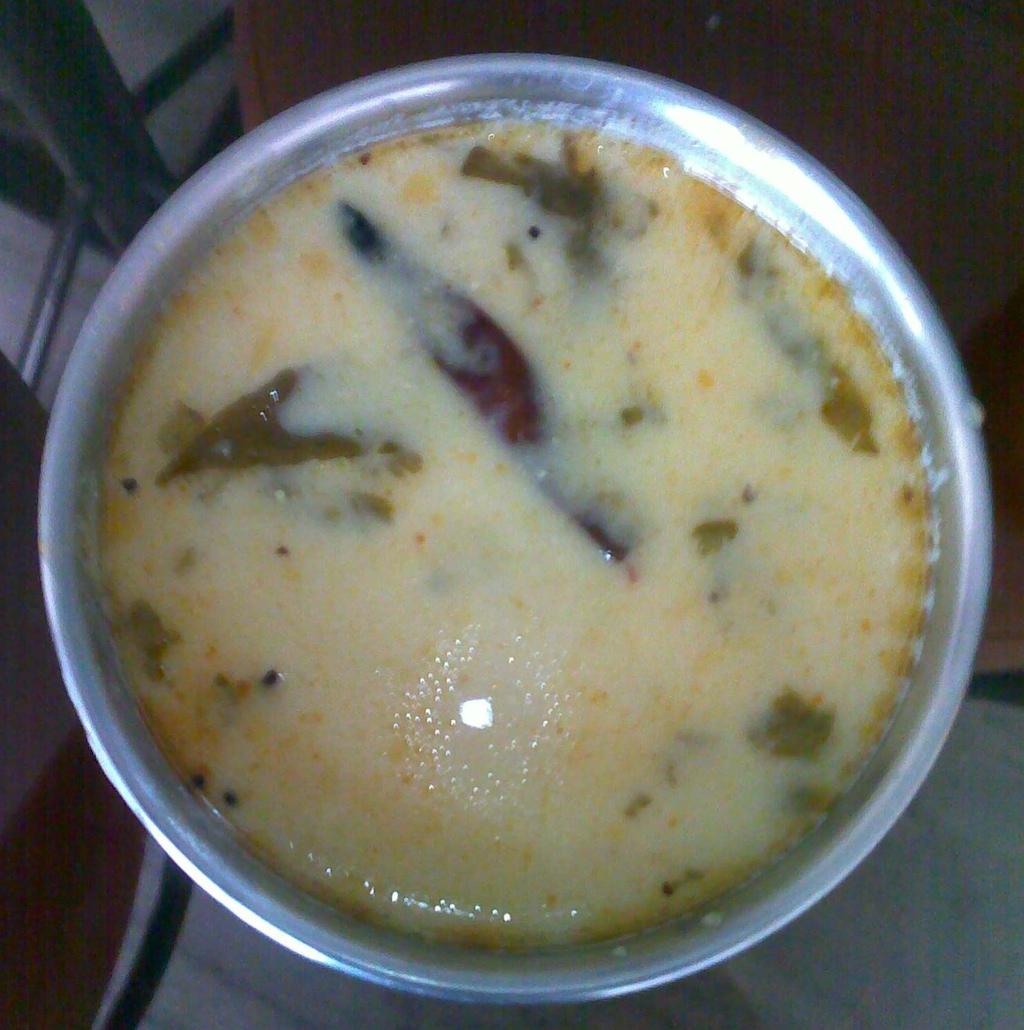
Kadhi
Yogurt and gram flour soup, often with fritters, from Rajasthan
Kadhi is a tangy, yogurt-based soup thickened with gram flour and spices, first made in Rajasthan, India. It is sometimes combined with pakoras (deep-fried fritters) and eaten with rice or roti. Many regions in India and Pakistan have their own versions, and it is also found in Trinidad and Tobago, where it is made with split pea flour.
- Kadhi is a yogurt and gram flour soup from Rajasthan, India.
- Pakoras (fritters) are often added to make it heartier.
- Gujarati kadhi is known for its sweet taste.
- Sindhi kadhi uses tamarind instead of yogurt for sourness.
- Kurhi in Trinidad uses split pea flour and is served at Hindu festivals.
What is Kadhi?
Kadhi is a thick, tangy soup made by simmering yogurt with gram flour (besan) and spices. The mixture becomes creamy and slightly sour, with a yellowish color from the flour and turmeric. Sometimes, deep-fried fritters called pakoras are added, making the dish heartier. Kadhi is often garnished with red chili or other spices. Depending on the region, vegetables like okra or eggplant may be included, and the soup can range from thin to quite thick. It is usually served hot, with rice or flatbreads.
Where does Kadhi come from?
Kadhi comes from Rajasthan, a dry region in India where cooks used dairy to make up for the lack of fresh vegetables. The dish spread to Gujarat, Sindh, and other parts of India and Pakistan. Its name comes from Sanskrit words for a decoction or gruel, and it was often made when households had extra milk, which was churned into butter, leaving buttermilk for kadhi. The dish traveled with Indian migrants to Trinidad and Tobago, where it became part of Hindu festival and wedding meals.
How is Kadhi made?
To make kadhi, yogurt is whisked with gram flour and water to form a smooth base. This is simmered with spices such as cumin, coriander, red chili, and sometimes fenugreek or asafoetida. The mixture thickens as it cooks. In many versions, pakoras—fritters made from chickpea flour and sometimes vegetables—are fried separately and added to the soup. Some regions add vegetables like okra, eggplant, or pumpkin. In Trinidad, split pea flour replaces gram flour, and pholouries (fried balls) are used.


How and when is Kadhi eaten?
Kadhi is eaten hot, usually at lunch or dinner. It is commonly paired with steamed rice, but can also be served with roti, paratha, or khichdi (rice and lentil porridge). In India and Pakistan, it is an everyday food but also appears at religious events, weddings, and festivals, especially among Hindus. In Trinidad and Tobago, it is part of ceremonial meals. Kadhi is considered easy to digest and is sometimes chosen for simple, home-style meals.
Kinds of Kadhi
There are many regional types of kadhi. Gujarati kadhi is thinner and often sweetened with sugar or jaggery, while Rajasthani kadhi is more sour and thicker. Punjabi kadhi is usually served with pakoras and may use buttermilk instead of yogurt. In southern India, coconut and green chilies are blended in, and the dish is called by different names in local languages. Sindhi kadhi uses roasted chickpea flour and tamarind for sourness. In Pakistan, kadhi often includes vegetables and always has fritters.
What Kadhi means
Kadhi is a staple in many Indian and Pakistani homes and is tied to both daily meals and special occasions. In Trinidad and Tobago, it is closely linked to Hindu religious ceremonies and weddings, where it is served with rice and vegetable dishes. The dish reflects local ingredients and customs, with each region adapting the base recipe. Its simple, comforting nature has made it a symbol of home cooking for many communities.
Questions people ask about Kadhi
What is kadhi made of?
Kadhi is made from yogurt and gram flour (besan), mixed with water and spices. Some versions include vegetables or deep-fried fritters called pakoras.
Where does kadhi come from?
Kadhi originated in Rajasthan, India, and spread to other regions such as Gujarat, Punjab, Sindh, and even Trinidad and Tobago.
How is kadhi usually eaten?
Kadhi is served hot, often with steamed rice, roti, or paratha. It can be part of everyday meals or served at festivals and weddings.
Are there different types of kadhi?
Yes, there are many regional versions. Gujarati kadhi is sweeter and thinner, Punjabi kadhi has pakoras, Sindhi kadhi uses tamarind, and in Trinidad, split pea flour is used.
Is kadhi vegetarian?
Kadhi is typically vegetarian, as it is made from yogurt, gram flour, and spices. Some versions include vegetables or fritters, but no meat.
Good reading and sources
The facts on this page come from the Wikipedia article "Kadhi", written by its contributors and used under the CC BY-SA 4.0 licence, and from its Wikidata record (CC0). Thali rewrote the text in its own words, with AI assistance, and compares every page with the article to make sure no passage is copied. It may be reused under the same CC BY-SA 4.0 licence with a link back.
It may contain mistakes, and it is not dietary or allergy advice: recipes differ from cook to cook. If something is wrong, tell us. Last refreshed 2026-10-03.
More from India
All the food of India Kebabكَبَاب
🇹🇷 Turkey and 5 moreGrilled or roasted meat, often on skewers, found across the Middle East and beyond
Main dish, Lunch, Dinner
Kebabكَبَاب
🇹🇷 Turkey and 5 moreGrilled or roasted meat, often on skewers, found across the Middle East and beyond
Main dish, Lunch, Dinner
 Biryani
🇮🇳 India and 5 moreRice and spiced meat or vegetables layered and cooked together
Main dish, Lunch, Dinner
Biryani
🇮🇳 India and 5 moreRice and spiced meat or vegetables layered and cooked together
Main dish, Lunch, Dinner
 French toast
🇫🇷 France and 5 moreBread soaked in egg and milk, pan-fried and served sweet or savoury
Main dish, Breakfast, Snacks
French toast
🇫🇷 France and 5 moreBread soaked in egg and milk, pan-fried and served sweet or savoury
Main dish, Breakfast, Snacks
 Fish and chipsFish or seafood
🇬🇧 United Kingdom and 8 moreBattered fried fish served hot with thick-cut chips
Main dish, Lunch, Dinner
Fish and chipsFish or seafood
🇬🇧 United Kingdom and 8 moreBattered fried fish served hot with thick-cut chips
Main dish, Lunch, Dinner
Its cousins elsewhere
All soups Maraqمرق
🇸🇴 Somalia and 3 moreSomali and Arabian meat or vegetable soup served with rice or bread
Soup, Lunch, Dinner
Maraqمرق
🇸🇴 Somalia and 3 moreSomali and Arabian meat or vegetable soup served with rice or bread
Soup, Lunch, Dinner
 Chicken soupMeat
🇺🇸 United States and 4 moreA hot soup of chicken simmered with vegetables, noodles or grains
Soup, Lunch, Dinner
Chicken soupMeat
🇺🇸 United States and 4 moreA hot soup of chicken simmered with vegetables, noodles or grains
Soup, Lunch, Dinner
 Lentil soupVegan
🇪🇬 Egypt and 5 moreA hearty soup made from lentils, often with vegetables and spices
Soup, Lunch, Dinner
Lentil soupVegan
🇪🇬 Egypt and 5 moreA hearty soup made from lentils, often with vegetables and spices
Soup, Lunch, Dinner
 Chorba
🇩🇿 Algeria and 5 moreA family of hearty soups and stews found from North Africa to Central Asia
Soup
Chorba
🇩🇿 Algeria and 5 moreA family of hearty soups and stews found from North Africa to Central Asia
Soup