
Chorba
A family of hearty soups and stews found from North Africa to Central Asia
Chorba refers to a wide range of soups and stews common in North Africa, the Middle East, Central Asia, Southeast Europe, and beyond. Recipes vary, but most versions include water, meat, beans, vegetables, and legumes. It can be served as a simple broth or with bread, and is a staple in many national cuisines.
- Chorba is found from North Africa to Central Asia
- It can be a simple broth or a rich stew
- Common ingredients include meat, beans, vegetables, and legumes
- Often served with bread
- Known by many names in different languages
What is Chorba?
Chorba is a term for a group of soups and stews enjoyed across a wide region stretching from North Africa through the Middle East and into Central and Southeast Europe. The dish can be made with a variety of ingredients, but most versions use water or broth as a base, with meat, beans, vegetables, and legumes added for substance. Some types are rich and hearty, while others are lighter and served as broths. The consistency and flavor can vary greatly depending on local tastes and available ingredients.
Where does Chorba come from?
The word 'chorba' comes from Ottoman Turkish, which borrowed it from Persian. Its roots trace back to words meaning 'salty' and 'stew' or 'gruel.' Over time, the name and the dish spread widely, appearing in many languages and cuisines under different forms. In some countries, like Romania and Moldova, 'ciorbă' is a general word for soup. The dish has no single point of origin but reflects centuries of culinary exchange across regions.
How is Chorba made?
There is no single way to make chorba, as recipes change from place to place. Commonly, water or broth is brought to a simmer, then meat (such as lamb or beef), beans, and a mix of vegetables and legumes are added. In some regions, potatoes are used. The soup may be cooked slowly for depth of flavor, or more quickly with a pressure cooker. Seasonings and herbs depend on local traditions.


How and when is Chorba eaten?
Chorba is often served with bread, which may be dipped into the soup or stew. In Afghanistan, for example, shorwa is eaten with Afghan bread on a shared tablecloth, called a dastarkhān. The dish can be a simple meal on its own or part of a larger spread. It is enjoyed in everyday settings and adapts to the ingredients at hand.
Kinds of Chorba
Chorba goes by many names and takes many forms. In Afghanistan, shorwa is made with potatoes, beans, and meat, and is usually served with bread. In Romania and Moldova, ciorbă refers to any soup. The dish can be vegetarian or made with different meats, and the choice of vegetables and spices changes with the region. Some versions are thick and filling, while others are more like a broth.
What Chorba means
Chorba is a staple in the daily cooking of many countries, reflecting local customs and tastes. Its many names and styles show how food traditions travel and adapt. The dish is not tied to a specific festival or religious practice, but is valued as a comforting, adaptable meal that brings people together.
Questions people ask about Chorba
What is chorba made of?
Chorba typically includes water or broth, meat, beans, vegetables, and legumes. The exact ingredients vary by region, and some versions are vegetarian.
Where does chorba come from?
Chorba is found across North Africa, the Middle East, Central Asia, Southeast Europe, and beyond. Its name and style spread through centuries of cultural exchange.
Is chorba always made with meat?
No, while many versions use meat, there are also vegetarian forms of chorba, depending on local customs and preferences.
How is chorba usually eaten?
Chorba is often served with bread, which can be dipped into the soup or stew. It may be eaten as a main meal or as part of a larger spread.
What does the word 'chorba' mean?
The word 'chorba' comes from Ottoman Turkish and Persian roots meaning 'salty stew' or 'broth.' It is used in many languages for soup or stew.
Good reading and sources
The facts on this page come from the Wikipedia article "Chorba", written by its contributors and used under the CC BY-SA 4.0 licence, and from its Wikidata record (CC0). Thali rewrote the text in its own words, with AI assistance, and compares every page with the article to make sure no passage is copied. It may be reused under the same CC BY-SA 4.0 licence with a link back.
It may contain mistakes, and it is not dietary or allergy advice: recipes differ from cook to cook. If something is wrong, tell us. Last refreshed 2026-10-03.
More from Algeria
All the food of Algeria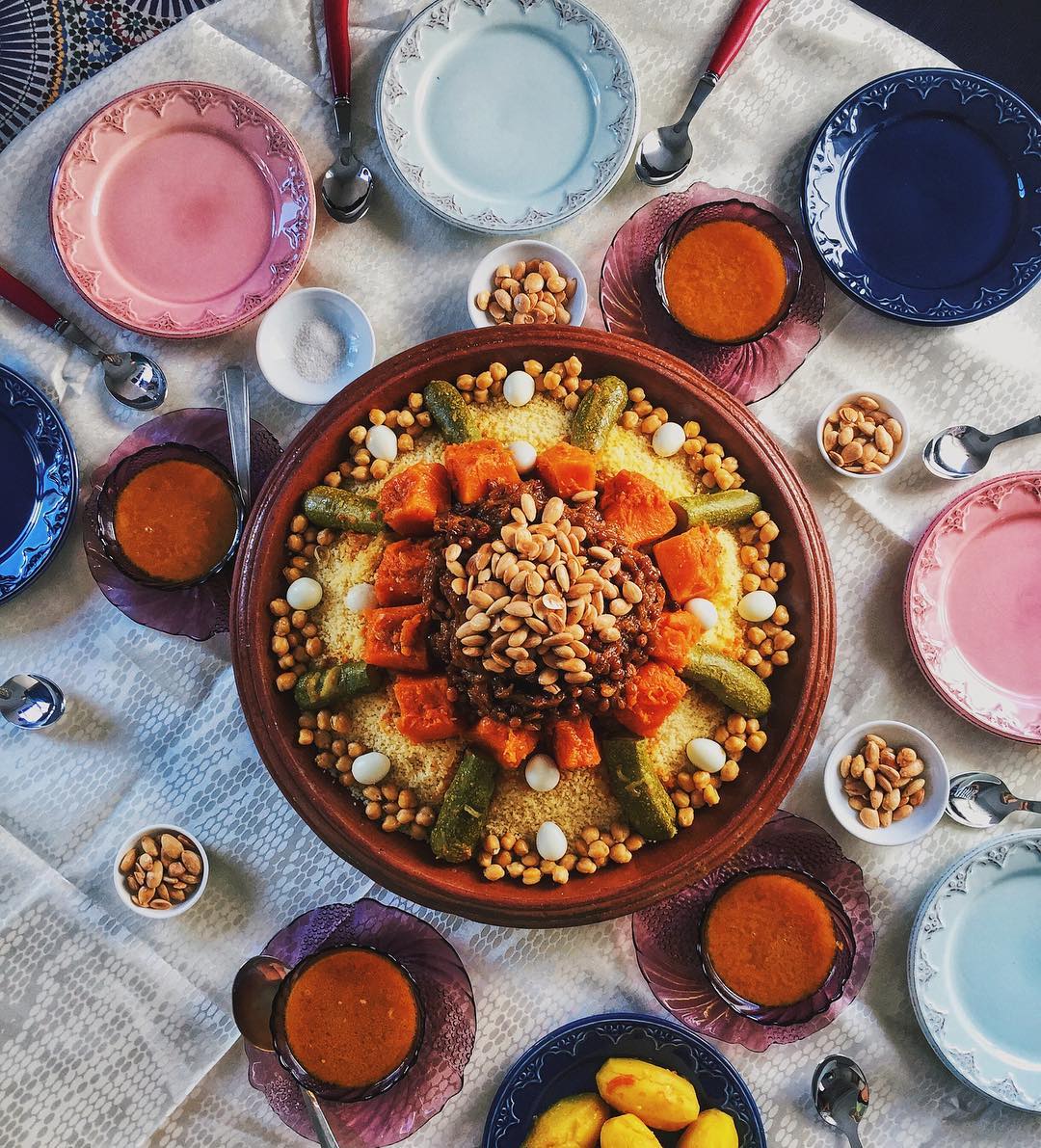 Couscousseksu
🇩🇿 Algeria and 4 moreSteamed semolina granules served with stew or vegetables across North Africa
Main dish, Lunch, Dinner
Couscousseksu
🇩🇿 Algeria and 4 moreSteamed semolina granules served with stew or vegetables across North Africa
Main dish, Lunch, Dinner
 Tajineطاجين
🇲🇦 Morocco and 4 moreNorth African stew slow-cooked in a cone-lidded clay pot
Main dish, Lunch, Dinner
Tajineطاجين
🇲🇦 Morocco and 4 moreNorth African stew slow-cooked in a cone-lidded clay pot
Main dish, Lunch, Dinner
 Hariraالحريرة
🇲🇦 Morocco and 3 moreNorth African soup of tomato, legumes, herbs and spices, often served during Ramadan
Soup, Dinner, Supper
Hariraالحريرة
🇲🇦 Morocco and 3 moreNorth African soup of tomato, legumes, herbs and spices, often served during Ramadan
Soup, Dinner, Supper
 ChakhchoukhaMeatشخشوخة
🇩🇿 AlgeriaAlgerian flatbread pieces in a spiced tomato and meat stew
Main dish, Lunch, Dinner
ChakhchoukhaMeatشخشوخة
🇩🇿 AlgeriaAlgerian flatbread pieces in a spiced tomato and meat stew
Main dish, Lunch, Dinner
Its cousins elsewhere
All soups Chicken soupMeat
🇺🇸 United States and 4 moreA hot soup of chicken simmered with vegetables, noodles or grains
Soup, Lunch, Dinner
Chicken soupMeat
🇺🇸 United States and 4 moreA hot soup of chicken simmered with vegetables, noodles or grains
Soup, Lunch, Dinner
 Hot pot火鍋
🇨🇳 China and 5 moreSimmering broth at the table for cooking meats, vegetables and more as you eat
Main dish, Dinner, Lunch
Hot pot火鍋
🇨🇳 China and 5 moreSimmering broth at the table for cooking meats, vegetables and more as you eat
Main dish, Dinner, Lunch
 HaleemMeat
🇮🇳 India and 7 moreA slow-cooked stew of wheat, lentils, meat and spices
Stew or curry, Breakfast, Lunch
HaleemMeat
🇮🇳 India and 7 moreA slow-cooked stew of wheat, lentils, meat and spices
Stew or curry, Breakfast, Lunch
 Thukpaཐུག་པ
🇨🇳 China and 3 moreTibetan noodle soup with many regional versions
Soup
Thukpaཐུག་པ
🇨🇳 China and 3 moreTibetan noodle soup with many regional versions
Soup