
Khinkali
In its own language: ხინკალი
Georgian dumplings with spiced meat or vegetable filling and a juicy broth inside
Khinkali are dumplings from Georgia, made by wrapping spiced meat or vegetables in dough and twisting the top to seal in the juices. They come from the mountainous regions of eastern Georgia and are eaten hot, often by hand, with the juices sipped from inside before eating the rest. Fillings can include beef, pork, lamb, mushrooms, potatoes, or cheese.
- Khinkali are eaten by hand, not with utensils
- The top knot is not eaten and left on the plate
- Fillings can be meat, mushroom, potato, or cheese
- Juicy broth forms inside the dumpling during cooking
- Pasanauri is famous for its khinkali
What is Khinkali?
Khinkali are large dumplings with a twisted knob at the top, filled with a mixture that can include spiced meat such as beef, pork, or lamb, or sometimes mushrooms, potatoes, or cheese. The filling is seasoned with herbs, cumin, chili pepper, onions, and sometimes garlic. When cooked, the meat releases juices, creating a broth inside the dumpling. The dough is thick enough to hold the filling and juices, and the top where the pleats meet is firmer and usually not eaten. Khinkali are served hot and are known for their juicy, flavorful interior.
Where does Khinkali come from?
Khinkali come from the mountainous regions of eastern Georgia, especially areas like Pshavi and Khevsureti. They were traditionally made by shepherds and farmers as a hearty, portable meal for cold winters. Some legends suggest a Mongolian influence, brought along the Silk Road in the 13th century, but most sources credit the dish to the mountain peoples of Georgia. The earliest versions used lamb, with other meats and vegetarian fillings becoming popular as the dish spread to urban areas.
How is Khinkali made?
To make khinkali, dough is rolled out and cut into circles. A spoonful of raw, spiced filling—often a mix of coarsely chopped meat, onions, herbs, and spices—is placed in the center. The dough is gathered up and twisted at the top to seal in the filling and juices. Sometimes water or broth is added to the filling for extra juiciness. The dumplings are then boiled until cooked through. The top knot is left thick to help seal the dumpling but is not usually eaten.

How and when is Khinkali eaten?
Khinkali are eaten hot, usually as a main dish for lunch or dinner. The traditional way is to pick them up by hand, bite into the side, and suck out the hot broth before eating the rest. The pleated top is left on the plate. They are served plain or with a sprinkle of ground black pepper. Using utensils is discouraged, as it can break the dumpling and spill the juices. Vegetarian versions are common during Orthodox fasting days.
Kinds of Khinkali
The original mountain version, khevsuruli, used only meat, onions, chili, salt, and cumin. In cities, the kalakuri style adds fresh herbs like parsley and coriander. Fillings now include mushrooms, potatoes, or cheese, especially for those who do not eat meat. Khinkali from Pasanauri is especially prized for its quality. In some regions, beef or lamb is used exclusively for religious reasons.
What Khinkali means
Khinkali is a symbol of Georgian hospitality and is a staple at gatherings and feasts. The etiquette of eating khinkali—by hand, counting the tops left on the plate—reflects local custom. Vegetarian versions are important during Orthodox fasting periods. The dish is closely tied to the mountainous regions of Georgia, and some towns like Pasanauri are famous for their khinkali.
Questions people ask about Khinkali
What is khinkali made of?
Khinkali are made from dough filled with spiced meat such as beef, pork, or lamb, or sometimes mushrooms, potatoes, or cheese. The filling is seasoned with herbs, cumin, chili pepper, onions, and sometimes garlic.
Where does khinkali come from?
Khinkali originates from the mountainous regions of eastern Georgia, particularly areas like Pshavi and Khevsureti. It is a traditional Georgian dish.
How is khinkali eaten?
Khinkali is eaten hot, picked up by hand. The diner bites into the dumpling and sucks out the broth before eating the rest, leaving the twisted top on the plate.
Are there vegetarian versions of khinkali?
Yes, khinkali can be filled with mushrooms, potatoes, or cheese instead of meat. Vegetarian versions are especially common during Orthodox fasting days in Georgia.
What makes khinkali different from other dumplings?
Khinkali are known for their juicy filling, with broth trapped inside the dough. The way they are eaten—by hand, with the broth sipped first—is also distinctive.
Good reading and sources
- Georgia’s giant dumpling born from conquestBBC, Article
- Georgians have the Mongols to thank for their favourite dumplingSouth China Morning Post, Article
The facts on this page come from the Wikipedia article "Khinkali", written by its contributors and used under the CC BY-SA 4.0 licence, and from its Wikidata record (CC0). Thali rewrote the text in its own words, with AI assistance, and compares every page with the article to make sure no passage is copied. It may be reused under the same CC BY-SA 4.0 licence with a link back.
It may contain mistakes, and it is not dietary or allergy advice: recipes differ from cook to cook. If something is wrong, tell us. Last refreshed 2026-10-03.
More from Georgia
All the food of Georgia Satsiviსაცივი
🇬🇪 GeorgiaCold Georgian walnut sauce served with poultry or vegetables
Main dish
Satsiviსაცივი
🇬🇪 GeorgiaCold Georgian walnut sauce served with poultry or vegetables
Main dish
 WineVegan
🇬🇪 Georgia and 5 moreAlcoholic drink made by fermenting grape juice in many styles and colors
Drink
KhachapuriVegetarianხაჭაპური
🇬🇪 Georgia and 4 moreLeavened bread filled with cheese, sometimes egg, from Georgia
Bread, Breakfast, Lunch
WineVegan
🇬🇪 Georgia and 5 moreAlcoholic drink made by fermenting grape juice in many styles and colors
Drink
KhachapuriVegetarianხაჭაპური
🇬🇪 Georgia and 4 moreLeavened bread filled with cheese, sometimes egg, from Georgia
Bread, Breakfast, Lunch
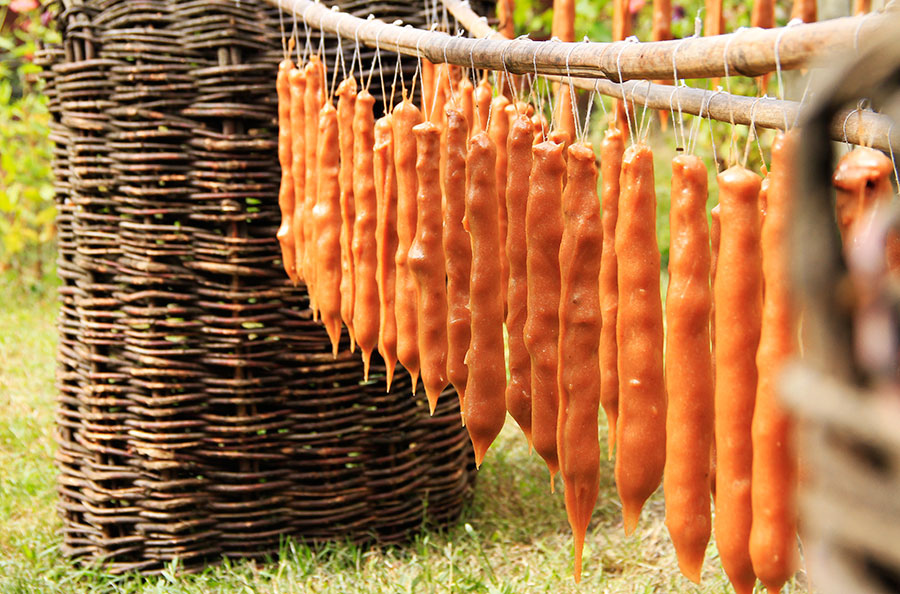 ChurchkhelaVegetarianჩურჩხელა
🇬🇪 GeorgiaCandle-shaped Georgian sweet made by dipping nuts in thickened grape juice
Sweet or dessert, Snacks
ChurchkhelaVegetarianჩურჩხელა
🇬🇪 GeorgiaCandle-shaped Georgian sweet made by dipping nuts in thickened grape juice
Sweet or dessert, Snacks
Its cousins elsewhere
All dumplings RavioliRavioliai
🇮🇹 Italy and 4 moreStuffed pasta parcels, usually square, with varied fillings and sauces
Main dish, Lunch, Dinner
RavioliRavioliai
🇮🇹 Italy and 4 moreStuffed pasta parcels, usually square, with varied fillings and sauces
Main dish, Lunch, Dinner
 Gnocchi
🇮🇹 Italy and 5 moreSoft dumplings of dough, often made with potato, flour and egg
Dumpling, Lunch, Dinner
Gnocchi
🇮🇹 Italy and 5 moreSoft dumplings of dough, often made with potato, flour and egg
Dumpling, Lunch, Dinner
 Varenykyвареники
🇺🇦 Ukraine and 1 moreUkrainian dumplings filled with sweet or savoury ingredients
Dumpling, Lunch, Dinner
Varenykyвареники
🇺🇦 Ukraine and 1 moreUkrainian dumplings filled with sweet or savoury ingredients
Dumpling, Lunch, Dinner