
Knödel
Boiled dumplings made from potato, bread or flour, common in Central Europe
Knödel are boiled dumplings made from potato, bread, or flour, found across Central and Eastern Europe, especially in Austria and Germany. They can be served as a side dish, in soup, or as a sweet dessert when filled with fruit. Many kinds exist, using different ingredients and fillings.
- Knödel are boiled dumplings from Central Europe
- They can be made from potato, bread, or flour
- Some are savoury sides, others are sweet desserts
- Filled versions use fruit, meat, or cheese
- Many regional names and styles exist
What is Knödel?
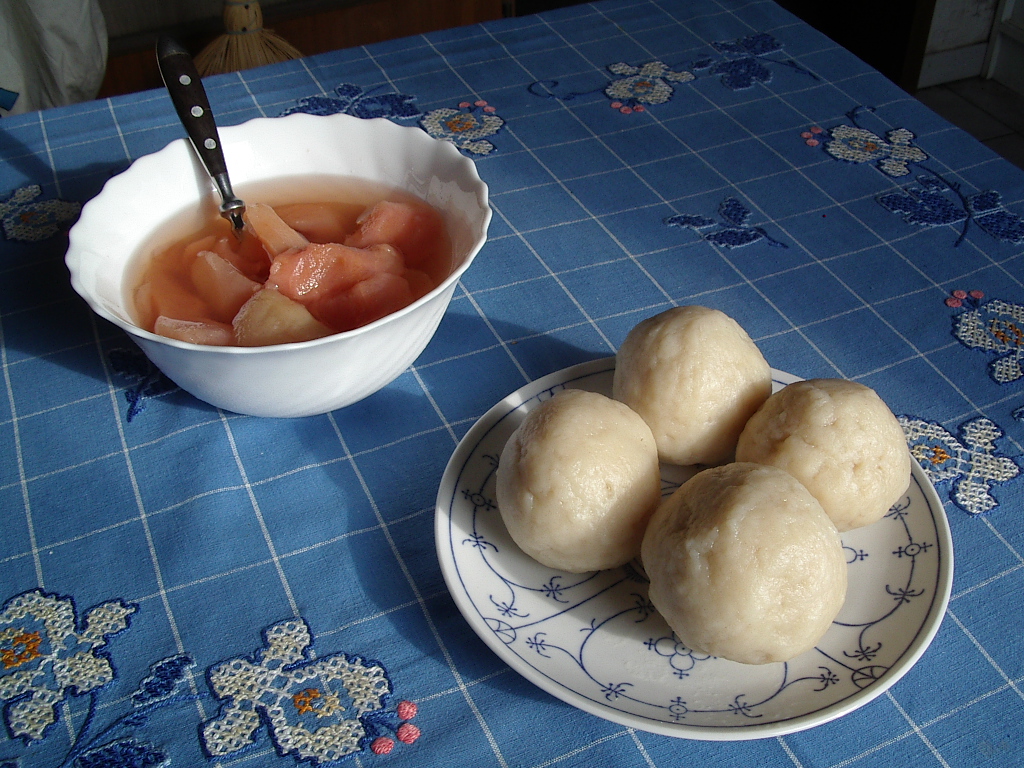
Knödel are round, boiled dumplings made from a dough of potato, bread, or flour, and sometimes eggs and milk. They can be plain or filled, and range in size from small balls to large, loaf-like shapes. Some are savoury, served as a side or in soup, while others are sweet, stuffed with fruit like plums or apricots. The texture is soft and dense, and the taste depends on the base and any fillings or toppings, which can include buttered breadcrumbs or sugar.
Where does Knödel come from?
Knödel have roots in Central Europe, especially Austria and Germany, and spread throughout the region. The name comes from the German word for 'knot', reflecting their shape. Over time, many local versions developed, using available ingredients like potatoes, bread, or flour. The dish became a staple in many Central and Eastern European cuisines, with similar dumplings found in Italy, Scandinavia, and among Ashkenazi Jews.
How is Knödel made?
The dough for Knödel is made by mixing mashed or grated potatoes, or soaked bread, or flour with eggs and sometimes milk. The mixture is shaped into balls, which may be filled with fruit, meat, or cheese, or left plain. The dumplings are then boiled in water or stock until cooked through. Some types are rolled in buttered breadcrumbs after boiling, or topped with sugar and poppy seeds for sweet versions.


How and when is Knödel eaten?
Knödel are eaten in many ways. Savoury types are often served as a side dish with meat and gravy, or added to soups. Sweet versions, filled with fruit, are eaten as dessert. In some regions, they are a main dish. The setting can be a family meal or a festive table, and the accompaniments vary by region and type, from stews to sweet sauces.
Kinds of Knödel
There are many regional and ingredient-based variations. Semmelknödel use bread, while potato-based versions are common in Germany and Austria. Some are filled with bacon, ham, or croutons, while others, like plum or apricot dumplings, are sweet. Leberknödel use liver, and Grießklößchen are made with semolina. Each country and region has its own style and name for these dumplings.
What Knödel means
Knödel are a staple of Central European cooking and appear in daily meals and festive occasions. They are found in the cuisines of Austria, Germany, and neighbouring countries, and have spread to immigrant communities abroad. The dish is known by many names and has inspired similar foods in other cultures, reflecting its adaptability and importance in the region's food traditions.
Questions people ask about Knödel
What are Knödel made of?
Knödel are made from a dough based on potato, bread, or flour, often with eggs and milk. Some versions include fillings like fruit, meat, or cheese.
Where do Knödel come from?
Knödel originate from Central Europe, especially Austria and Germany, and are found throughout the region in many local forms.
Are Knödel sweet or savoury?
They can be both. Some are savoury and served as sides or in soup, while others are sweet, filled with fruit and served as dessert.
How are Knödel cooked?
They are shaped into balls and boiled in water or stock until cooked through. Some are rolled in breadcrumbs or topped with sugar.
What are some well-known variations?
Variations include Semmelknödel (bread), Leberknödel (liver), plum or apricot dumplings, and versions filled with bacon or croutons.
Good reading and sources
The facts on this page come from the Wikipedia article "Knödel", written by its contributors and used under the CC BY-SA 4.0 licence, and from its Wikidata record (CC0). Thali rewrote the text in its own words, with AI assistance, and compares every page with the article to make sure no passage is copied. It may be reused under the same CC BY-SA 4.0 licence with a link back.
It may contain mistakes, and it is not dietary or allergy advice: recipes differ from cook to cook. If something is wrong, tell us. Last refreshed 2026-10-03.
More from Austria
All the food of Austria SpätzleSpätzla
🇩🇪 Germany and 5 moreIrregular egg noodles from Swabia, served as a side or main dish
Main dish, Lunch, Dinner
SpätzleSpätzla
🇩🇪 Germany and 5 moreIrregular egg noodles from Swabia, served as a side or main dish
Main dish, Lunch, Dinner
 Dampfnudel
🇩🇪 Germany and 3 moreSoft yeast dumplings cooked in a covered pan until golden underneath
Dumpling, Lunch, Dinner
Dampfnudel
🇩🇪 Germany and 3 moreSoft yeast dumplings cooked in a covered pan until golden underneath
Dumpling, Lunch, Dinner
 Hot dogMeat
🇺🇸 United States and 2 moreA sausage in a sliced bun, topped with condiments and eaten hot
Street food, Lunch, Dinner
Hot dogMeat
🇺🇸 United States and 2 moreA sausage in a sliced bun, topped with condiments and eaten hot
Street food, Lunch, Dinner
 CroissantVegetarian
🇫🇷 France and 5 moreA crescent-shaped, flaky pastry made from layered yeast dough and butter
Pie or savoury pastry, Breakfast, Tea time
CroissantVegetarian
🇫🇷 France and 5 moreA crescent-shaped, flaky pastry made from layered yeast dough and butter
Pie or savoury pastry, Breakfast, Tea time
Its cousins elsewhere
All dumplings Pelmeniпельмени
🇷🇺 RussiaRussian dumplings filled with seasoned meat and wrapped in thin dough
Dumpling, Lunch, Dinner
Pelmeniпельмени
🇷🇺 RussiaRussian dumplings filled with seasoned meat and wrapped in thin dough
Dumpling, Lunch, Dinner
 Khinkaliხინკალი
🇬🇪 GeorgiaGeorgian dumplings with spiced meat or vegetable filling and a juicy broth inside
Dumpling, Lunch, Dinner
Khinkaliხინკალი
🇬🇪 GeorgiaGeorgian dumplings with spiced meat or vegetable filling and a juicy broth inside
Dumpling, Lunch, Dinner
 MantiMeat
🇺🇿 Uzbekistan and 5 moreSpiced meat dumplings wrapped in thin dough, steamed, boiled or baked
Dumpling, Lunch, Dinner
MantiMeat
🇺🇿 Uzbekistan and 5 moreSpiced meat dumplings wrapped in thin dough, steamed, boiled or baked
Dumpling, Lunch, Dinner
 Wonton云吞
🇨🇳 China and 5 moreChinese dumplings with a thin wrapper, filled and served in soup or fried
Dumpling, Lunch, Dinner
Wonton云吞
🇨🇳 China and 5 moreChinese dumplings with a thin wrapper, filled and served in soup or fried
Dumpling, Lunch, Dinner