
Kocho
In its own language: ቆጮ
Fermented flatbread made from the enset plant in Ethiopia
Kocho is a dense, slightly sour flatbread made from the fermented pulp of the enset plant, eaten mainly in Ethiopia. The pith from the plant’s pseudo-stem is pulped, mixed with yeast, and left to ferment for months before being cooked. Kocho is a staple food in some Ethiopian regions and is often served with stews, greens, or cheese.
- Made from fermented pulp of the enset plant
- Can be stored underground for up to a year
- Staple food for many Ethiopians
- Served with dishes like kitfo and gomen
- Has a sour taste and dense texture
What is Kocho?
Kocho is a staple Ethiopian food made from the enset plant, sometimes called false banana. The plant’s pseudo-stem and corm are scraped and pulped, then fermented with yeast. The result is a dense, doughy bread with a sour flavor. Kocho is usually cooked as a flatbread and has a chewy texture. It is often used to scoop up other dishes, acting as both food and utensil. Its color and taste come from the long fermentation process.
Where does Kocho come from?
Kocho comes from Ethiopia, where the enset plant is widely grown, especially in the southern regions. For many Ethiopians, kocho has long been a key part of the diet, sometimes as the main source of food. Its ability to be stored underground for months or even years made it important in times of food shortage. The method of fermenting enset pulp is traditional and has been passed down through generations.
How is Kocho made?
To make kocho, the enset plant’s pseudo-stem is cut open and the soft inner pulp is scraped out. This pulp, along with the corm, is pounded and mixed with yeast. The mixture is packed and left to ferment in a pit or container for several weeks to up to two years. When ready, the fermented dough is shaped and cooked, often as a flatbread over a hot surface.
How and when is Kocho eaten?
Kocho is eaten as a main part of meals in some Ethiopian communities. It is usually served hot, alongside dishes like kitfo (minced raw meat), gomen (cooked greens), or ayibe (fresh cheese). People use pieces of kocho to scoop up these foods, much like injera. It is filling and can be eaten for lunch or dinner. Its sour taste pairs well with rich or spicy accompaniments.
Kinds of Kocho
While the basic process of making kocho is similar across Ethiopia, the length of fermentation and the way it is cooked can differ. Some families ferment the dough for only a few months, while others may leave it underground for up to two years. The bread may be cooked as a thick or thin flatbread, depending on local custom. Kocho can be eaten alone or with a variety of side dishes.
What Kocho means
Kocho is more than just food; it is a symbol of resilience in Ethiopian culture. Its long shelf life makes it a reliable staple during hard times. In some regions, it is a daily food, while in others it is reserved for special meals. The process of making and sharing kocho is part of community life, and it is often served at gatherings and family meals.
Questions people ask about Kocho
What is kocho made from?
Kocho is made from the scraped pulp of the enset plant’s pseudo-stem and corm, mixed with yeast and fermented before being cooked.
Where does kocho come from?
Kocho is a traditional food from Ethiopia, especially important in the southern regions where enset is widely grown.
How does kocho taste?
Kocho has a dense, chewy texture and a sour flavor, which comes from its long fermentation process.
How is kocho eaten?
Kocho is served hot, often as a flatbread, and is used to scoop up other foods like stews, greens, or cheese.
Why is kocho important in Ethiopia?
Kocho is a staple food for many Ethiopians and can be stored underground for months, making it vital during times of food scarcity.
Good reading and sources
The facts on this page come from the Wikipedia article "Kocho (food)", written by its contributors and used under the CC BY-SA 4.0 licence, and from its Wikidata record (CC0). Thali rewrote the text in its own words, with AI assistance, and compares every page with the article to make sure no passage is copied. It may be reused under the same CC BY-SA 4.0 licence with a link back.
It may contain mistakes, and it is not dietary or allergy advice: recipes differ from cook to cook. If something is wrong, tell us. Last refreshed 2026-10-03.
More from Ethiopia
All the food of Ethiopia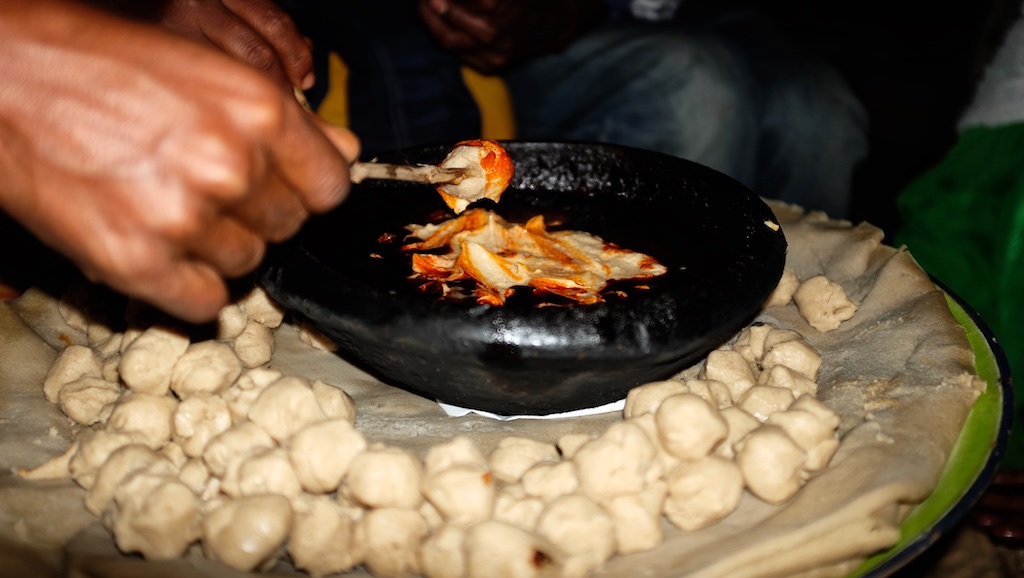 TihloMeatጥሕሎ
🇪🇹 EthiopiaBarley dough balls served with spicy meat stew from Tigray, Ethiopia
Main dish, Snacks, Lunch
TihloMeatጥሕሎ
🇪🇹 EthiopiaBarley dough balls served with spicy meat stew from Tigray, Ethiopia
Main dish, Snacks, Lunch
 HilbetVeganሕልበት
🇪🇷 Eritrea and 1 moreCreamy vegan dip of fava beans, lentils and spices from Eritrea and Ethiopia
Main dish, Lunch, Dinner
OodkacMeat
🇸🇴 Somalia and 3 moreSomali preserved meat cubes cooked and stored in butter
Main dish, Breakfast, Lunch
HilbetVeganሕልበት
🇪🇷 Eritrea and 1 moreCreamy vegan dip of fava beans, lentils and spices from Eritrea and Ethiopia
Main dish, Lunch, Dinner
OodkacMeat
🇸🇴 Somalia and 3 moreSomali preserved meat cubes cooked and stored in butter
Main dish, Breakfast, Lunch
 Beyaynetuበያይነቱ
🇪🇹 Ethiopia and 1 moreEthiopian platter of injera with assorted vegetables and meats
Main dish, Lunch, Dinner
Beyaynetuበያይነቱ
🇪🇹 Ethiopia and 1 moreEthiopian platter of injera with assorted vegetables and meats
Main dish, Lunch, Dinner
Its cousins elsewhere
All breads BaguetteVegan
🇫🇷 France and 5 moreLong, thin French bread with a crisp crust and soft interior
Bread, Breakfast, Lunch
BaguetteVegan
🇫🇷 France and 5 moreLong, thin French bread with a crisp crust and soft interior
Bread, Breakfast, Lunch
 Bagel
🇵🇱 Poland and 2 moreRing-shaped bread roll, boiled then baked for a dense, chewy texture
Bread, Breakfast, Lunch
Bagel
🇵🇱 Poland and 2 moreRing-shaped bread roll, boiled then baked for a dense, chewy texture
Bread, Breakfast, Lunch
 PanettoneVegetarian
🇮🇹 Italy and 2 moreTall, sweet Italian bread with candied fruit, eaten at Christmas and New Year
Sweet or dessert, Breakfast, Tea time
PanettoneVegetarian
🇮🇹 Italy and 2 moreTall, sweet Italian bread with candied fruit, eaten at Christmas and New Year
Sweet or dessert, Breakfast, Tea time