
Laksa
In its own language: لقسا / 叻沙
Spicy Southeast Asian noodle soup with coconut or sour broth
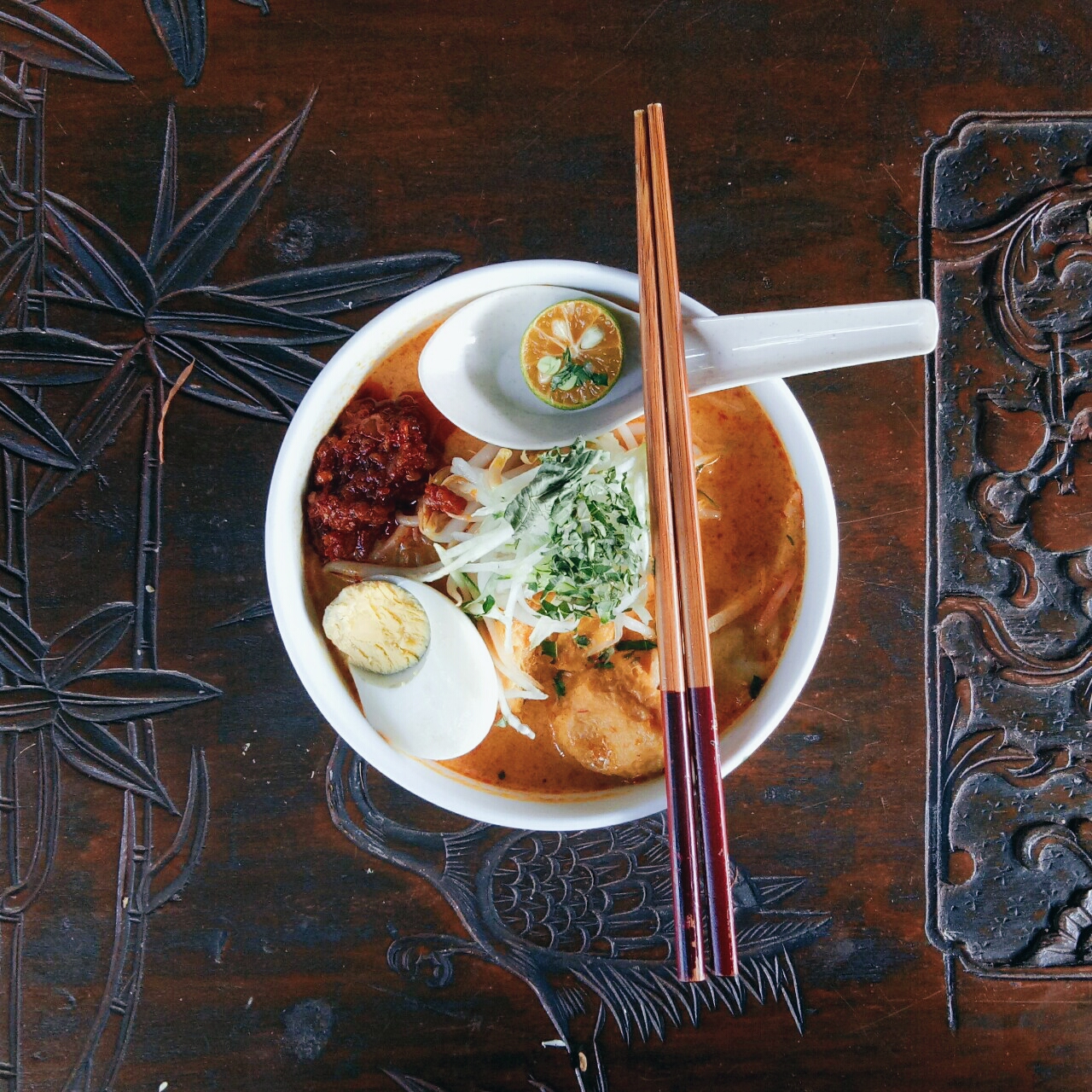
Laksa is a spicy noodle soup from Southeast Asia, especially linked to Peranakan Chinese communities in Malaysia, Singapore, and Indonesia. It features thick rice noodles or vermicelli in a coconut milk curry or sour tamarind-based broth, topped with chicken, prawns, or fish and fresh herbs. Laksa is enjoyed at any meal and comes in many regional styles.
- Laksa comes in coconut or sour tamarind broth styles
- Thick rice noodles or vermicelli are most common
- Toppings include chicken, prawns, fish, and herbs
- Katong Laksa is eaten with a spoon only
- Laksa is linked to Peranakan Chinese heritage
What is Laksa?
Laksa is a noodle soup with a spicy, aromatic broth, popular in Malaysia, Indonesia, and Singapore. It usually features thick rice noodles or vermicelli, served in either a rich coconut milk curry or a tangy, sour broth flavored with tamarind or asam gelugur. Toppings can include chicken, prawns, fish, eggs, tofu, and fresh herbs like mint or Vietnamese coriander. Some versions add vegetables, cucumber, or torch ginger flower. The soup is often garnished with sambal chili paste and sometimes a sweet shrimp paste. The dish is known for its bold flavors and fragrant aroma.
Where does Laksa come from?
Laksa comes from the Peranakan Chinese, a community formed by Chinese settlers who married into local Southeast Asian populations. The dish reflects a blend of Chinese noodle soups and local Malay or Javanese spices and coconut milk. Its roots are tied to port cities along historic Southeast Asian trade routes, where recipes and ideas mixed. The word 'laksa' itself has Persian origins, meaning 'slippery', and early records of the dish date back to the Majapahit era in Java. Over time, laksa developed many regional forms, each shaped by local tastes and ingredients.
How is Laksa made?
To make laksa, noodles—often thick rice noodles or vermicelli—are cooked and placed in a bowl. The soup base varies: one style uses coconut milk simmered with spices like turmeric, coriander, lemongrass, garlic, and shallots, while another uses a sour broth with tamarind and fish. Toppings such as shredded chicken, prawns, or fish are added, along with eggs, tofu, or vegetables. Herbs like mint or Vietnamese coriander are sprinkled on top. A spoonful of sambal chili paste is often served on the side. Some versions include a sweet shrimp paste or torch ginger flower for extra flavor.



How and when is Laksa eaten?
Laksa is eaten hot and can be served for breakfast, lunch, or dinner. It is a common everyday meal in Malaysia, Singapore, and Indonesia, found in restaurants, food courts, and street stalls. Diners may customize their bowl with extra herbs, chili paste, or shrimp paste. In some places, laksa is eaten with just a spoon, especially when the noodles are cut short. It is often enjoyed on its own but may be paired with side dishes like fried tofu or rice cakes, depending on the region.
Kinds of Laksa
There are many regional types of laksa. In Singapore, Katong Laksa features cut noodles and a coconut gravy thickened with dried shrimp. In Indonesia, versions like Bogor Laksa use oncom (fermented bean cake) and are served with rice cakes. Banjar Laksa includes fish and coconut milk, while Betawi Laksa is topped with basil and perkedel (potato patties). Some Malaysian styles use sour broths with shredded fish and pineapple. Each region adapts the soup, noodles, and toppings to local tastes and ingredients.
What Laksa means
Laksa is closely tied to Peranakan culture, reflecting the blending of Chinese and Southeast Asian traditions. It is a symbol of local identity in cities like Penang, Malacca, and Singapore. In Indonesia, laksa is part of the harvest celebration in Baduy communities, where it is prepared and eaten together. The dish appears in daily life, from home kitchens to street stalls, and is a point of pride for many towns and regions, each claiming their own special version.
Questions people ask about Laksa
What is laksa made of?
Laksa is made with noodles (usually thick rice noodles or vermicelli) in a spicy broth, which can be coconut milk-based or sour with tamarind. Toppings often include chicken, prawns, fish, eggs, tofu, and fresh herbs.
Where does laksa come from?
Laksa originated with the Peranakan Chinese communities in Southeast Asia, especially in Malaysia, Singapore, and Indonesia. It developed in port cities where Chinese and local cooking mixed.
What does laksa taste like?
Laksa has a bold, spicy flavor. Coconut-based versions are rich and creamy, while tamarind-based types are tangy and sour. Herbs and chili paste add freshness and heat.
Are there different types of laksa?
Yes, there are many regional variations. Some use coconut milk, others use sour broths. Toppings and noodles also vary by region, with each place having its own style.
When is laksa usually eaten?
Laksa is eaten hot and can be enjoyed at breakfast, lunch, or dinner. It is a common everyday meal in Malaysia, Singapore, and Indonesia.
Good reading and sources
The facts on this page come from the Wikipedia article "Laksa", written by its contributors and used under the CC BY-SA 4.0 licence, and from its Wikidata record (CC0). Thali rewrote the text in its own words, with AI assistance, and compares every page with the article to make sure no passage is copied. It may be reused under the same CC BY-SA 4.0 licence with a link back.
It may contain mistakes, and it is not dietary or allergy advice: recipes differ from cook to cook. If something is wrong, tell us. Last refreshed 2026-10-03.
More from Malaysia
All the food of Malaysia Biryani
🇮🇳 India and 5 moreRice and spiced meat or vegetables layered and cooked together
Main dish, Lunch, Dinner
Biryani
🇮🇳 India and 5 moreRice and spiced meat or vegetables layered and cooked together
Main dish, Lunch, Dinner
 Roti canaiரொட்டி சென்னை
🇲🇾 Malaysia and 5 moreUnleavened flatbread tossed thin and cooked until crisp, served with curry or dal
Bread, Breakfast, Snacks
Roti canaiரொட்டி சென்னை
🇲🇾 Malaysia and 5 moreUnleavened flatbread tossed thin and cooked until crisp, served with curry or dal
Bread, Breakfast, Snacks
 Lei chaVegan擂茶
🇨🇳 China and 3 moreA Hakka tea-based drink or soup made with ground tea, nuts, seeds and grains
Drink
Lei chaVegan擂茶
🇨🇳 China and 3 moreA Hakka tea-based drink or soup made with ground tea, nuts, seeds and grains
Drink
Its cousins elsewhere
All soups Chicken soupMeat
🇺🇸 United States and 4 moreA hot soup of chicken simmered with vegetables, noodles or grains
Soup, Lunch, Dinner
Chicken soupMeat
🇺🇸 United States and 4 moreA hot soup of chicken simmered with vegetables, noodles or grains
Soup, Lunch, Dinner
 BouillabaisseFish or seafood
🇫🇷 FranceA Marseille fish stew with local seafood, herbs, and saffron broth
Stew or curry, Lunch, Dinner
BouillabaisseFish or seafood
🇫🇷 FranceA Marseille fish stew with local seafood, herbs, and saffron broth
Stew or curry, Lunch, Dinner
 Waterzooi
🇧🇪 BelgiumBelgian stew of fish or chicken with vegetables in a creamy broth
Stew or curry, Lunch, Dinner
Waterzooi
🇧🇪 BelgiumBelgian stew of fish or chicken with vegetables in a creamy broth
Stew or curry, Lunch, Dinner
 Peppersoup
🇳🇬 Nigeria and 1 moreA spicy, watery soup made with meat or fish and West African spices
Soup, Dinner, Lunch
Peppersoup
🇳🇬 Nigeria and 1 moreA spicy, watery soup made with meat or fish and West African spices
Soup, Dinner, Lunch