
Laziji
In its own language: 辣子鸡
Crispy chicken stir-fried with dried chilies and Sichuan peppercorns
Laziji is a Sichuan dish of small, deep-fried chicken pieces tossed with dried red chilies, Sichuan peppercorns, garlic, and ginger. Originating from Geleshan in Chongqing, it is known for its numbing and spicy 'mala' flavor and is served as a communal main course, often buried under a mound of chilies.
- Chicken is double-fried for a crisp texture
- Served buried under a mound of dried red chilies
- Signature 'mala' flavor from Sichuan peppercorns
- Originated in Geleshan, Chongqing
- Chilies provide aroma and are not eaten whole
What is Laziji?
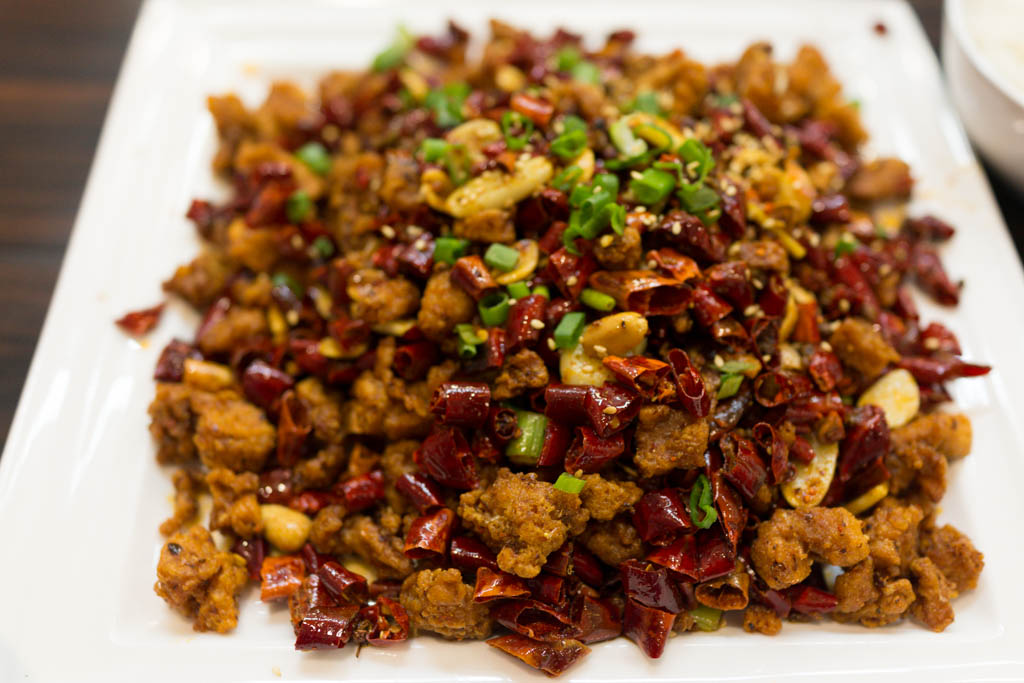
Laziji is a dish of bite-sized chicken pieces marinated, deep-fried, and then quickly stir-fried with a large amount of dried red chilies and Sichuan peppercorns. Garlic and ginger add aroma, while the chilies and peppercorns create a numbing, spicy taste known as 'mala.' The chicken is crisp on the outside and tender inside, often served under a heap of bright red chilies. The dish is visually striking, with sesame seeds and spring onions sometimes added for contrast.
Where does Laziji come from?
Laziji comes from Geleshan in Chongqing, China, and became popular in the late 20th century. It began as a local specialty using small, free-range chickens cut into tiny pieces to soak up more flavor. The dish first caught on among travelers and truck drivers passing through the area. The original use of many chilies helped preserve the chicken in Chongqing's humid climate, but today, the mountain of chilies is mainly for appearance and aroma.
How is Laziji made?
To make laziji, chicken is chopped into small cubes and marinated with Shaoxing wine, soy sauce, and salt. The chicken is fried twice: first at a moderate heat to cook it through, then quickly at a higher temperature to make it crisp. After draining most of the oil, ginger, garlic, and spicy bean paste are fried in the remaining oil. The chicken is then tossed with a large amount of dried red chilies and Sichuan peppercorns, which are toasted until fragrant but not burnt.


How and when is Laziji eaten?
Laziji is usually shared at the table as a main dish for lunch or dinner. The chicken pieces are hidden beneath a mound of dried chilies, and diners use chopsticks to find the meat among the peppers. The chilies are not meant to be eaten whole; they provide aroma and heat to the chicken. The dish is sometimes garnished with sesame seeds and spring onions for extra flavor and color.
Kinds of Laziji
The classic version from Chongqing's Geleshan is the best known, but other styles exist. In Guizhou, cooks may use crushed chili paste instead of whole dried chilies, making the dish saucier. Some home cooks add vegetables such as leeks or celery to soften the heat and add variety.
What Laziji means
Laziji is a signature dish of Sichuan cuisine and a point of pride for Chongqing. Its dramatic presentation and bold flavors make it a favorite in restaurants and at gatherings. The custom of searching for chicken among the chilies is part of the fun and communal spirit of the meal. The dish reflects the region's love of spicy, numbing flavors.
Questions people ask about Laziji
What is laziji made of?
Laziji is made from small pieces of chicken, dried red chilies, Sichuan peppercorns, garlic, and ginger. The chicken is marinated, deep-fried, and then stir-fried with the spices for a spicy, numbing flavor.
Where does laziji come from?
Laziji originated in the Geleshan region of Chongqing, China. It became popular in the late 20th century and is now a well-known dish in Sichuan cuisine.
Is laziji very spicy?
Yes, laziji is known for its intense spiciness and numbing sensation, which comes from the large amount of dried chilies and Sichuan peppercorns used in the dish.
How is laziji served?
Laziji is typically served hot as a main dish, with the chicken pieces hidden under a pile of dried red chilies. Diners use chopsticks to pick out the chicken, while the chilies are mostly left uneaten.
Are there different versions of laziji?
Yes, besides the classic Chongqing style, there are versions from Guizhou that use chili paste for a saucier dish, and home-style recipes may add vegetables like leeks or celery.
Good reading and sources
The facts on this page come from the Wikipedia article "Laziji", written by its contributors and used under the CC BY-SA 4.0 licence, and from its Wikidata record (CC0). Thali rewrote the text in its own words, with AI assistance, and compares every page with the article to make sure no passage is copied. It may be reused under the same CC BY-SA 4.0 licence with a link back.
It may contain mistakes, and it is not dietary or allergy advice: recipes differ from cook to cook. If something is wrong, tell us. Last refreshed 2026-10-03.
More from China
All the food of China Pasta
🇮🇹 Italy and 1 moreUnleavened dough shaped and cooked, a staple of Italian cuisine
Main dish, Lunch, Dinner
TofuVegan豆腐
🇨🇳 China and 5 moreSoft white blocks made by curdling soy milk and pressing the curds
Main dish
Pasta
🇮🇹 Italy and 1 moreUnleavened dough shaped and cooked, a staple of Italian cuisine
Main dish, Lunch, Dinner
TofuVegan豆腐
🇨🇳 China and 5 moreSoft white blocks made by curdling soy milk and pressing the curds
Main dish
 Tofu skin roll
🇨🇳 ChinaTofu skin wrapped around a savoury filling, served steamed or fried as dim sum
Main dish, Lunch, Dinner
Tofu skin roll
🇨🇳 ChinaTofu skin wrapped around a savoury filling, served steamed or fried as dim sum
Main dish, Lunch, Dinner
 Mu kropMeat
🇹🇭 Thailand and 4 moreThai-style fried pork belly with a crunchy golden skin
Main dish, Lunch, Dinner
Mu kropMeat
🇹🇭 Thailand and 4 moreThai-style fried pork belly with a crunchy golden skin
Main dish, Lunch, Dinner
Its cousins elsewhere
All main dishes Chicken tikka masalaMeat
🇬🇧 United Kingdom and 4 moreRoasted marinated chicken in a creamy, spiced tomato-based sauce
Main dish, Lunch, Dinner
Chicken tikka masalaMeat
🇬🇧 United Kingdom and 4 moreRoasted marinated chicken in a creamy, spiced tomato-based sauce
Main dish, Lunch, Dinner
 Luwombo
🇺🇬 UgandaUgandan stew steamed in smoked banana leaves
Main dish, Lunch, Dinner
Luwombo
🇺🇬 UgandaUgandan stew steamed in smoked banana leaves
Main dish, Lunch, Dinner
 BratwurstMeat
🇩🇪 Germany and 3 moreGerman sausage made from pork, veal, or beef, often grilled and served in a bread roll
Main dish, Lunch, Dinner
BratwurstMeat
🇩🇪 Germany and 3 moreGerman sausage made from pork, veal, or beef, often grilled and served in a bread roll
Main dish, Lunch, Dinner
 Coq au vinMeat
🇫🇷 FranceFrench chicken braised slowly in red wine with lardons and mushrooms
Main dish, Lunch, Dinner
Coq au vinMeat
🇫🇷 FranceFrench chicken braised slowly in red wine with lardons and mushrooms
Main dish, Lunch, Dinner