
Coq au vin
French chicken braised slowly in red wine with lardons and mushrooms
Coq au vin is a French dish where chicken is gently cooked in red wine with lardons, mushrooms, and often garlic. Though its name refers to rooster, chicken is usually used today. The dish is known for its deep flavor and is enjoyed across France, with each region sometimes using its own local wine.
- Chicken is braised in red wine with lardons and mushrooms
- Burgundy wine is the classic choice, but local wines are used in regional versions
- Despite the name, chicken is usually used instead of rooster
- Julia Child helped popularize coq au vin in the United States
What is Coq au vin?
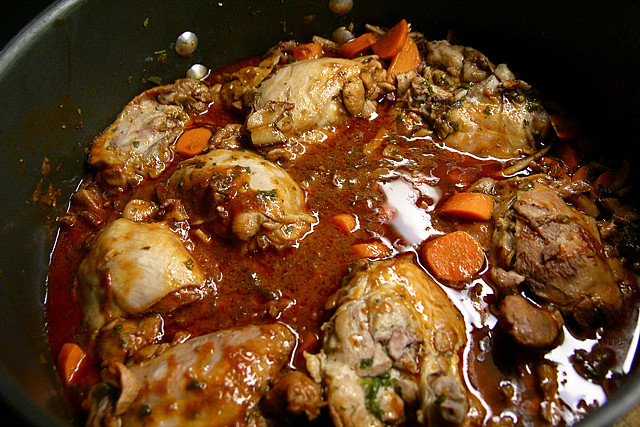
Coq au vin is a classic French dish where pieces of chicken are simmered slowly in red wine, usually Burgundy, with lardons (small strips of pork fat), mushrooms, onions, and sometimes garlic. The sauce is often thickened and flavored with herbs like thyme, parsley, and bay leaf. The result is a rich, savory stew with tender meat and a deep, wine-infused sauce. Although the name means 'rooster with wine', chicken is the most common choice today.
Where does Coq au vin come from?
Stories claim coq au vin dates back to ancient Gaul, but there is no written recipe before the 20th century. It is widely believed to have been a country dish, made to tenderize tough birds with slow cooking in wine. The recipe became more widely known after being featured in cookbooks and on television, especially through Julia Child’s work in the United States.
How is Coq au vin made?
To prepare coq au vin, chicken pieces are first seasoned and sometimes coated with flour. They are browned in fat, then simmered slowly in red wine along with lardons, mushrooms, onions, and often garlic. Aromatic herbs are added, usually bundled as a bouquet garni. The sauce may be thickened with a roux or, in some versions, with blood. The long braising makes the chicken very tender and infuses the dish with deep flavors.


How and when is Coq au vin eaten?
Coq au vin is served as a main course, typically for lunch or dinner. It is often brought to the table in the same pot it was cooked in, accompanied by bread or potatoes to soak up the sauce. The dish is enjoyed in homes and restaurants alike, especially when people want something hearty and comforting.
Kinds of Coq au vin
Different regions of France have their own versions of coq au vin, using local wines. For example, in Jura, vin jaune is used, while Alsace uses riesling. Beaujolais and Champagne are also used in other regional takes. Some recipes call for morels instead of white mushrooms, depending on the wine and local ingredients.
What Coq au vin means
Coq au vin is seen as a symbol of rustic French cooking and has become a well-known dish internationally. Its popularity grew after Julia Child featured it in her cookbook and television show, making it familiar to American audiences. The dish is often associated with French culinary tradition and home-style meals.
Questions people ask about Coq au vin
What is coq au vin made of?
It is made with chicken, red wine, lardons (pork fat), mushrooms, onions, and often garlic, flavored with herbs like thyme, parsley, and bay leaf.
Where does coq au vin come from?
Coq au vin comes from France, where it is a traditional dish found in many regions, each sometimes using its own local wine.
Does coq au vin always use rooster?
Although the name means 'rooster with wine', chicken is most commonly used today, as it is more widely available and tender.
What kind of wine is used in coq au vin?
Red Burgundy wine is traditional, but other French wines like those from Jura, Alsace, Beaujolais, or Champagne are used in regional versions.
How is coq au vin served?
It is served as a main dish, often with bread or potatoes to soak up the sauce, and is enjoyed for lunch or dinner.
Good reading and sources
The facts on this page come from the Wikipedia article "Coq au vin", written by its contributors and used under the CC BY-SA 4.0 licence, and from its Wikidata record (CC0). Thali rewrote the text in its own words, with AI assistance, and compares every page with the article to make sure no passage is copied. It may be reused under the same CC BY-SA 4.0 licence with a link back.
It may contain mistakes, and it is not dietary or allergy advice: recipes differ from cook to cook. If something is wrong, tell us. Last refreshed 2026-10-03.
More from France
All the food of France RatatouilleVegan
🇫🇷 FranceA Provençal stew of summer vegetables cooked in olive oil
Main dish, Lunch, Dinner
RatatouilleVegan
🇫🇷 FranceA Provençal stew of summer vegetables cooked in olive oil
Main dish, Lunch, Dinner
 French toast
🇫🇷 France and 5 moreBread soaked in egg and milk, pan-fried and served sweet or savoury
Main dish, Breakfast, Snacks
Blood sausageMeat
🇫🇷 France and 5 moreA sausage made with animal blood, fillers and spices, cooked or dried until firm
Main dish, Lunch, Dinner
French toast
🇫🇷 France and 5 moreBread soaked in egg and milk, pan-fried and served sweet or savoury
Main dish, Breakfast, Snacks
Blood sausageMeat
🇫🇷 France and 5 moreA sausage made with animal blood, fillers and spices, cooked or dried until firm
Main dish, Lunch, Dinner
 Pancake
🇺🇸 United States and 5 moreFlat cakes made from batter, cooked on a griddle or pan and served sweet or savoury
Main dish, Breakfast, Snacks
Pancake
🇺🇸 United States and 5 moreFlat cakes made from batter, cooked on a griddle or pan and served sweet or savoury
Main dish, Breakfast, Snacks
Its cousins elsewhere
All main dishes Shchiщи
🇷🇺 Russia and 1 moreRussian cabbage soup, made with fresh or fermented cabbage
Soup, Lunch, Dinner
Shchiщи
🇷🇺 Russia and 1 moreRussian cabbage soup, made with fresh or fermented cabbage
Soup, Lunch, Dinner
 Kabab Bargکباب برگ
🇮🇷 IranPersian skewered meat marinated and grilled over open fire
Main dish, Lunch, Dinner
Kabab Bargکباب برگ
🇮🇷 IranPersian skewered meat marinated and grilled over open fire
Main dish, Lunch, Dinner
 Phat khingMeatผัดขิง
🇹🇭 Thailand and 1 moreStir-fried ginger dish from Thailand and Laos, often made with chicken and vegetables
Main dish, Lunch, Dinner
Phat khingMeatผัดขิง
🇹🇭 Thailand and 1 moreStir-fried ginger dish from Thailand and Laos, often made with chicken and vegetables
Main dish, Lunch, Dinner
 ShashlikMeatшашлык
🇷🇺 RussiaSkewered cubes of marinated meat grilled over open coals
Main dish, Dinner, Lunch
ShashlikMeatшашлык
🇷🇺 RussiaSkewered cubes of marinated meat grilled over open coals
Main dish, Dinner, Lunch