
Lebkuchen
German spiced honey cakes and cookies, often enjoyed at Christmas
Lebkuchen are German baked sweets made with honey, nuts, spices, and sometimes candied fruit. Originating in Franconia, these gingerbread-like cakes are especially popular during the Christmas season and come in various shapes, coatings, and textures.
- Lebkuchen are made with honey, nuts, spices, and sometimes candied fruit
- The sweet originated with monks in Franconia in the 13th century
- Nuremberg is famous for its protected Lebkuchen variety
- Elisenlebkuchen contains at least 25% nuts and little flour
- Lebkuchen is a staple at German Christmas markets
What is Lebkuchen?
Lebkuchen are traditional German sweets that can be soft or firm, shaped in rounds, rectangles, or hearts. They are made with honey, a mix of spices like ginger, cloves, cardamom, and aniseed, and often include nuts such as almonds, hazelnuts, or walnuts. Some versions add candied fruit. The surface might be coated with chocolate or a sugar glaze, while others are left plain. Their flavor ranges from mildly sweet to warmly spiced, and they are closely related to gingerbread.
Where does Lebkuchen come from?
Lebkuchen first appeared in Franconia, Germany, around the 13th century, with monks credited for their creation. Early records show Lebkuchen bakers in Ulm by 1296 and in Nuremberg by 1395. Nuremberg later became especially known for this sweet, with a special event in 1487 where Emperor Friedrich III gave Lebkuchen to thousands of children. The name's origin is debated, with possible links to old words for bread, loaf, or honey. Since 1996, the Nuremberg variety has held protected status in the European Union.
How is Lebkuchen made?
Making Lebkuchen starts with a dough sweetened by honey and flavored with a blend of spices. Nuts and candied fruit are often mixed in. The dough may be left to ferment for several weeks in a cool place, which helps it rise and develop flavor. Some types use a thin edible base to keep the dough from sticking. After shaping, the cakes or cookies are baked, then sometimes glazed with sugar or covered in dark chocolate. The Elisenlebkuchen variety uses a high proportion of nuts and little or no flour.



How and when is Lebkuchen eaten?
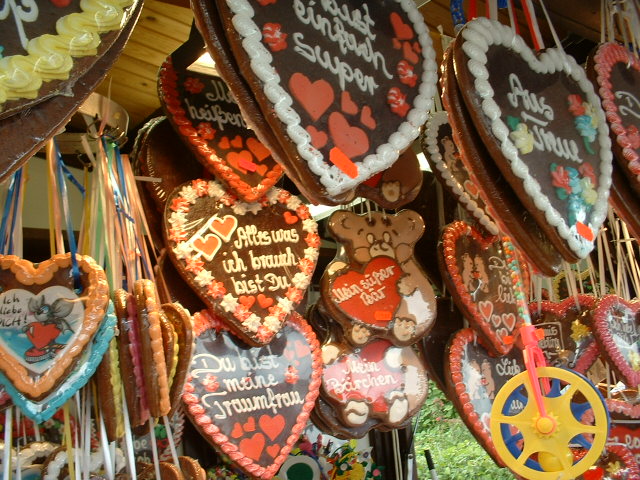
Lebkuchen are most commonly eaten during the Christmas season, but they are also enjoyed at fairs and as everyday treats. They are sold at Christmas markets and festivals, sometimes decorated with messages or shaped into hearts and animals. People may eat them on their own as a snack or give them as gifts, often in decorative tins or boxes. The firmer versions are popular as souvenirs at events like Oktoberfest.
Kinds of Lebkuchen
There are many types of Lebkuchen, differing in nut content, shape, and coatings. Nuremberg's Elisenlebkuchen is known for its high nut content and minimal flour. Some are soft, while others are firm enough to be used for decorated hearts or shaped into figures. Swiss regions have their own versions, such as Berner Honiglebkuchen. Lebkuchen can be glazed, chocolate-coated, or left plain, and may be round, rectangular, or even built into small houses.
What Lebkuchen means
Lebkuchen are a symbol of German holiday traditions, especially at Christmas. The Nuremberg variety is protected by European law, ensuring only those made in the city can use the name. Decorative Lebkuchen hearts are a familiar sight at festivals and fairs, often inscribed with playful or affectionate messages. Collectible tins and boxes for Lebkuchen are also part of the tradition, and the sweet is recognized as part of Switzerland's culinary heritage.
Questions people ask about Lebkuchen
What is Lebkuchen made of?
Lebkuchen is made from honey, a blend of spices like ginger and cloves, nuts such as almonds and hazelnuts, and sometimes candied fruit. Some types include flour, while others, like Elisenlebkuchen, use mostly nuts.
Where does Lebkuchen come from?
Lebkuchen comes from Germany, with its origins in Franconia. Nuremberg is especially known for its Lebkuchen, and the sweet has also become part of Swiss regional traditions.
When is Lebkuchen usually eaten?
Lebkuchen is most popular during the Christmas season, but it is also found at fairs and festivals throughout the year. It is often enjoyed as a snack or given as a festive gift.
Are there different kinds of Lebkuchen?
Yes, there are many kinds. Some are soft, others are firm, and they can be round, rectangular, or shaped into hearts or figures. Coatings may include chocolate or sugar glaze, and nut content varies by type.
Is Lebkuchen vegetarian?
Lebkuchen is typically vegetarian, as it is made from honey, nuts, spices, flour, and sugar. Some versions may use eggs, but it does not contain meat or fish.
Good reading and sources
The facts on this page come from the Wikipedia article "Lebkuchen", written by its contributors and used under the CC BY-SA 4.0 licence, and from its Wikidata record (CC0). Thali rewrote the text in its own words, with AI assistance, and compares every page with the article to make sure no passage is copied. It may be reused under the same CC BY-SA 4.0 licence with a link back.
It may contain mistakes, and it is not dietary or allergy advice: recipes differ from cook to cook. If something is wrong, tell us. Last refreshed 2026-10-03.
More from Germany
All the food of Germany Doughnut
🇺🇸 United States and 5 moreSweet fried or baked rings or balls, often glazed or filled
Sweet or dessert, Breakfast, Snacks
Doughnut
🇺🇸 United States and 5 moreSweet fried or baked rings or balls, often glazed or filled
Sweet or dessert, Breakfast, Snacks
 MarzipanVegetarian
🇩🇪 Germany and 5 moreSweet almond paste shaped or used in cakes, especially at Christmas and weddings
Sweet or dessert, Snacks, Tea time
MarzipanVegetarian
🇩🇪 Germany and 5 moreSweet almond paste shaped or used in cakes, especially at Christmas and weddings
Sweet or dessert, Snacks, Tea time
 SachertorteVegetarian
🇦🇹 Austria and 1 moreAustrian chocolate sponge cake with apricot jam and a glossy chocolate glaze
Sweet or dessert, Tea time, Snacks
SachertorteVegetarian
🇦🇹 Austria and 1 moreAustrian chocolate sponge cake with apricot jam and a glossy chocolate glaze
Sweet or dessert, Tea time, Snacks
 Cinnamon rollVegetarian
🇸🇪 Sweden and 4 moreA sweet rolled bun with cinnamon and sugar, baked and often topped with icing
Sweet or dessert, Breakfast, Tea time
Cinnamon rollVegetarian
🇸🇪 Sweden and 4 moreA sweet rolled bun with cinnamon and sugar, baked and often topped with icing
Sweet or dessert, Breakfast, Tea time
Its cousins elsewhere
All sweets and desserts Alfajor
🇦🇷 Argentina and 4 moreSweet biscuits or pastry joined with a filling, often dulce de leche or honey and nuts
Sweet or dessert, Snacks
Alfajor
🇦🇷 Argentina and 4 moreSweet biscuits or pastry joined with a filling, often dulce de leche or honey and nuts
Sweet or dessert, Snacks
 BaklavaVegetarianباقلوا
🇹🇷 Turkey and 5 moreThin pastry filled with nuts and soaked in sweet syrup
Sweet or dessert, Tea time, Snacks
BaklavaVegetarianباقلوا
🇹🇷 Turkey and 5 moreThin pastry filled with nuts and soaked in sweet syrup
Sweet or dessert, Tea time, Snacks
 KahkVegetarianكحك
🇪🇬 EgyptEgyptian shortbread biscuits dusted with powdered sugar, made for Eid and other feasts
Sweet or dessert, Snacks, Tea time
KahkVegetarianكحك
🇪🇬 EgyptEgyptian shortbread biscuits dusted with powdered sugar, made for Eid and other feasts
Sweet or dessert, Snacks, Tea time
 JalebiVegetarian
🇮🇳 India and 6 moreDeep-fried spirals of batter soaked in syrup, enjoyed across Asia and Africa
Pie or savoury pastry, Breakfast, Snacks
JalebiVegetarian
🇮🇳 India and 6 moreDeep-fried spirals of batter soaked in syrup, enjoyed across Asia and Africa
Pie or savoury pastry, Breakfast, Snacks