
Mandi
In its own language: مندي
Meat and spiced rice cooked together in an underground pit
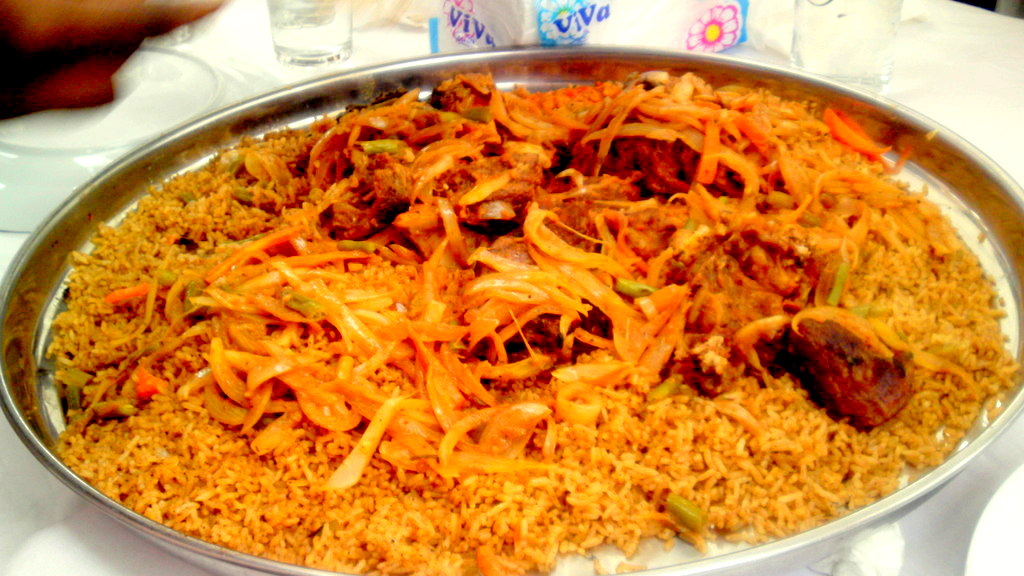
Mandi is a dish from Yemen made of rice and meat, cooked together with spices in a pit oven. It is now enjoyed across the Arabian Peninsula, Egypt, and parts of South Asia, often served at lunch or dinner and shared from a large communal platter.
- Mandi is cooked in an underground pit oven
- Meat is suspended above rice to cook in steam and heat
- The dish is a Yemeni specialty now found across the Arab world
- Zarb is a Jordanian Bedouin version of mandi
- Often served with tangy tomato sauce and salad in Yemen
What is Mandi?
Mandi is a dish where meat and rice are cooked together with a blend of spices, using a special underground oven. The meat, which can be lamb, goat, chicken, or sometimes camel, is suspended above rice inside a pit heated with charcoal from dry wood. The result is tender, moist meat with aromatic rice, often served on a large platter for sharing. The dish is known for its rich, spiced flavor and the unique texture of the meat, which is described as 'dewy'.
Where does Mandi come from?
Mandi comes from Yemen and has deep roots in Arab cooking. Its name refers to the moistness of the meat. The method of cooking meat in a pit oven dates back centuries, with similar techniques described in medieval Arab cookbooks and by early 20th-century ethnographers. Yemeni migration spread mandi to places like Hyderabad in India and Istanbul in Turkey, making it a dish with many regional touches.
How is Mandi made?
To make mandi, dry wood is burned in a pit oven until it turns to charcoal. The meat is first simmered with whole spices, then suspended above rice in the oven, so it cooks in the steam and heat without touching the fire. The rice is cooked in the spiced stock, absorbing the flavors. The oven is sealed with clay and left for several hours, allowing the meat to become very tender.


How and when is Mandi eaten?
Mandi is usually eaten at lunch or dinner, often from a communal platter. In Yemen, it is served with a tangy tomato sauce and a fresh vegetable salad. The dish is meant to be shared, making it a centerpiece for gatherings. In some regions, it is paired with local sauces or salads, and the style of meat or vegetables may vary.
Kinds of Mandi
Many regions have their own versions of mandi. In Jordan and Palestine, the dish is called zarb and may include different meats and vegetables, cooked in a tiered metal rack inside a barrel-like oven. In Kerala, India, it is known as kuzhi mandi and uses local spices. Egypt has a similar dish called Abu Mardam, made with chicken or duck and vegetables in a pit oven.
What Mandi means
Mandi is a symbol of hospitality and communal eating in Yemeni and wider Arab culture. It is popular at family gatherings and celebrations, and its spread to other countries reflects migration and cultural exchange. In Jordan, zarb is closely tied to Bedouin traditions. The dish is also a marker of Yemeni identity in diaspora communities.
Questions people ask about Mandi
What is mandi made of?
Mandi is made from rice, meat such as lamb, goat, chicken, or camel, and a blend of spices. The ingredients are cooked together in a pit oven, giving the dish its signature flavor and texture.
Where does mandi come from?
Mandi originates from Yemen and is strongly associated with Yemeni cuisine. Over time, it has spread to other parts of the Arabian Peninsula, Egypt, Turkey, and South Asia.
How is mandi cooked?
Mandi is cooked in an underground pit oven. The meat is first simmered with spices, then suspended above rice in the oven, which is sealed and left for hours so the meat cooks in the steam and heat from charcoal.
What does mandi taste like?
Mandi has a rich, spiced flavor with very tender, moist meat and aromatic rice. The unique cooking method gives the meat a soft, 'dewy' texture.
Is mandi eaten for special occasions?
Mandi is often served at gatherings and shared meals, but it is also eaten as an everyday dish in Yemen and other regions where it is popular.
Good reading and sources
- So, what’s khaas about Barkas?The Hindu, Article
- Zarb: The Bedouin answer to barbecueBBC, Article
- Review: In Anaheim, Bill Addison feasts on Yemeni meats and rice worth their weight in goldLos Angeles Times, Article
The facts on this page come from the Wikipedia article "Mandi (food)", written by its contributors and used under the CC BY-SA 4.0 licence, and from its Wikidata record (CC0). Thali rewrote the text in its own words, with AI assistance, and compares every page with the article to make sure no passage is copied. It may be reused under the same CC BY-SA 4.0 licence with a link back.
It may contain mistakes, and it is not dietary or allergy advice: recipes differ from cook to cook. If something is wrong, tell us. Last refreshed 2026-10-03.
More from Yemen
All the food of Yemen Kabsaكبسة
🇸🇦 Saudi Arabia and 4 moreRice and meat cooked with aromatic spices, a staple of the Arabian Peninsula
Main dish, Lunch, Dinner
Kabsaكبسة
🇸🇦 Saudi Arabia and 4 moreRice and meat cooked with aromatic spices, a staple of the Arabian Peninsula
Main dish, Lunch, Dinner
 KosharyVeganكشرى
🇪🇬 Egypt and 2 moreA mix of rice, pasta, lentils and sauce topped with fried onions, from Egypt
Main dish, Lunch, Dinner
KosharyVeganكشرى
🇪🇬 Egypt and 2 moreA mix of rice, pasta, lentils and sauce topped with fried onions, from Egypt
Main dish, Lunch, Dinner
 MurtabakMeatمُطَبَّق
🇾🇪 Yemen and 5 moreA stuffed, folded pancake or flatbread with savoury or sweet fillings
Main dish, Lunch, Dinner
MurtabakMeatمُطَبَّق
🇾🇪 Yemen and 5 moreA stuffed, folded pancake or flatbread with savoury or sweet fillings
Main dish, Lunch, Dinner
 SaltahMeatسلتة
🇾🇪 YemenYemen’s national stew of meat broth, fenugreek froth, and spicy salsa
Stew or curry, Lunch
SaltahMeatسلتة
🇾🇪 YemenYemen’s national stew of meat broth, fenugreek froth, and spicy salsa
Stew or curry, Lunch
Its cousins elsewhere
All main dishes Cabbage roll
🇺🇦 Ukraine and 5 moreCooked cabbage leaves wrapped around seasoned fillings, simmered or baked
Main dish, Lunch, Dinner
Cabbage roll
🇺🇦 Ukraine and 5 moreCooked cabbage leaves wrapped around seasoned fillings, simmered or baked
Main dish, Lunch, Dinner
 JuaneMeat
🇵🇪 PeruRice, meat, and egg wrapped in leaves and boiled, from the Peruvian Amazon
Main dish
JuaneMeat
🇵🇪 PeruRice, meat, and egg wrapped in leaves and boiled, from the Peruvian Amazon
Main dish
 Riz grasMeat
🇧🇫 Burkina Faso and 4 moreWest African rice cooked with meat and vegetables, served hot
Main dish, Lunch, Dinner
Riz grasMeat
🇧🇫 Burkina Faso and 4 moreWest African rice cooked with meat and vegetables, served hot
Main dish, Lunch, Dinner