
Kabsa
In its own language: كبسة
Rice and meat cooked with aromatic spices, a staple of the Arabian Peninsula
Kabsa is a mixed rice dish from Saudi Arabia and Yemen, widely eaten across the Arabian Peninsula. Long-grain rice is cooked with meat—often chicken or lamb—vegetables, and a blend of spices such as cardamom, cinnamon, and black lime. Kabsa is served hot, often as a main meal, and regarded as a national dish in Gulf countries.
- Kabsa is considered a national dish in Gulf countries
- It is made with rice, meat, vegetables, and a blend of spices
- The dish can be cooked in one pot using various techniques
- Kabsa is often served hot and shared at gatherings
What is Kabsa?
Kabsa is a one-pot rice dish where long-grain rice, such as basmati, is cooked with meat—commonly chicken, lamb, or sometimes goat, beef, fish, or shrimp. The dish is seasoned with a mix of spices like cardamom, cinnamon, black lime, bay leaf, nutmeg, and sometimes saffron. Vegetables such as onions and tomatoes are often included, and the finished dish may be garnished with nuts or sultanas. Kabsa is served hot and is known for its fragrant aroma and richly spiced flavor.
Where does Kabsa come from?
Kabsa’s exact origin is debated. Some say it was first made by Bedouin tribes of the Arabian Peninsula, who used simple ingredients available in the desert. Others believe it was inspired by mandi, a Yemeni rice and meat dish cooked in a pit, or even by Spanish paella from Andalusia. As trade brought new ingredients, kabsa evolved and spread across the region. Today, it is considered a national dish in Saudi Arabia and other Gulf countries, with each area having its own version.
How is Kabsa made?
To make kabsa, rice and meat are cooked together in a single pot. The meat can be prepared in several ways: slow-cooked in an earth oven (mandi), grilled on stones over embers (mathbi), or cooked in a pressure cooker (madghūt). Spices such as cardamom, cinnamon, black lime, nutmeg, and bay leaf are added for depth of flavor. Vegetables, especially onions and tomatoes, are often included. The dish may be finished with nuts or sultanas and is typically served hot.


How and when is Kabsa eaten?
Kabsa is usually eaten for lunch or dinner as a main meal. It is often served on a large platter for sharing, especially at family gatherings or communal events. The dish may be accompanied by a homemade tomato sauce called daqqūs. Garnishes like fried onions, nuts, or dried fruit are sometimes added. Kabsa is a regular part of daily meals in the Arabian Peninsula and is also served on special occasions.
Kinds of Kabsa
Many regional versions of kabsa exist across the Arabian Peninsula. The type of meat used can vary—chicken, lamb, goat, beef, fish, or shrimp. In some areas, a whole chicken or lamb is cooked with the rice. The blend of spices and garnishes also differs by region and family tradition. Related dishes include machboos or makboos, which are similar rice and meat dishes found in the Gulf.
What Kabsa means
Kabsa is a symbol of hospitality and national identity in Saudi Arabia and neighboring Gulf countries. It is promoted as part of Saudi cultural heritage and is commonly served at gatherings, celebrations, and in daily life. The dish’s importance is recognized by cultural initiatives, and it is a source of pride across the region.
Questions people ask about Kabsa
What is kabsa made of?
Kabsa is made from long-grain rice, meat (such as chicken or lamb), vegetables like onions and tomatoes, and a mix of spices including cardamom, cinnamon, black lime, bay leaf, and nutmeg.
Where does kabsa come from?
Kabsa originates from Saudi Arabia and Yemen and is widely eaten throughout the Arabian Peninsula. It is regarded as a national dish in several Gulf countries.
What kind of meat is used in kabsa?
Kabsa can be made with chicken, lamb, goat, camel, beef, fish, or shrimp. The choice of meat varies by region and personal preference.
How is kabsa usually cooked?
Kabsa is cooked in one pot, with rice and meat simmered together. The meat can be slow-cooked in an earth oven, grilled on stones, or cooked in a pressure cooker, depending on the method used.
Is kabsa eaten every day or for special occasions?
Kabsa is an everyday meal in many Gulf households but is also served at gatherings and special events. It is a staple of daily life and hospitality in the region.
Good reading and sources
The facts on this page come from the Wikipedia article "Kabsa", written by its contributors and used under the CC BY-SA 4.0 licence, and from its Wikidata record (CC0). Thali rewrote the text in its own words, with AI assistance, and compares every page with the article to make sure no passage is copied. It may be reused under the same CC BY-SA 4.0 licence with a link back.
It may contain mistakes, and it is not dietary or allergy advice: recipes differ from cook to cook. If something is wrong, tell us. Last refreshed 2026-10-03.
More from Saudi Arabia
All the food of Saudi Arabia SaleegMeatسليق
🇸🇦 Saudi ArabiaRice cooked with broth and milk, topped with roasted meat from western Saudi Arabia
Main dish, Lunch, Dinner
Kabuli pulaoMeatقابلی پلو
🇦🇫 Afghanistan and 5 moreAfghan rice pilaf with caramelized carrots, raisins, and meat
Main dish, Lunch, Dinner
SaleegMeatسليق
🇸🇦 Saudi ArabiaRice cooked with broth and milk, topped with roasted meat from western Saudi Arabia
Main dish, Lunch, Dinner
Kabuli pulaoMeatقابلی پلو
🇦🇫 Afghanistan and 5 moreAfghan rice pilaf with caramelized carrots, raisins, and meat
Main dish, Lunch, Dinner
 MurtabakMeatمُطَبَّق
🇾🇪 Yemen and 5 moreA stuffed, folded pancake or flatbread with savoury or sweet fillings
Main dish, Lunch, Dinner
MurtabakMeatمُطَبَّق
🇾🇪 Yemen and 5 moreA stuffed, folded pancake or flatbread with savoury or sweet fillings
Main dish, Lunch, Dinner
 KhabeesVeganالخبيص
🇦🇪 United Arab Emirates and 5 moreA sweet breakfast dish of flour, oil, cardamom and saffron from the Gulf region
Sweet or dessert, Breakfast
KhabeesVeganالخبيص
🇦🇪 United Arab Emirates and 5 moreA sweet breakfast dish of flour, oil, cardamom and saffron from the Gulf region
Sweet or dessert, Breakfast
Its cousins elsewhere
All main dishes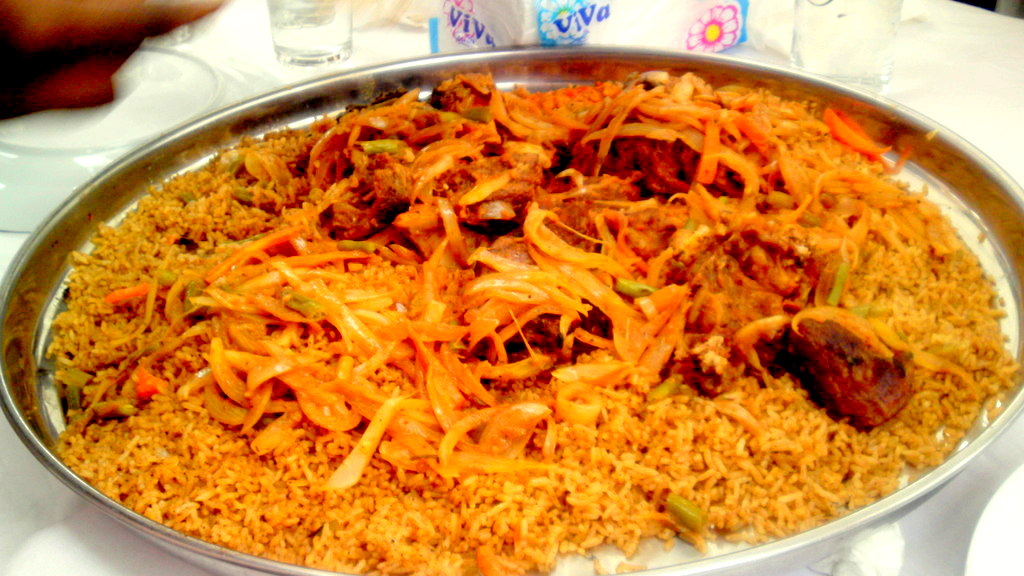 Riz grasMeat
🇧🇫 Burkina Faso and 4 moreWest African rice cooked with meat and vegetables, served hot
Main dish, Lunch, Dinner
Riz grasMeat
🇧🇫 Burkina Faso and 4 moreWest African rice cooked with meat and vegetables, served hot
Main dish, Lunch, Dinner
 Hariraالحريرة
🇲🇦 Morocco and 3 moreNorth African soup of tomato, legumes, herbs and spices, often served during Ramadan
Soup, Dinner, Supper
Hariraالحريرة
🇲🇦 Morocco and 3 moreNorth African soup of tomato, legumes, herbs and spices, often served during Ramadan
Soup, Dinner, Supper
 OssobucoMeat
🇮🇹 ItalyBraised veal shank with bone marrow, a Lombard dish often served with risotto or polenta
Main dish, Dinner, Lunch
OssobucoMeat
🇮🇹 ItalyBraised veal shank with bone marrow, a Lombard dish often served with risotto or polenta
Main dish, Dinner, Lunch
 PelauMeat
🇹🇹 Trinidad and Tobago and 1 moreA one-pot rice and meat dish from the Caribbean, darkened with caramelised sugar
Main dish, Lunch, Dinner
PelauMeat
🇹🇹 Trinidad and Tobago and 1 moreA one-pot rice and meat dish from the Caribbean, darkened with caramelised sugar
Main dish, Lunch, Dinner