
Mantou
In its own language: 馒头
Soft, steamed wheat buns eaten across northern China
Mantou are plain, steamed wheat buns widely eaten in northern China, where wheat is a staple crop. Made from wheat flour, water, and leavening agents, they range from small and fluffy to large and dense. Mantou are served as a staple food, snack, or side dish, and can be found in both homes and restaurants.
- Mantou are plain steamed wheat buns, a staple in northern China.
- They range from small and fluffy to large and dense.
- Northern mantou are denser; southern ones are softer and sometimes sweet.
- Precooked mantou are sold frozen in Asian supermarkets.
- The name is linked to a legend about Zhuge Liang.
What is Mantou?
Mantou are soft, white buns made by steaming a dough of wheat flour, water, and a leavening agent such as yeast. They come in a range of sizes, from small and fluffy versions served in restaurants to large, dense buns eaten as a filling meal. The texture can be chewy or airy, depending on how the dough is kneaded and fermented. Mantou are plain, without filling, and are a staple food in northern China, where wheat is more common than rice. Sometimes, sugar, brown sugar, or food coloring is added for flavor or appearance, and on special occasions, the dough may be shaped into decorative forms.
Where does Mantou come from?
Mantou is thought to have its roots in the Qin State during the Zhou dynasty, with references dating back to at least the Han dynasty. Early texts described steamed wheat cakes, and the name mantou was used by around 300 CE. A well-known legend connects the name to Zhuge Liang, who is said to have shaped buns to resemble human heads as a substitute for ritual sacrifice. Over time, mantou became a staple in northern China, while the term's meaning shifted in different regions.
How is Mantou made?
To make mantou, wheat flour is mixed with water and a leavening agent to form a dough. The dough is kneaded thoroughly, then left to rise. After shaping into buns, the dough is steamed until cooked through. The process and ingredients can vary by region: northern mantou are often larger and denser, while southern versions may be smaller, softer, and sometimes sweetened. Some mantou are deep-fried or colored for variety. Today, precooked mantou are also sold frozen for quick preparation.


How and when is Mantou eaten?
Mantou are eaten throughout the day in northern China, often as a main source of carbohydrates at breakfast, lunch, or dinner. They are served plain as a side with savory dishes, or as a snack. In the south, mantou are more likely to appear as street food or in restaurants, sometimes deep-fried and dipped in sweetened condensed milk. They can be eaten hot or at room temperature, and are commonly found in the frozen section of Asian supermarkets for convenience.
Kinds of Mantou
Northern Chinese mantou are usually larger, round, and denser, reflecting local tastes and the use of strong wheat flour. Southern Chinese mantou tend to be smaller, softer, and sometimes sweetened or filled. In some regions, mantou refers to both filled and unfilled buns, while elsewhere, only the plain version is called mantou. The word and style have spread widely, influencing filled dumplings and buns in Central and East Asia, such as manty, mantı, and manjū.
What Mantou means
Mantou is a staple food in northern China, as important there as rice is in the south. Its plain taste and versatility make it a daily presence at the table. The bun also appears in folklore, most famously in the story of Zhuge Liang. Mantou’s name and form have traveled beyond China, shaping similar foods in neighboring countries. For special occasions, mantou may be shaped into decorative forms, especially in regions like Shanxi and Shandong.
Questions people ask about Mantou
What is mantou made of?
Mantou is made from wheat flour, water, and a leavening agent such as yeast. Sometimes sugar or food coloring is added for flavor or appearance.
Where does mantou come from?
Mantou comes from northern China, where it is a staple food. Its history dates back to at least the Han dynasty, and it remains popular throughout China today.
How is mantou different from baozi?
Mantou are plain steamed buns without filling, while baozi are similar buns that have a savory or sweet filling inside. The two were once called by the same name, but now are distinguished in Mandarin.
How is mantou usually eaten?
Mantou is eaten as a staple food in northern China, served plain as a side with meals, or as a snack. In the south, it may be deep-fried and eaten with sweetened condensed milk.
Are there different types of mantou?
Yes. Northern mantou are usually larger and denser, while southern versions are smaller, softer, and sometimes sweetened. Mantou can also be shaped or colored for special occasions.
Good reading and sources
The facts on this page come from the Wikipedia article "Mantou", written by its contributors and used under the CC BY-SA 4.0 licence, and from its Wikidata record (CC0). Thali rewrote the text in its own words, with AI assistance, and compares every page with the article to make sure no passage is copied. It may be reused under the same CC BY-SA 4.0 licence with a link back.
It may contain mistakes, and it is not dietary or allergy advice: recipes differ from cook to cook. If something is wrong, tell us. Last refreshed 2026-10-03.
More from China
All the food of China YoutiaoVegan油條
🇨🇳 China and 5 moreLong, golden-brown strips of deep-fried dough eaten across East and Southeast Asia
Street food, Breakfast, Snacks
YoutiaoVegan油條
🇨🇳 China and 5 moreLong, golden-brown strips of deep-fried dough eaten across East and Southeast Asia
Street food, Breakfast, Snacks
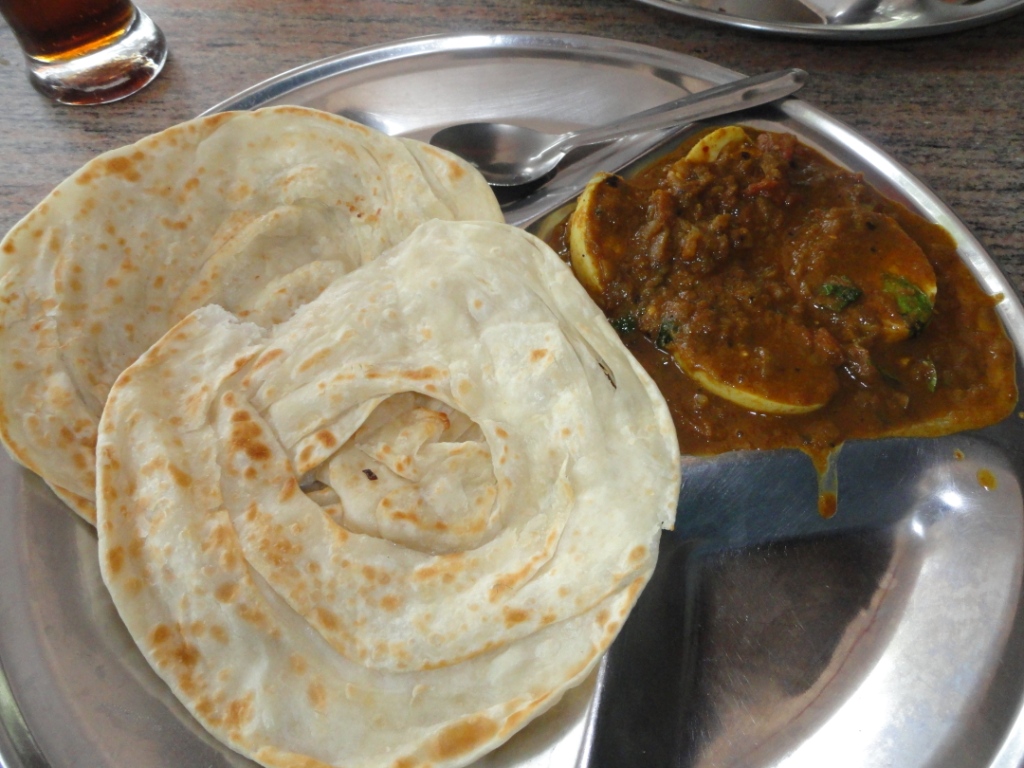 Parotta
🇮🇳 India and 5 moreLayered flatbread from South India, soft and flakey, made with refined flour
Bread, Breakfast, Lunch
Parotta
🇮🇳 India and 5 moreLayered flatbread from South India, soft and flakey, made with refined flour
Bread, Breakfast, Lunch
 Scallion pancakeVegan蔥油餅
🇨🇳 China and 3 moreLayered Chinese flatbread with scallions, pan-fried until crisp and chewy
Bread, Snacks
Scallion pancakeVegan蔥油餅
🇨🇳 China and 3 moreLayered Chinese flatbread with scallions, pan-fried until crisp and chewy
Bread, Snacks
Its cousins elsewhere
All breads PitaVegan
🇪🇬 Egypt and 5 moreRound, leavened flatbread baked from wheat flour, common across the Middle East and Mediterranean
Bread
PitaVegan
🇪🇬 Egypt and 5 moreRound, leavened flatbread baked from wheat flour, common across the Middle East and Mediterranean
Bread
 Bagel
🇵🇱 Poland and 2 moreRing-shaped bread roll, boiled then baked for a dense, chewy texture
Bread, Breakfast, Lunch
Bagel
🇵🇱 Poland and 2 moreRing-shaped bread roll, boiled then baked for a dense, chewy texture
Bread, Breakfast, Lunch
 CrispbreadVegan
🇸🇪 Sweden and 4 moreA dry, flat rye bread that keeps for months and is eaten across the Nordic countries
Bread, Breakfast, Lunch
CrispbreadVegan
🇸🇪 Sweden and 4 moreA dry, flat rye bread that keeps for months and is eaten across the Nordic countries
Bread, Breakfast, Lunch
 Ftira
🇲🇹 MaltaRing-shaped Maltese bread, often filled or topped with local ingredients
Bread
Ftira
🇲🇹 MaltaRing-shaped Maltese bread, often filled or topped with local ingredients
Bread