
Marshmallow
A pillowy, aerated confection whipped from sugar, syrup, and gelatin
Marshmallow is an aerated sweet made by whipping boiled sugar syrup with gelatin until it forms a bouncy, tender foam. Originally derived from a French throat confection, this pillowy candy is now enjoyed across the world as an everyday snack and baking ingredient.
- Half of an ordinary marshmallow consists of trapped air bubbles.
- Gelatin makes the candy dissolve on the tongue by melting just beneath human body temperature.
- The recipe was inspired by ancient Egyptian herbal remedies made from the marsh-mallow plant.
- Alex Doumak revolutionized manufacturing in 1956 by patenting continuous extrusion.
What is Marshmallow?
Marshmallow is an airy, spongy confection with a pillowy bite. Whipped until light and buoyant, the sweet is roughly half air by volume. It typically comes in soft white cubes or cylinders dusted in fine starch to keep them from sticking. In the mouth, the confection dissolves readily because its gelatin network liquefies just under human body temperature. The flavor is clean and mildly sweet, accented with a delicate touch of vanilla. When touched, it springs back quickly into shape, yielding a soft chew before melting away on the tongue.
Where does Marshmallow come from?
The candy traces its lineage to Althaea officinalis, a wild herb common in damp European, Asian, and North African soil. Around two thousand years before the common era, people in ancient Egypt simmered pulp from the plant root with honey to soothe troubled throats. By the nineteenth century, French confectioners had transformed this medicinal remedy into an indulgence known as pâte de guimauve. Shopkeepers whipped root extract with egg whites and sweeteners into bars. Towards the end of that century, manufacturers replaced plant extracts with animal gelatin and adopted cornstarch molds, paving the way for factory production.
How is Marshmallow made?
Modern producers boil a blend of ordinary sugar, corn syrup, and water into a smooth syrup. The hot liquid mixes with softened gelatin, an animal protein that builds an elastic matrix. Giant mixers beat gas into the fluid, multiplying its volume until a thick white foam emerges. This mixture is squeezed through cylindrical nozzles into endless strands. Once chilled and set, the ropes are chopped into uniform cylinders. A light dusting of cornstarch stops the pieces from adhering to each other before packaging.


How and when is Marshmallow eaten?
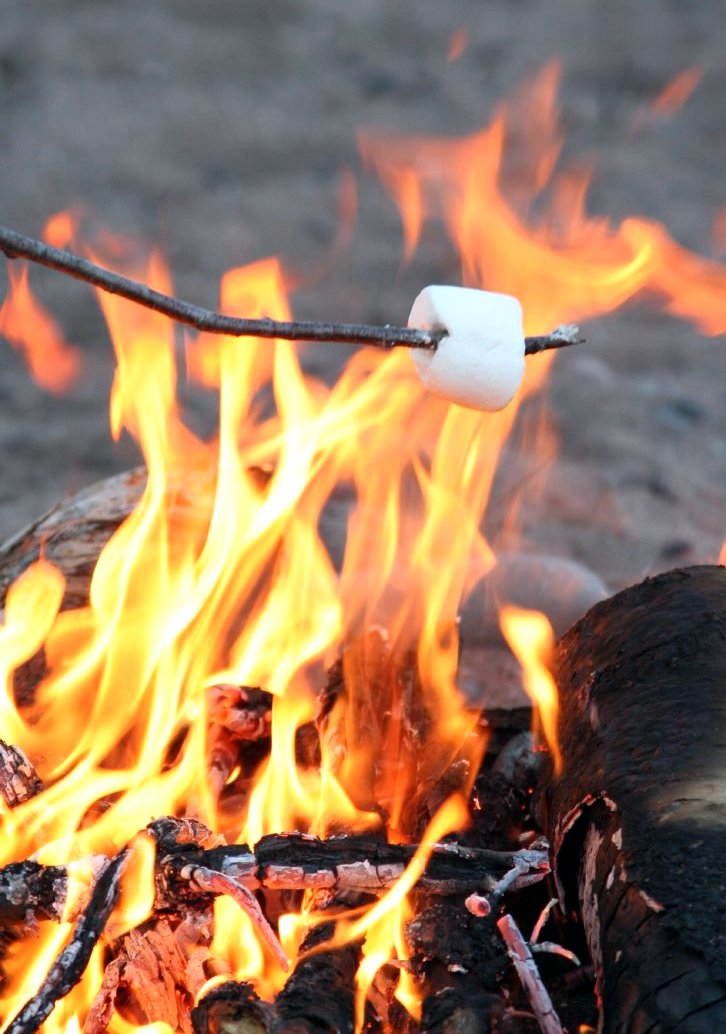
Most people eat marshmallows out of hand as a sweet treat. The candy also serves as an ingredient in home baking, where it provides a pillowy filling for cakes and pastries. Because the gelatin melts swiftly under gentle warmth, people often toast marshmallows over an open fire or drop them into hot drinks. In early twentieth-century American home cooking, the confection became a regular pantry staple, frequently folded into chilled fruit dishes and layered party desserts.
Kinds of Marshmallow
While classic marshmallows are white and vanilla-flavored, makers also tint them with food coloring or roll them in sprinkles. Traditional recipes sometimes add whipped egg whites alongside gelatin for extra lightness. Home cooks and confectionery artisans occasionally prepare versions infused with natural fruit syrups or citrus juice to adjust the balance. Omitting gelatin entirely prevents the foam from firming up, yielding a spreadable sweet known as marshmallow creme.
What Marshmallow means
Marshmallows shifted from an exclusive apothecary remedy to an accessible everyday sweet over the course of a century. The invention of continuous extrusion by Alex Doumak in 1956 allowed industrial factories to turn out massive quantities each day. Today, the pillowy candy is deeply rooted in casual snacking, outdoor gatherings, and childhood treats across North America and Europe, serving as both a nostalgic candy and a versatile staple in modern confectionery.
Questions people ask about Marshmallow
What is marshmallow made of?
Modern marshmallows are composed primarily of granulated sugar, corn syrup, water, and gelatin, whipped with air. Flavoring, typically vanilla, is incorporated during cooking, and the exterior is coated in cornstarch.
Where does marshmallow come from?
The treat originated in ancient Egypt as a boiled honey medicine made with marsh-mallow root. French confectioners later turned it into a sweet confection, before modern industrial methods arose in the United States.
Why does marshmallow melt on the tongue?
The gelatin protein matrix softens and breaks down at approximately 35 degrees Celsius. Because this temperature is slightly cooler than natural human body heat, the confection promptly liquefies upon contact with warm mouth surfaces.
Why is corn syrup used instead of plain sugar?
Corn syrup contains glucose molecules that prevent ordinary sucrose crystals from clustering together. This keeps the mixture supple and smooth, avoiding the gritty, rough bite that would occur if pure granulated sugar were used alone.
Good reading and sources
The facts on this page come from the Wikipedia article "Marshmallow", written by its contributors and used under the CC BY-SA 4.0 licence, and from its Wikidata record (CC0). EveryThali rewrote the text in its own words, with AI assistance, and compares every page with the article to make sure no passage is copied. It may be reused under the same CC BY-SA 4.0 licence with a link back.
It may contain mistakes, and it is not dietary or allergy advice: recipes differ from cook to cook. If something is wrong, tell us. Last refreshed 2026-10-04.
More from the United States
All the food of the United States Ice cream
🇺🇸 United States and 5 moreA frozen dessert made from sweetened, flavoured milk or cream
Sweet or dessert, Snacks
Ice cream
🇺🇸 United States and 5 moreA frozen dessert made from sweetened, flavoured milk or cream
Sweet or dessert, Snacks
 Candy
🇺🇸 United States and 5 moreSmall sweet treats made mainly from sugar or sweeteners
Sweet or dessert, Snacks
Candy
🇺🇸 United States and 5 moreSmall sweet treats made mainly from sugar or sweeteners
Sweet or dessert, Snacks
 Doughnut
🇺🇸 United States and 5 moreSweet fried or baked rings or balls, often glazed or filled
Sweet or dessert, Breakfast, Snacks
Doughnut
🇺🇸 United States and 5 moreSweet fried or baked rings or balls, often glazed or filled
Sweet or dessert, Breakfast, Snacks
 Hot chocolate
🇲🇽 Mexico and 5 moreA warm drink made from chocolate or cocoa, milk or water, and sugar
Drink, Breakfast, Snacks
Hot chocolate
🇲🇽 Mexico and 5 moreA warm drink made from chocolate or cocoa, milk or water, and sugar
Drink, Breakfast, Snacks
Its cousins elsewhere
All sweets and desserts MochiVegan餅
🇯🇵 JapanJapanese rice cake made by pounding glutinous rice into a sticky, chewy mass
Sweet or dessert
MochiVegan餅
🇯🇵 JapanJapanese rice cake made by pounding glutinous rice into a sticky, chewy mass
Sweet or dessert
 PoiVegan
🇼🇸 SamoaSamoan chilled dessert of mashed fruit and coconut milk
Sweet or dessert
PoiVegan
🇼🇸 SamoaSamoan chilled dessert of mashed fruit and coconut milk
Sweet or dessert
 Panna cottaMeat
🇮🇹 ItalyMoulded sweet cream dessert thickened with gelatin
Sweet or dessert, Lunch, Dinner
Panna cottaMeat
🇮🇹 ItalyMoulded sweet cream dessert thickened with gelatin
Sweet or dessert, Lunch, Dinner
 Custard
🇬🇧 United Kingdom and 6 moreA rich dairy sauce or set cream thickened with gently cooked eggs
Sweet or dessert, Breakfast, Tea time
Custard
🇬🇧 United Kingdom and 6 moreA rich dairy sauce or set cream thickened with gently cooked eggs
Sweet or dessert, Breakfast, Tea time