
Momo
Steamed dumplings filled with meat or vegetables, served with spicy sauces
Momo are steamed dumplings popular in Nepal and Tibet, often filled with minced meat or vegetables and served with spicy dipping sauces or in broth. They are enjoyed as a snack or meal across Nepal, Tibet, Bhutan, and parts of India, with many regional variations in filling and preparation.
- Momo are steamed dumplings from Nepal and Tibet.
- Fillings include meat, vegetables, or cheese.
- They are served with spicy sauces or in broth.
- Pan-fried and deep-fried versions are also common.
- Jhol momo are served in a thin, spiced sauce.
What is Momo?
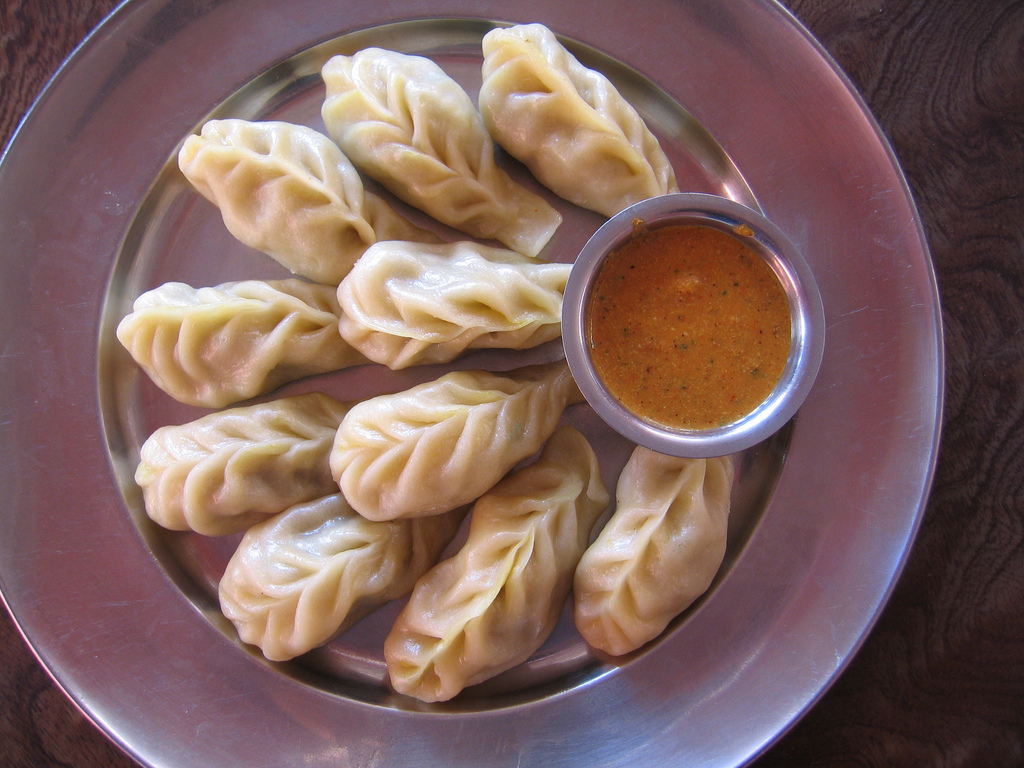
Momo are round or crescent-shaped dumplings with a thin, soft dough made from white flour and water. Inside, they are filled with minced or ground meat—such as chicken, pork, goat, buffalo, lamb, or yak—or with vegetables like cabbage, carrot, and potato. Cheese (paneer or soft chhurpi) and even sweet milk solids are used in some versions. The dumplings are usually steamed, but can also be pan-fried or deep-fried. They are served hot, often with spicy sauces made from tomato, sesame, or chili, and sometimes in a thin, spiced broth.
Where does Momo come from?
The roots of momo are debated. Some say a Nepali princess brought them to Tibet in the 7th century, while others believe Mongol influence from China in the 13th century introduced dumplings to the region. The dish was first popular among the Newar community of Nepal, who may have brought the recipe from Tibet. Over time, momos spread across the Himalayas and into the plains, adapting to local tastes and ingredients. Tibetan migration to India in the 20th century also helped popularize momos there.
How is Momo made?
To make momo, a dough of white flour and water is rolled into small circles. A spoonful of filling—meat mixed with onion, garlic, ginger, and coriander, or a blend of chopped vegetables or cheese—is placed in the center. The dough is folded and sealed into a round or crescent shape. The dumplings are then steamed in a special utensil, but may also be pan-fried or deep-fried. Some versions are cooked in or served with a spiced broth.



How and when is Momo eaten?
Momo are eaten hot, often as a snack or main meal. In Nepal and Tibet, they are served with spicy dipping sauces such as tomato-based chutney, sesame, or chili garlic sauce. In Tibet, pickled daikon is a common side. Jhol momo is served in a thin, spiced broth. Momos are popular at street stalls, restaurants, and at home, and are enjoyed by people of all ages. They are eaten with hands or chopsticks, and the sauces are poured over or used for dipping.
Kinds of Momo
Momo come in many forms. Jhol momo are served in a spiced broth. Kothey momo are pan-fried after steaming. C-momo are tossed in chili sauce. Open momo have an open top for adding sauces. Vegetarian fillings are common, especially in regions with many Hindus. Cheese momos use paneer or chhurpi. In Bhutan, hoentay uses buckwheat dough and cheese. Sweet momos with milk solids are found in Kathmandu. Each region adapts the filling and cooking method to local tastes.
What Momo means
Momo are a daily food in Nepal, Tibet, and surrounding regions, found at street stalls and in homes. They reflect the blending of Himalayan and Chinese food traditions. The dish has spread widely due to migration and trade, and is now a symbol of Himalayan cuisine in South Asia. Momos are not tied to a specific festival or religious practice, but are a favorite for gatherings and casual meals. Their popularity has led to many creative versions in urban centers.
Questions people ask about Momo
What are momo made of?
Momo are made from a dough of white flour and water, filled with minced meat such as chicken, pork, goat, buffalo, or yak, or with vegetables, cheese, or even sweet milk solids. The filling often includes onion, garlic, ginger, and coriander.
Where do momo come from?
Momo originate from Nepal and Tibet, with influences from China. They are now popular in Bhutan, India, and Bangladesh, especially in regions with Himalayan communities.
How are momo cooked?
Momo are usually steamed in a special utensil, but can also be pan-fried or deep-fried after steaming. Some versions are served in a spiced broth or sauce.
Are there vegetarian momo?
Yes, vegetarian momo are common, especially in Nepal and India. Fillings can include cabbage, carrot, potato, paneer cheese, or a mix of vegetables.
How are momo served?
Momo are served hot, often with spicy sauces such as tomato chutney, sesame, or chili garlic sauce. In Nepal, they may also be served in a thin, spiced broth called jhol.
Good reading and sources
- Georgians have the Mongols to thank for their favourite dumplingSouth China Morning Post, Article
- WORLDFOOD - Momo: Nepal’s Most Popular FoodSlow Food, Article
The facts on this page come from the Wikipedia article "Momo (food)", written by its contributors and used under the CC BY-SA 4.0 licence, and from its Wikidata record (CC0). Thali rewrote the text in its own words, with AI assistance, and compares every page with the article to make sure no passage is copied. It may be reused under the same CC BY-SA 4.0 licence with a link back.
It may contain mistakes, and it is not dietary or allergy advice: recipes differ from cook to cook. If something is wrong, tell us. Last refreshed 2026-10-03.
More from Nepal
All the food of Nepal Samosa
🇮🇳 India and 5 moreFried or baked pastry with a spiced filling, shaped into triangles or cones
Pie or savoury pastry, Snacks, Lunch
Samosa
🇮🇳 India and 5 moreFried or baked pastry with a spiced filling, shaped into triangles or cones
Pie or savoury pastry, Snacks, Lunch
 Papri chaatVegetarianपापड़ी चाट
🇮🇳 India and 3 moreCrisp wafers topped with potatoes, chickpeas, yoghurt and tangy chutneys
Street food, Snacks
Papri chaatVegetarianपापड़ी चाट
🇮🇳 India and 3 moreCrisp wafers topped with potatoes, chickpeas, yoghurt and tangy chutneys
Street food, Snacks
 RajmaVegetarian
🇮🇳 India and 2 moreKidney beans stewed with spices, often served with rice in North India and Nepal
Main dish, Lunch, Dinner
RajmaVegetarian
🇮🇳 India and 2 moreKidney beans stewed with spices, often served with rice in North India and Nepal
Main dish, Lunch, Dinner
 Pakoraपकोड़ा
🇮🇳 India and 5 moreVegetables or other fillings coated in spiced gram flour batter and deep-fried
Street food, Snacks, Tea time
Pakoraपकोड़ा
🇮🇳 India and 5 moreVegetables or other fillings coated in spiced gram flour batter and deep-fried
Street food, Snacks, Tea time
Its cousins elsewhere
All dumplings RavioliRavioliai
🇮🇹 Italy and 4 moreStuffed pasta parcels, usually square, with varied fillings and sauces
Main dish, Lunch, Dinner
Pierogi
🇵🇱 Poland and 6 moreDumplings of unleavened dough filled with savory or sweet mixtures
Dumpling, Lunch, Dinner
RavioliRavioliai
🇮🇹 Italy and 4 moreStuffed pasta parcels, usually square, with varied fillings and sauces
Main dish, Lunch, Dinner
Pierogi
🇵🇱 Poland and 6 moreDumplings of unleavened dough filled with savory or sweet mixtures
Dumpling, Lunch, Dinner
 Varenykyвареники
🇺🇦 Ukraine and 1 moreUkrainian dumplings filled with sweet or savoury ingredients
Dumpling, Lunch, Dinner
Varenykyвареники
🇺🇦 Ukraine and 1 moreUkrainian dumplings filled with sweet or savoury ingredients
Dumpling, Lunch, Dinner
 MaultaschenMeat
🇩🇪 GermanyStuffed pasta squares from Swabia with a savory meat and vegetable filling
Main dish, Lunch, Dinner
MaultaschenMeat
🇩🇪 GermanyStuffed pasta squares from Swabia with a savory meat and vegetable filling
Main dish, Lunch, Dinner