
Papri chaat
In its own language: पापड़ी चाट
Crisp wafers topped with potatoes, chickpeas, yoghurt and tangy chutneys
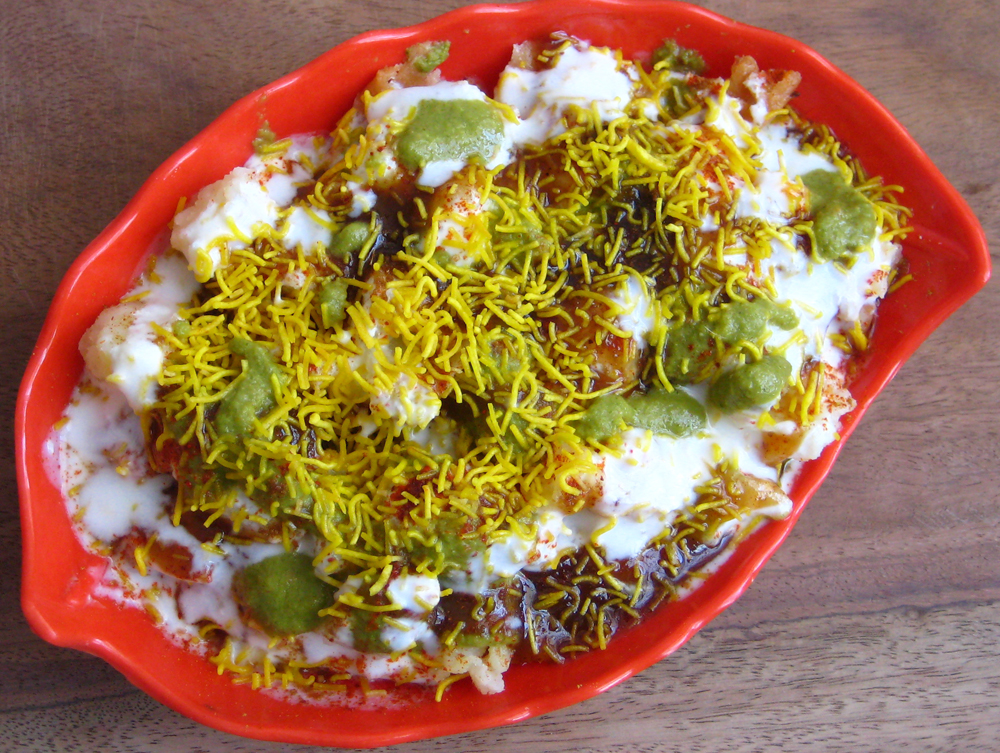
Papri chaat is a street snack from the Indian subcontinent, especially popular in northern India. It is made by layering crisp fried dough wafers (papri) with boiled potatoes, chickpeas, yoghurt, tamarind chutney, spices and crunchy sev. The dish is known for its mix of sweet, tangy, spicy and creamy flavors.
- Papri chaat is built on crisp fried dough wafers called papri
- Topped with potatoes, chickpeas, yoghurt and tamarind chutney
- Combines sweet, tangy, spicy and creamy flavors
- Popular at street stalls across northern India
- A recipe for papri appears in a 12th-century Sanskrit text
What is Papri chaat?
Papri chaat is a layered snack built on crisp, fried wafers called papri, which are made from refined wheat flour and ghee or oil. These are topped with boiled potatoes and chickpeas, smooth yoghurt, and a drizzle of tamarind chutney. The dish is finished with a sprinkle of chaat masala (a spice blend), sev (thin, crunchy noodles made from chickpea flour), and often fresh mint and cilantro. It brings together creamy, crunchy, tangy, sweet and spicy elements in every bite.
Where does Papri chaat come from?
Papri chaat comes from the Indian subcontinent, with a strong presence in northern India. The word 'chaat' comes from a Sanskrit verb meaning 'to taste', and refers to a family of snacks. A recipe for papri, under the name purika, appears in the Manasollasa, a Sanskrit encyclopedia from the 12th century compiled in present-day Karnataka. Today, papri chaat is found in Bangladesh, Nepal, and Pakistan as well.
How is Papri chaat made?
To make papri chaat, crisp wafers are first prepared by frying dough made from refined wheat flour and ghee or oil. These papri are then arranged on a plate and topped with boiled potatoes and chickpeas. Yoghurt is spooned over, followed by tangy tamarind chutney. The dish is finished with chaat masala, sev, and sometimes chopped mint and cilantro. Each component is added just before serving to keep the textures distinct.

How and when is Papri chaat eaten?
Papri chaat is usually eaten as a snack, often bought from street vendors who assemble it fresh at mobile stalls. It is especially popular in northern India, but is enjoyed across the Indian subcontinent. The dish is eaten with a spoon or sometimes by hand, and is most often served as a quick bite rather than as part of a main meal. It is valued for its refreshing mix of flavors and textures.
Kinds of Papri chaat
Across India, papri chaat has many variations. Some versions use different chutneys, add sprouts, or include other vegetables. The spice level and sweetness can be adjusted to taste. In some places, the dish may be topped with extra yoghurt or a different blend of spices. The basic idea of combining crisp papri with potatoes, chickpeas and chutneys remains the same.
What Papri chaat means
Papri chaat is a staple of street food culture in the Indian subcontinent. It is a common sight at food stalls, especially in northern Indian cities. The dish is not tied to any festival or religious occasion, but is enjoyed as an everyday treat. Its popularity has spread to restaurants abroad, where traditional versions are served to those seeking a taste of Indian street food.
Questions people ask about Papri chaat
What is papri chaat made of?
Papri chaat is made from crisp fried dough wafers (papri), boiled potatoes, chickpeas, yoghurt, tamarind chutney, spices, sev, and sometimes mint and cilantro.
Where does papri chaat come from?
Papri chaat comes from the Indian subcontinent and is especially popular in northern India, but is also found in Bangladesh, Nepal, and Pakistan.
Is papri chaat vegetarian?
Yes, papri chaat is a vegetarian dish. It contains no meat or fish and is made with plant-based and dairy ingredients.
When is papri chaat usually eaten?
Papri chaat is usually eaten as a snack, often from street vendors, and is not tied to any specific meal or festival.
What does papri chaat taste like?
Papri chaat offers a mix of creamy, crunchy, sweet, tangy, and spicy flavors in each bite, thanks to its combination of yoghurt, chutneys, spices, and crisp wafers.
Good reading and sources
The facts on this page come from the Wikipedia article "Papri chat", written by its contributors and used under the CC BY-SA 4.0 licence, and from its Wikidata record (CC0). Thali rewrote the text in its own words, with AI assistance, and compares every page with the article to make sure no passage is copied. It may be reused under the same CC BY-SA 4.0 licence with a link back.
It may contain mistakes, and it is not dietary or allergy advice: recipes differ from cook to cook. If something is wrong, tell us. Last refreshed 2026-10-03.
More from India
All the food of India Samosa
🇮🇳 India and 5 moreFried or baked pastry with a spiced filling, shaped into triangles or cones
Pie or savoury pastry, Snacks, Lunch
Samosa
🇮🇳 India and 5 moreFried or baked pastry with a spiced filling, shaped into triangles or cones
Pie or savoury pastry, Snacks, Lunch
 Fish and chipsFish or seafood
🇬🇧 United Kingdom and 8 moreBattered fried fish served hot with thick-cut chips
Main dish, Lunch, Dinner
Fish and chipsFish or seafood
🇬🇧 United Kingdom and 8 moreBattered fried fish served hot with thick-cut chips
Main dish, Lunch, Dinner
 ChapatiVeganचपाती
🇮🇳 India and 4 moreUnleavened flatbread cooked on a griddle and served hot with meals
Bread, Breakfast, Lunch
ChapatiVeganचपाती
🇮🇳 India and 4 moreUnleavened flatbread cooked on a griddle and served hot with meals
Bread, Breakfast, Lunch
 Bhel puriVegan
🇮🇳 IndiaPuffed rice snack tossed with chutneys, sev and crisp puris, sold on Mumbai streets
Street food, Snacks, Tea time
Bhel puriVegan
🇮🇳 IndiaPuffed rice snack tossed with chutneys, sev and crisp puris, sold on Mumbai streets
Street food, Snacks, Tea time
Its cousins elsewhere
All street food Huarache
🇲🇽 MexicoOblong masa snack topped with beans, salsa, meat, and cheese
Street food, Lunch, Dinner
Huarache
🇲🇽 MexicoOblong masa snack topped with beans, salsa, meat, and cheese
Street food, Lunch, Dinner
 Roti
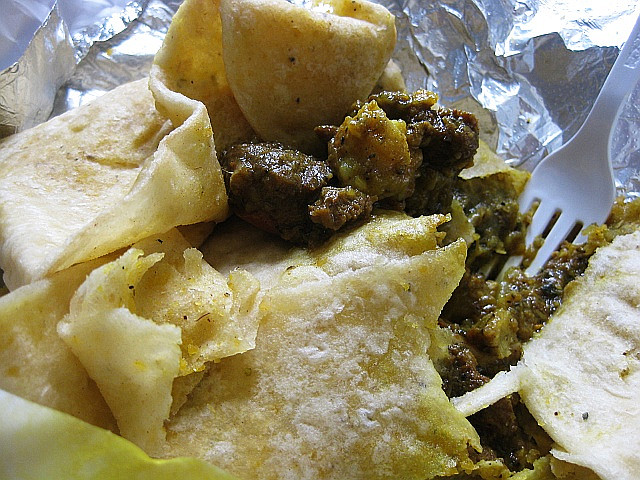
🇹🇹 Trinidad and Tobago and 4 moreCurried meat or vegetables wrapped in a Caribbean flatbread
Main dish, Lunch, Dinner
Roti
🇹🇹 Trinidad and Tobago and 4 moreCurried meat or vegetables wrapped in a Caribbean flatbread
Main dish, Lunch, Dinner
 French friesVeganpommes frites
🇫🇷 France and 5 moreDeep-fried strips of potato, served hot and salted
Street food, Lunch, Dinner
French friesVeganpommes frites
🇫🇷 France and 5 moreDeep-fried strips of potato, served hot and salted
Street food, Lunch, Dinner
 Taco
🇲🇽 Mexico and 1 moreA folded tortilla filled with meat, beans or vegetables, eaten by hand
Street food, Lunch, Dinner
Taco
🇲🇽 Mexico and 1 moreA folded tortilla filled with meat, beans or vegetables, eaten by hand
Street food, Lunch, Dinner