
Moussaka
In its own language: μουσακάς
Baked casserole of eggplant or potato, often layered with meat and sauce
Moussaka is a baked dish from the Balkans and Middle East, most famously Greece, made with layers of eggplant or potato, minced meat, and tomato, often topped with a creamy sauce. Its form and ingredients vary by country, with both meat and vegan versions found. It is usually served hot as a main course.
- Greek moussaka was created in the 1920s by chef Nikolaos Tselementes
- Some versions use béchamel sauce, others use custard or yogurt
- Egyptian mesaqa‘ah can be vegan, vegetarian, or with meat
- Turkish musakka is not layered and served in tomato-based sauce
- Romanian moussaka may use potatoes, cabbage, or pasta
What is Moussaka?
Moussaka is a casserole built from layers of vegetables and often meat, with eggplant or potato as the base. In many versions, ground meat such as lamb or beef is cooked with tomato and onion, then layered with slices of fried or sautéed eggplant or potato. Greek moussaka is topped with a thick, creamy sauce like béchamel, while other countries use custard or yogurt. The dish is baked until the top is golden. Its texture is soft and rich, and the flavor depends on the spices and sauce used. Some versions are more like a stew, especially in the Levant.
Where does Moussaka come from?
Moussaka’s roots are in the Balkans and Middle East, with early eggplant and meat dishes found in 13th-century Arabic cookbooks. The modern Greek layered version was created in the 1920s by chef Nikolaos Tselementes, who added béchamel sauce. The name comes from Arabic and Turkish words meaning 'cold' or 'moistened.' Each region developed its own style, from layered casseroles to stew-like preparations, reflecting local tastes and ingredients.
How is Moussaka made?
To make moussaka, vegetables such as eggplant or potato are sliced and fried or sautéed. Minced meat is cooked with tomato, onion, and spices. In Greece, these are layered in a baking dish, topped with béchamel sauce, and baked. Other countries may use yogurt or custard as the top layer, or skip the sauce entirely. Some versions include zucchini, mushrooms, or even pasta. Vegan and fasting versions replace meat with mushrooms, rice, or extra vegetables.


How and when is Moussaka eaten?
Moussaka is served as a main course, often at lunch or dinner. In Greece and Egypt, it is usually eaten hot, but in parts of the Middle East it may be served cold or at room temperature. It can be part of a family meal or a mezze spread. In Turkey, it is often accompanied by rice pilaf and yogurt dishes. The dish is popular for everyday meals but also appears during religious fasting with vegan adaptations.
Kinds of Moussaka
Greek moussaka is layered and topped with béchamel, while Turkish musakka is not layered and is served in a tomato-based sauce. Egyptian mesaqa‘ah is often vegan or vegetarian, with fried eggplant and tomato sauce. In the Balkans and Romania, potatoes or cabbage may replace eggplant, and the topping can be yogurt, custard, or cheese. Some regions use mushrooms or rice instead of meat for fasting or vegan versions.
What Moussaka means
Moussaka is a symbol of home cooking in Greece and neighboring countries, with each region proud of its own style. The Greek version is closely linked to national identity, while in the Middle East and Balkans, it is part of everyday and festive meals. Vegan versions are prepared for Orthodox Christian fasting days. The dish’s name and form reflect centuries of cultural exchange across the region.
Questions people ask about Moussaka
What is moussaka made of?
Moussaka is usually made from layers of eggplant or potato, minced meat (such as lamb or beef), tomato, onion, and sometimes topped with a creamy sauce like béchamel. Some versions are vegetarian or vegan, using mushrooms or rice instead of meat.
Where does moussaka come from?
Moussaka is found across the Balkans and the Middle East, with the best-known version from Greece. Its origins trace back to medieval Arabic cookbooks, and each country has developed its own style.
Is moussaka always made with meat?
No, while many versions include minced meat, there are also vegetarian and vegan types, especially for religious fasting. These may use mushrooms, rice, or extra vegetables instead of meat.
How is Greek moussaka different from other versions?
Greek moussaka is layered with eggplant, meat, and topped with a thick béchamel sauce before baking. Other countries may use different vegetables, sauces, or skip the layering.
Is moussaka served hot or cold?
It depends on the region. In Greece and Egypt, it is usually served hot, while in some Middle Eastern countries it may be eaten cold or at room temperature.
Good reading and sources
- Encyclopaedia BritannicaArticle
- Meera Sodha’s vegan recipe for Lebanese moussaka with five-garlic-clove sauceThe Guardian, Recipe
- Everything you need to know about moussaka, the classic Greek dishNational Geographic, Article
The facts on this page come from the Wikipedia article "Moussaka", written by its contributors and used under the CC BY-SA 4.0 licence, and from its Wikidata record (CC0). Thali rewrote the text in its own words, with AI assistance, and compares every page with the article to make sure no passage is copied. It may be reused under the same CC BY-SA 4.0 licence with a link back.
It may contain mistakes, and it is not dietary or allergy advice: recipes differ from cook to cook. If something is wrong, tell us. Last refreshed 2026-10-03.
More from Greece
All the food of Greece Kebabكَبَاب
🇹🇷 Turkey and 5 moreGrilled or roasted meat, often on skewers, found across the Middle East and beyond
Main dish, Lunch, Dinner
Kebabكَبَاب
🇹🇷 Turkey and 5 moreGrilled or roasted meat, often on skewers, found across the Middle East and beyond
Main dish, Lunch, Dinner
 TomatokeftedesVegan
🇬🇷 GreeceFried tomato fritters from Santorini made with herbs and flour
Street food, Snacks
TomatokeftedesVegan
🇬🇷 GreeceFried tomato fritters from Santorini made with herbs and flour
Street food, Snacks
 Börek
🇹🇷 Turkey and 5 moreFlaky pastry filled with cheese, meat or vegetables, baked or fried
Pie or savoury pastry, Breakfast, Lunch
Börek
🇹🇷 Turkey and 5 moreFlaky pastry filled with cheese, meat or vegetables, baked or fried
Pie or savoury pastry, Breakfast, Lunch
 SouvlakiMeatσουβλάκι
🇬🇷 Greece and 1 moreGrilled meat skewers, often served in pita with salad and sauce
Main dish, Lunch, Dinner
SouvlakiMeatσουβλάκι
🇬🇷 Greece and 1 moreGrilled meat skewers, often served in pita with salad and sauce
Main dish, Lunch, Dinner
Its cousins elsewhere
All main dishes Rocoto rellenoMeat
🇵🇪 PeruPeruvian stuffed rocoto peppers baked with meat and cheese
Main dish, Lunch, Dinner
Rocoto rellenoMeat
🇵🇪 PeruPeruvian stuffed rocoto peppers baked with meat and cheese
Main dish, Lunch, Dinner
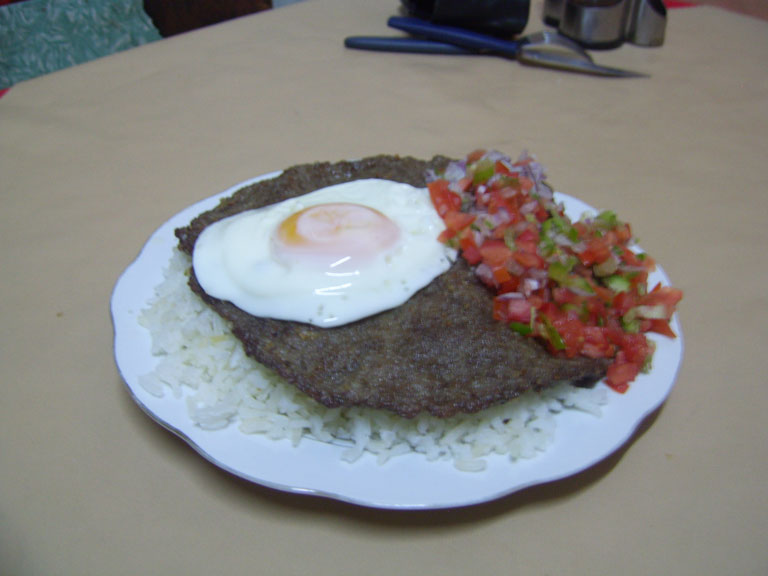 SilpanchoMeatSillp'anchu
🇧🇴 BoliviaLayered Bolivian meal with rice, potatoes, breaded meat, and fried eggs
Main dish, Lunch, Dinner
SilpanchoMeatSillp'anchu
🇧🇴 BoliviaLayered Bolivian meal with rice, potatoes, breaded meat, and fried eggs
Main dish, Lunch, Dinner
 Khoresh bademjanخورش بادمجان
🇮🇷 IranPersian stew of eggplant, tomato, lamb, and tart fruit, served with rice
Stew or curry, Lunch, Dinner
Khoresh bademjanخورش بادمجان
🇮🇷 IranPersian stew of eggplant, tomato, lamb, and tart fruit, served with rice
Stew or curry, Lunch, Dinner
 Misalमिसळ
🇮🇳 IndiaSpicy sprouted bean curry layered with toppings, served hot with bread
Main dish, Breakfast, Snacks
Misalमिसळ
🇮🇳 IndiaSpicy sprouted bean curry layered with toppings, served hot with bread
Main dish, Breakfast, Snacks