
Naryn
Central Asian noodles with horse or lamb and onion
Naryn is a traditional dish from Central Asia, especially found in Kyrgyzstan and Uzbekistan. It combines thin hand-cut noodles with shredded horse or lamb meat and onions, sometimes served with broth or as a cold salad. Naryn appears at large meals and is often served after appetizers and before rice dishes.
- Made with hand-cut noodles and shredded horse or lamb meat
- Served hot with broth or cold as a salad
- Often topped with slices of horse sausage
- Common in Kyrgyzstan, Uzbekistan, Kazakhstan, and Turkmenistan
What is Naryn?
Naryn is a dish where thin strips of dough are cut into short noodles and mixed with finely shredded horse or lamb meat. Onions are often added, sometimes as a sauce. In some versions, the noodles and meat are served in a hot broth, while in others the dish is served cold and dry. The meal is usually presented on a large plate, sometimes decorated with slices of horse sausage. The look is simple: pale noodles with dark meat and onions, sometimes with a little broth.
Where does Naryn come from?
Naryn is rooted in the food traditions of Central Asia, especially among Kyrgyz and Uzbek communities. The dish reflects the region’s history of horse breeding and the use of hand-made noodles. In Kyrgyz cooking, it is closely related to beshbarmak, which is naryn with added noodles. The Uzbek style focuses on hand-rolled pasta and horse meat, showing how local customs shape the dish. Its exact beginnings are not clear, but it has long been part of celebratory and everyday meals in these cultures.
How is Naryn made?
To make naryn, dough is rolled out thin and cut into short, narrow strips. These noodles are boiled, sometimes in water, sometimes in a broth made from horse meat. The cooked noodles are then mixed with shredded horse or lamb meat. Onions, either raw or cooked into a sauce, are added for flavor. In some places, slices of horse sausage are arranged on top. The dish can be served hot with broth or cold as a salad.

How and when is Naryn eaten?
Naryn is usually served at lunch or dinner, often as part of a larger meal. It comes after starters like samosas and before the main rice dish, such as plov. The food is typically shared from a large plate, with guests helping themselves. In some traditions, naryn is reserved for special gatherings, but it can also be found in everyday meals. It is eaten with the hands or with utensils, depending on local custom.
Kinds of Naryn
There are two main versions: a hot soup-like style with broth, and a cold, dry version. The meat used can be horse or lamb, depending on what is available and local preference. In some regions, the dish is topped with horse sausage. The thickness and length of the noodles may also vary. Each country and family may have its own way of preparing and serving naryn.
What Naryn means
Naryn is more than just a meal; it is a symbol of hospitality and tradition in Central Asia. It marks important gatherings and is a sign of respect to guests. The use of horse meat reflects the nomadic history of the region. In Uzbekistan and Kyrgyzstan, naryn is a point of pride and a marker of cultural identity. Its place in festive meals shows its importance beyond daily food.
Questions people ask about Naryn
What is naryn made of?
Naryn is prepared with thin hand-cut noodles, shredded horse or lamb meat, and onions. Sometimes it is served with broth, and it may be topped with horse sausage.
Where does naryn come from?
Naryn is a traditional dish from Central Asia, especially found in Kyrgyzstan and Uzbekistan. It is also eaten in Kazakhstan and Turkmenistan.
Is naryn served hot or cold?
Naryn can be served either hot with broth or cold as a dry noodle and meat salad, depending on local custom.
What kind of meat is used in naryn?
Horse meat is traditional, but lamb is also common, especially in Kyrgyz cuisine.
When is naryn usually eaten?
It is typically served at lunch or dinner, often as part of a larger meal and sometimes at special gatherings.
Good reading and sources
The facts on this page come from the Wikipedia article "Naryn (dish)", written by its contributors and used under the CC BY-SA 4.0 licence, and from its Wikidata record (CC0). Thali rewrote the text in its own words, with AI assistance, and compares every page with the article to make sure no passage is copied. It may be reused under the same CC BY-SA 4.0 licence with a link back.
It may contain mistakes, and it is not dietary or allergy advice: recipes differ from cook to cook. If something is wrong, tell us. Last refreshed 2026-10-03.
More from Kyrgyzstan
All the food of Kyrgyzstan MantiMeat
🇺🇿 Uzbekistan and 5 moreSpiced meat dumplings wrapped in thin dough, steamed, boiled or baked
Dumpling, Lunch, Dinner
MantiMeat
🇺🇿 Uzbekistan and 5 moreSpiced meat dumplings wrapped in thin dough, steamed, boiled or baked
Dumpling, Lunch, Dinner
 BeshbarmakMeat
🇰🇬 Kyrgyzstan and 4 moreCentral Asian noodles with chopped boiled meat and onion sauce, eaten with the hands
Main dish, Lunch, Dinner
BeshbarmakMeat
🇰🇬 Kyrgyzstan and 4 moreCentral Asian noodles with chopped boiled meat and onion sauce, eaten with the hands
Main dish, Lunch, Dinner
 LaghmanMeatلەغمەن
🇨🇳 China and 5 moreHand-pulled noodles with meat and vegetables in a savoury broth
Noodle or pasta dish, Lunch, Dinner
LaghmanMeatلەغمەن
🇨🇳 China and 5 moreHand-pulled noodles with meat and vegetables in a savoury broth
Noodle or pasta dish, Lunch, Dinner
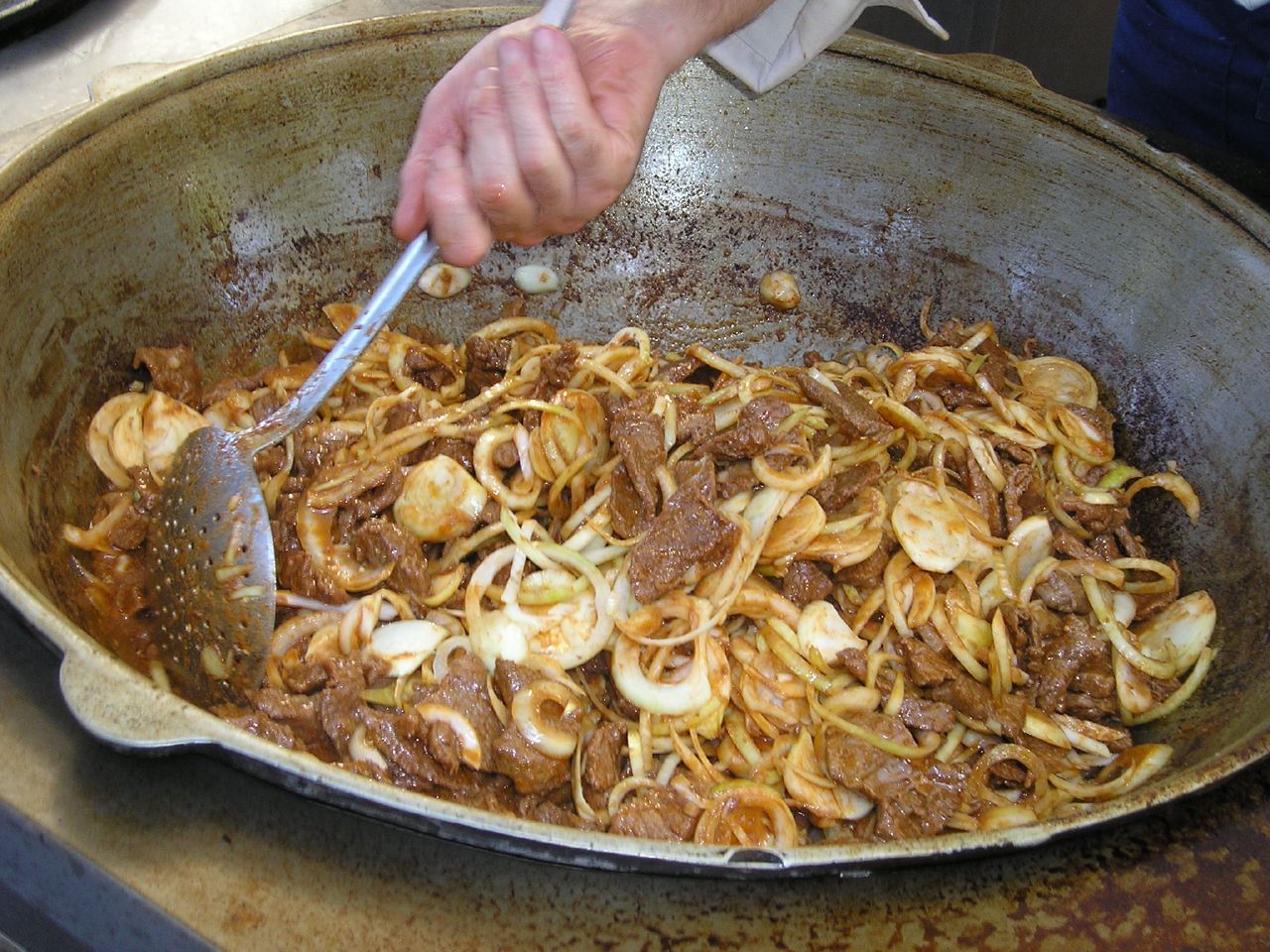 KuurdakMeat
🇰🇬 Kyrgyzstan and 4 moreCentral Asian fried meat and offal, often with onions and sometimes potatoes
Main dish
KuurdakMeat
🇰🇬 Kyrgyzstan and 4 moreCentral Asian fried meat and offal, often with onions and sometimes potatoes
Main dish
Its cousins elsewhere
All main dishes BarbacoaMeat
🇲🇽 Mexico and 3 moreMeat slow-cooked in a pit lined with agave or banana leaves
Main dish, Lunch, Dinner
BarbacoaMeat
🇲🇽 Mexico and 3 moreMeat slow-cooked in a pit lined with agave or banana leaves
Main dish, Lunch, Dinner
 Steak tartareMeat
🇫🇷 France and 5 moreRaw minced beef, seasoned and often topped with a raw egg yolk
Main dish, Lunch, Dinner
Steak tartareMeat
🇫🇷 France and 5 moreRaw minced beef, seasoned and often topped with a raw egg yolk
Main dish, Lunch, Dinner
 ĆevapiMeatћевапи
🇧🇦 Bosnia and Herzegovina and 5 moreGrilled minced meat rolls served with flatbread and onions in Southeast Europe
Main dish, Lunch, Dinner
ĆevapiMeatћевапи
🇧🇦 Bosnia and Herzegovina and 5 moreGrilled minced meat rolls served with flatbread and onions in Southeast Europe
Main dish, Lunch, Dinner
 PljeskavicaMeatпљескавица
🇷🇸 Serbia and 5 moreGrilled Balkan patty of spiced minced meats, served hot with sides or in flatbread
Main dish, Lunch, Dinner
PljeskavicaMeatпљескавица
🇷🇸 Serbia and 5 moreGrilled Balkan patty of spiced minced meats, served hot with sides or in flatbread
Main dish, Lunch, Dinner