Kuurdak
Central Asian fried meat and offal, often with onions and sometimes potatoes
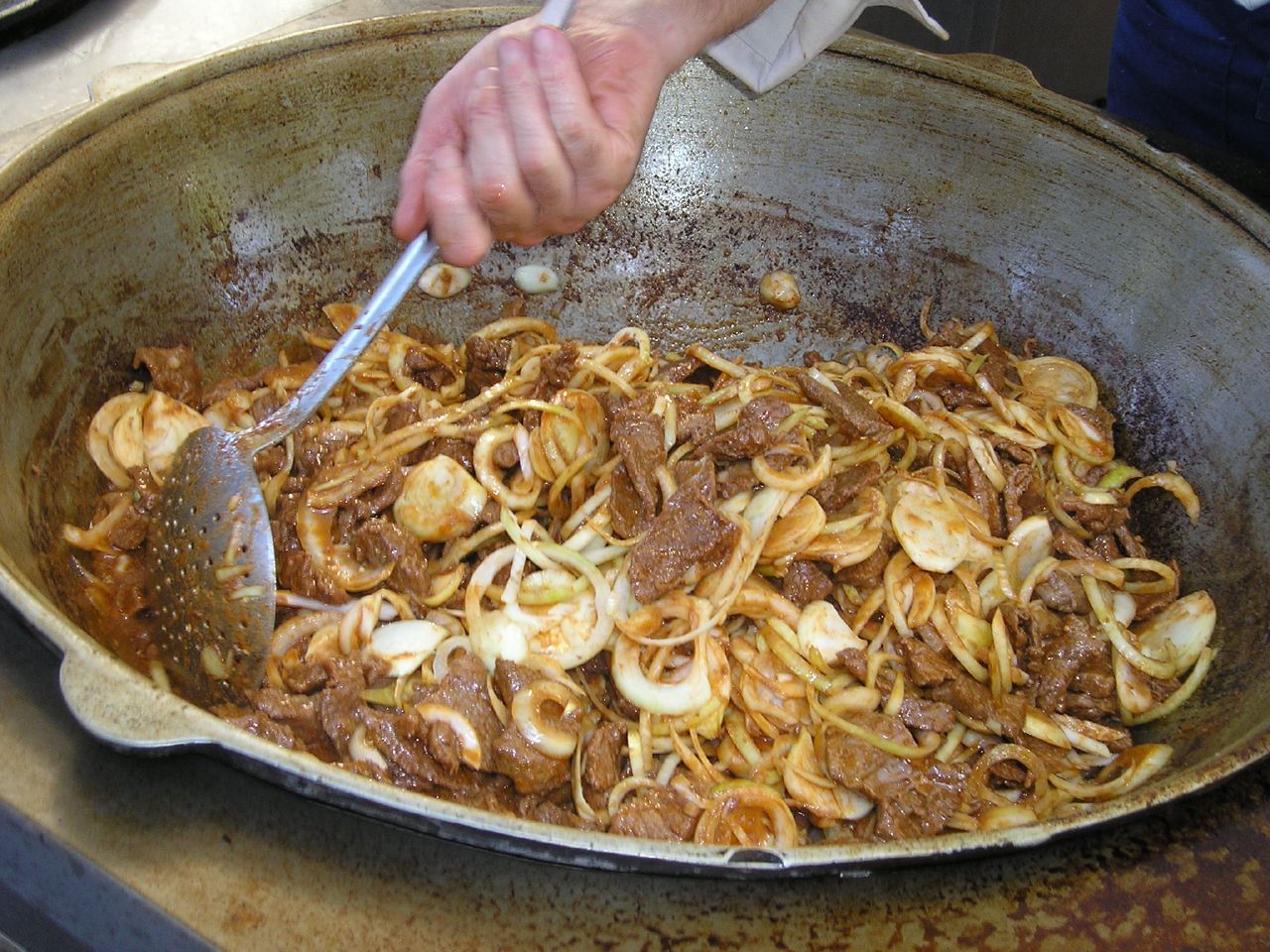
Kuurdak is a meat dish from Central Asia, especially Kyrgyzstan and Kazakhstan, made by frying lamb or other meats with onions and sometimes offal. Animal fat is often used, though vegetable oil and potatoes are now common in some versions. It is a traditional food with roots in nomadic cooking.
- Made by frying lamb or offal with onions
- Traditional among Central Asian nomads
- Potatoes added after the 19th century
- Known by many names across the region
- Animal fat or vegetable oil used for cooking
What is Kuurdak?
Kuurdak is a dish where pieces of meat, often lamb or mutton, are fried together with onions and sometimes offal such as liver. The meat is browned and cooked in animal fat, though vegetable oil is also used today. Some versions include potatoes, especially since the 19th century. The finished dish is hearty, with rich flavors from the meat and onions, and may have a slightly crispy texture from frying.
Where does Kuurdak come from?
This food has its roots among the nomadic peoples of Central Asia, who would prepare it using freshly butchered sheep and cook it in rendered animal fat. The name comes from a Kyrgyz word meaning to fry or roast, reflecting the main cooking method. Potatoes became part of the dish after being introduced to the region in the 1800s, though not all local versions include them. Kuurdak is found in several Central Asian cuisines, each with its own small differences.
How is Kuurdak made?
To make kuurdak, meat is cut into pieces and fried in fat or oil, often with onions and sometimes garlic. Offal such as liver may be added. The mixture is cooked until the meat is browned and tender. In some regions, potatoes are added partway through the cooking process. The dish is usually cooked in a single pot or pan, making it practical for nomadic life.
How and when is Kuurdak eaten?
Kuurdak is eaten as a main course and can be served on its own or with bread. It is a common meal in homes across Central Asia and is not tied to any particular festival or religious event. The dish is enjoyed for its filling nature and the deep flavor that comes from frying meat and onions together. It is often shared among family or guests.
Kinds of Kuurdak
Different countries and regions have their own takes on kuurdak. Some use more offal, while others stick to just meat. In Uzbekistan and Turkmenistan, potatoes are less common, while in other areas they are a standard addition. The choice of fat—animal or vegetable—also varies. In Turkey, a similar dish called kavurma is made with a range of meats and sometimes vegetables.
What Kuurdak means
Kuurdak is a staple of Central Asian home cooking, reflecting the region's pastoral traditions. It is not reserved for special occasions but is part of daily meals. The dish connects people to their nomadic past, when cooking with fresh meat and animal fat was a necessity. Its continued popularity shows how these traditions have adapted over time.
Questions people ask about Kuurdak
What is kuurdak made of?
Kuurdak is mainly prepared with lamb or mutton, onions, and sometimes offal like liver. Some versions also include potatoes and garlic, and it is cooked in animal fat or vegetable oil.
Where does kuurdak come from?
Kuurdak comes from Central Asia, especially Kyrgyzstan and Kazakhstan, but is also found in Mongolia, Uzbekistan, and Turkmenistan. It has roots in the cooking of nomadic peoples.
How is kuurdak cooked?
The dish is made by frying pieces of meat and onions, often with offal, in fat or oil until browned. Some recipes add potatoes during cooking. It is usually cooked in a single pan.
Is kuurdak eaten for special occasions?
Kuurdak is mostly an everyday food and is not tied to festivals or religious events. It is a regular part of meals in Central Asian households.
Does kuurdak always include potatoes?
Potatoes are a common addition in some regions since the 19th century, but in places like Uzbekistan and Turkmenistan, they are less often used.
Good reading and sources
The facts on this page come from the Wikipedia article "Kuurdak", written by its contributors and used under the CC BY-SA 4.0 licence, and from its Wikidata record (CC0). Thali rewrote the text in its own words, with AI assistance, and compares every page with the article to make sure no passage is copied. It may be reused under the same CC BY-SA 4.0 licence with a link back.
It may contain mistakes, and it is not dietary or allergy advice: recipes differ from cook to cook. If something is wrong, tell us. Last refreshed 2026-10-03.
More from Kyrgyzstan
All the food of Kyrgyzstan MantiMeat
🇺🇿 Uzbekistan and 5 moreSpiced meat dumplings wrapped in thin dough, steamed, boiled or baked
Dumpling, Lunch, Dinner
MantiMeat
🇺🇿 Uzbekistan and 5 moreSpiced meat dumplings wrapped in thin dough, steamed, boiled or baked
Dumpling, Lunch, Dinner
 BeshbarmakMeat
🇰🇬 Kyrgyzstan and 4 moreCentral Asian noodles with chopped boiled meat and onion sauce, eaten with the hands
Main dish, Lunch, Dinner
BeshbarmakMeat
🇰🇬 Kyrgyzstan and 4 moreCentral Asian noodles with chopped boiled meat and onion sauce, eaten with the hands
Main dish, Lunch, Dinner
 Chorba
🇩🇿 Algeria and 5 moreA family of hearty soups and stews found from North Africa to Central Asia
Soup
Chorba
🇩🇿 Algeria and 5 moreA family of hearty soups and stews found from North Africa to Central Asia
Soup
 LaghmanMeatلەغمەن
🇨🇳 China and 5 moreHand-pulled noodles with meat and vegetables in a savoury broth
Noodle or pasta dish, Lunch, Dinner
LaghmanMeatلەغمەن
🇨🇳 China and 5 moreHand-pulled noodles with meat and vegetables in a savoury broth
Noodle or pasta dish, Lunch, Dinner
Its cousins elsewhere
All main dishes Yassa
🇸🇳 SenegalChicken, fish or lamb marinated with lemon, onions and mustard, then stewed
Main dish, Lunch, Dinner
Yassa
🇸🇳 SenegalChicken, fish or lamb marinated with lemon, onions and mustard, then stewed
Main dish, Lunch, Dinner
 GoulashMeatgulyás
🇭🇺 Hungary and 5 moreA paprika-spiced meat and vegetable soup from Hungary
Soup, Lunch, Dinner
GoulashMeatgulyás
🇭🇺 Hungary and 5 moreA paprika-spiced meat and vegetable soup from Hungary
Soup, Lunch, Dinner
 Seafood boil
🇺🇸 United States and 1 moreShellfish and sides cooked together for a communal feast
Main dish, Lunch, Dinner
Seafood boil
🇺🇸 United States and 1 moreShellfish and sides cooked together for a communal feast
Main dish, Lunch, Dinner
 Rocoto rellenoMeat
🇵🇪 PeruPeruvian stuffed rocoto peppers baked with meat and cheese
Main dish, Lunch, Dinner
Rocoto rellenoMeat
🇵🇪 PeruPeruvian stuffed rocoto peppers baked with meat and cheese
Main dish, Lunch, Dinner