
Chocolate ball
In its own language: chokladboll
Swedish and Danish no-bake sweet made from oats, cocoa, and butter, rolled in coconut
Chocolate balls are a Swedish and Danish sweet made by mixing oats, sugar, cocoa, butter, and sometimes coffee or cream, then shaping the mixture into small balls and rolling them in coconut or pearl sugar. They are a popular homemade treat, especially at children's parties, and are usually served chilled.
- No baking is needed to make chocolate balls
- Oats, cocoa, and butter form the base of the mixture
- Commonly rolled in coconut or pearl sugar
- A favorite at children's parties in Sweden and Denmark
- Usually served cold after chilling
What is Chocolate ball?
Chocolate balls are small, round sweets made from a mixture of oats, sugar, cocoa powder, butter, and sometimes a splash of coffee or cream. The dough is shaped by hand into balls a bit smaller than a golf ball. These are then rolled in grated coconut, pearl sugar, or sprinkles, giving them a textured coating. The finished treat is soft and rich, with a chocolatey flavor and a chewy bite from the oats. They are usually served cold, which helps them hold their shape.
Where does Chocolate ball come from?
The chocolate ball likely appeared during World War II, when wheat flour was scarce and substitutes were needed. A Danish booklet from 1943 included a recipe for these oat-based sweets. In Sweden, a classified ad from 1918 mentioned a similar chocolate-coconut treat. Over time, the sweet became a staple in both Swedish and Danish home baking, especially because it requires no baking and uses simple ingredients.
How is Chocolate ball made?
To prepare chocolate balls, oats, sugar, cocoa powder, vanilla sugar, and butter are mixed together, sometimes with a little coffee or cream for extra smoothness. The mixture is kneaded until it forms a dense dough. Small portions are taken and rolled by hand into balls. Each ball is then coated in grated coconut, pearl sugar, or sprinkles. The balls are often chilled before serving to firm them up.

How and when is Chocolate ball eaten?
Chocolate balls are a common homemade snack in Sweden and Denmark, especially popular at children's parties due to their easy preparation. They are usually eaten cold, straight from the refrigerator, and can be enjoyed at any time of day. Because they are quick to make and do not require baking, they are often made at home rather than bought.
Kinds of Chocolate ball
In Israel, a similar sweet called Kadur Shokolad uses biscuit crumbs instead of oats. Austria has the Rumkugel, which adds rum to the mix and is popular at Christmas. In Newfoundland and Labrador, Canada, the snowball is a Christmas treat with evaporated milk added. The Swedish version may also be called kokosboll when coated in coconut.
What Chocolate ball means
Chocolate balls are a familiar sight at Swedish and Danish gatherings, especially for children. The treat has also been at the center of a naming debate in Sweden, where the older term negerboll was replaced by chokladboll due to changing attitudes. The sweet is recognized as part of Swedish culinary tradition and is often made at home rather than purchased.
Questions people ask about Chocolate ball
What are chocolate balls made of?
They are made from oats, sugar, cocoa powder, butter, and sometimes coffee or cream. The mixture is shaped into balls and rolled in coconut, pearl sugar, or sprinkles.
Where do chocolate balls come from?
Chocolate balls are popular in Sweden and Denmark. They likely originated during World War II when flour was scarce and oats were used as a substitute.
Are chocolate balls baked?
No, chocolate balls are not baked. The ingredients are mixed together, shaped into balls, and then chilled before eating.
How are chocolate balls usually served?
They are typically served cold, after being chilled in the refrigerator. This helps them stay firm and enhances their texture.
Are there different versions of chocolate balls?
Yes, in Israel biscuit crumbs are used instead of oats, in Austria rum is added, and in Canada evaporated milk is included for a Christmas treat.
Good reading and sources
The facts on this page come from the Wikipedia article "Oatmeal ball", written by its contributors and used under the CC BY-SA 4.0 licence, and from its Wikidata record (CC0). Thali rewrote the text in its own words, with AI assistance, and compares every page with the article to make sure no passage is copied. It may be reused under the same CC BY-SA 4.0 licence with a link back.
It may contain mistakes, and it is not dietary or allergy advice: recipes differ from cook to cook. If something is wrong, tell us. Last refreshed 2026-10-03.
More from Sweden
All the food of Sweden MarzipanVegetarian
🇩🇪 Germany and 5 moreSweet almond paste shaped or used in cakes, especially at Christmas and weddings
Sweet or dessert, Snacks, Tea time
MarzipanVegetarian
🇩🇪 Germany and 5 moreSweet almond paste shaped or used in cakes, especially at Christmas and weddings
Sweet or dessert, Snacks, Tea time
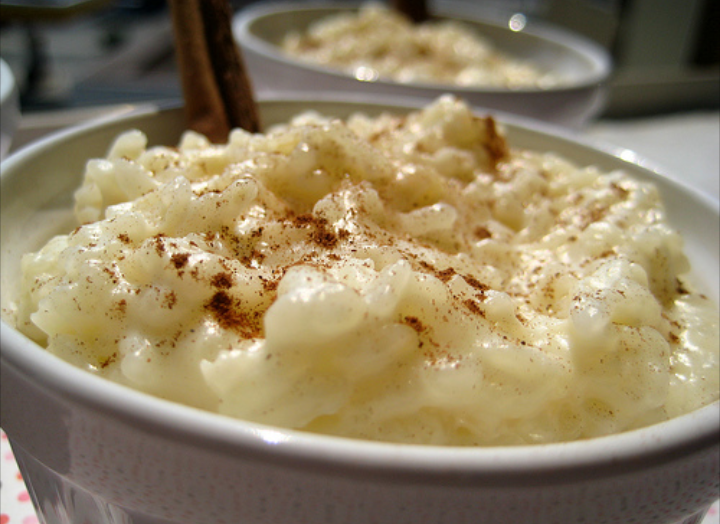 Rice pudding
🇮🇳 India and 4 moreSweetened rice cooked in milk, found in many forms worldwide
Sweet or dessert, Breakfast, Lunch
Rice pudding
🇮🇳 India and 4 moreSweetened rice cooked in milk, found in many forms worldwide
Sweet or dessert, Breakfast, Lunch
 Chocolate brownieVegetarianBrownie
🇺🇸 United States and 2 moreDense chocolate squares baked as a bar, often served warm or with toppings
Sweet or dessert, Snacks, Tea time
Chocolate brownieVegetarianBrownie
🇺🇸 United States and 2 moreDense chocolate squares baked as a bar, often served warm or with toppings
Sweet or dessert, Snacks, Tea time
 Cinnamon rollVegetarian
🇸🇪 Sweden and 4 moreA sweet rolled bun with cinnamon and sugar, baked and often topped with icing
Sweet or dessert, Breakfast, Tea time
Cinnamon rollVegetarian
🇸🇪 Sweden and 4 moreA sweet rolled bun with cinnamon and sugar, baked and often topped with icing
Sweet or dessert, Breakfast, Tea time
Its cousins elsewhere
All pies and savoury pastries Egg tartVegetarian蛋撻
🇨🇳 China and 5 moreA small pastry tart with a sweet egg custard filling, found in Cantonese cuisine
Pie or savoury pastry, Snacks, Tea time
Egg tartVegetarian蛋撻
🇨🇳 China and 5 moreA small pastry tart with a sweet egg custard filling, found in Cantonese cuisine
Pie or savoury pastry, Snacks, Tea time
 Hamantashהמן־טאַשן
🇮🇱 IsraelTriangular filled cookie for the Jewish festival of Purim
Sweet or dessert, Snacks
Hamantashהמן־טאַשן
🇮🇱 IsraelTriangular filled cookie for the Jewish festival of Purim
Sweet or dessert, Snacks
 Pineapple cakeVegetarian王梨酥 ông-lâi-so͘
🇹🇼 TaiwanTaiwanese pastry with sweet pineapple jam inside a golden, crumbly shell
Sweet or dessert, Snacks, Tea time
Pineapple cakeVegetarian王梨酥 ông-lâi-so͘
🇹🇼 TaiwanTaiwanese pastry with sweet pineapple jam inside a golden, crumbly shell
Sweet or dessert, Snacks, Tea time