
Ouzo
In its own language: ούζο
Greek anise-flavored spirit, often served with water and meze
Ouzo is a clear, dry spirit from Greece, flavored mainly with anise and sometimes other herbs. Traditionally enjoyed as an aperitif, it is often mixed with water, which turns it milky white, and served with small plates of food called meze. Ouzo is closely tied to Greek culture and has protected status in the European Union.
- Turns milky white when mixed with water or ice
- Protected as a Greek product by the European Union
- First ouzo distillery opened in Tyrnavos in 1856
- Traditionally served with meze like olives and feta
- Distilled with anise and sometimes other botanicals
What is Ouzo?
Ouzo is a clear spirit from Greece, known for its strong anise (licorice-like) flavor. It is made by distilling grape-based alcohol with anise and sometimes other botanicals like fennel, mastic, or cardamom. When mixed with water or ice, ouzo turns cloudy white due to the separation of anise oil. The drink is dry, aromatic, and is usually enjoyed slowly, often alongside small savory dishes.
Where does Ouzo come from?
Ouzo traces its roots to tsipouro, a grape spirit flavored with anise by monks on Mount Athos in the 14th century. The drink became popular after Greek independence in the 19th century, with the first distillery opening in Tyrnavos in 1856. Its name may come from the Italian 'uso Marsiglia' or the Turkish word for grape, 'üzüm'. Ouzo gained further popularity after absinthe was banned in Europe, filling the gap for anise-flavored spirits.
How is Ouzo made?
Production starts with distilling high-proof grape spirit in copper stills. Anise and sometimes other spices are added for flavor. The mixture is distilled again, and the first and last portions (heads and tails) are usually removed for quality. Some producers use double distillation for a smoother spirit. The final product is diluted with water to reach the desired alcohol content, and sugar may be added, especially in southern Greece. Ouzo is bottled at 40.5% to 55% alcohol by volume.


How and when is Ouzo eaten?
Ouzo is typically sipped slowly, mixed with water or ice, which turns it milky white. It is commonly served with meze—small plates of food such as fresh fish, olives, fries, or feta cheese. In Greece, ouzo is enjoyed in ouzeries, social places where people gather in the early evening. Outside Greece, it may be served chilled in shot glasses as an aperitif before a meal.
Kinds of Ouzo
Each ouzo producer uses a unique blend of botanicals, making flavor profiles distinct. Some brands are known for double distillation or using only distilled ingredients. Ouzo from Plomari and Tyrnavos is especially well known. In Cyprus, ouzo is also popular and forms the base of the Ouzini cocktail. The addition of sugar varies by region, with southern Greek ouzo tending to be sweeter.
What Ouzo means
Ouzo is a symbol of Greek hospitality and social life. It is protected by European law as a uniquely Greek product, and only Greece and Cyprus can use the name within the EU. Ouzo is often associated with leisurely gatherings and shared plates. There is even an ouzo museum in Plomari, Lesbos, reflecting its cultural importance.
Questions people ask about Ouzo
What is ouzo made from?
Ouzo is made by distilling grape-based alcohol with anise and sometimes other herbs like fennel or mastic. The exact blend of botanicals can vary by producer.
Where does ouzo come from?
Ouzo originates from Greece, with a long tradition in places like Tyrnavos and Plomari. It is also widely consumed in Cyprus.
How is ouzo usually served?
Ouzo is typically served in a small glass, often mixed with water or ice, which turns it cloudy white. It is usually sipped slowly alongside small plates of food called meze.
What does ouzo taste like?
Ouzo has a strong anise flavor, similar to licorice, and is dry and aromatic. The taste can be smoother than other anise spirits like absinthe.
Is ouzo protected by law?
Yes, ouzo is recognized by the European Union as a protected Geographical Indication, meaning only Greece and Cyprus can produce spirits called ouzo within the EU.
Good reading and sources
- Encyclopaedia BritannicaArticle
- TASTE OF TRAVEL: GREECE : Athens Openers : Traditional Appetizers Good Enough for the Gods Are Making the Meal in Modern OuzeriesLos Angeles Times, Article
The facts on this page come from the Wikipedia article "Ouzo", written by its contributors and used under the CC BY-SA 4.0 licence, and from its Wikidata record (CC0). Thali rewrote the text in its own words, with AI assistance, and compares every page with the article to make sure no passage is copied. It may be reused under the same CC BY-SA 4.0 licence with a link back.
It may contain mistakes, and it is not dietary or allergy advice: recipes differ from cook to cook. If something is wrong, tell us. Last refreshed 2026-10-03.
More from Greece
All the food of Greece WineVegan
🇬🇪 Georgia and 5 moreAlcoholic drink made by fermenting grape juice in many styles and colors
Drink
WineVegan
🇬🇪 Georgia and 5 moreAlcoholic drink made by fermenting grape juice in many styles and colors
Drink
 CappuccinoVegetarian
🇮🇹 Italy and 5 moreEspresso with steamed milk and a thick layer of milk foam, served in a small cup
Drink, Breakfast
CappuccinoVegetarian
🇮🇹 Italy and 5 moreEspresso with steamed milk and a thick layer of milk foam, served in a small cup
Drink, Breakfast
 Turkish coffeeVeganTürk kahvesi
🇹🇷 Turkey and 5 moreUnfiltered coffee brewed in a small pot and served with its fine grounds
Drink, Snacks
Turkish coffeeVeganTürk kahvesi
🇹🇷 Turkey and 5 moreUnfiltered coffee brewed in a small pot and served with its fine grounds
Drink, Snacks
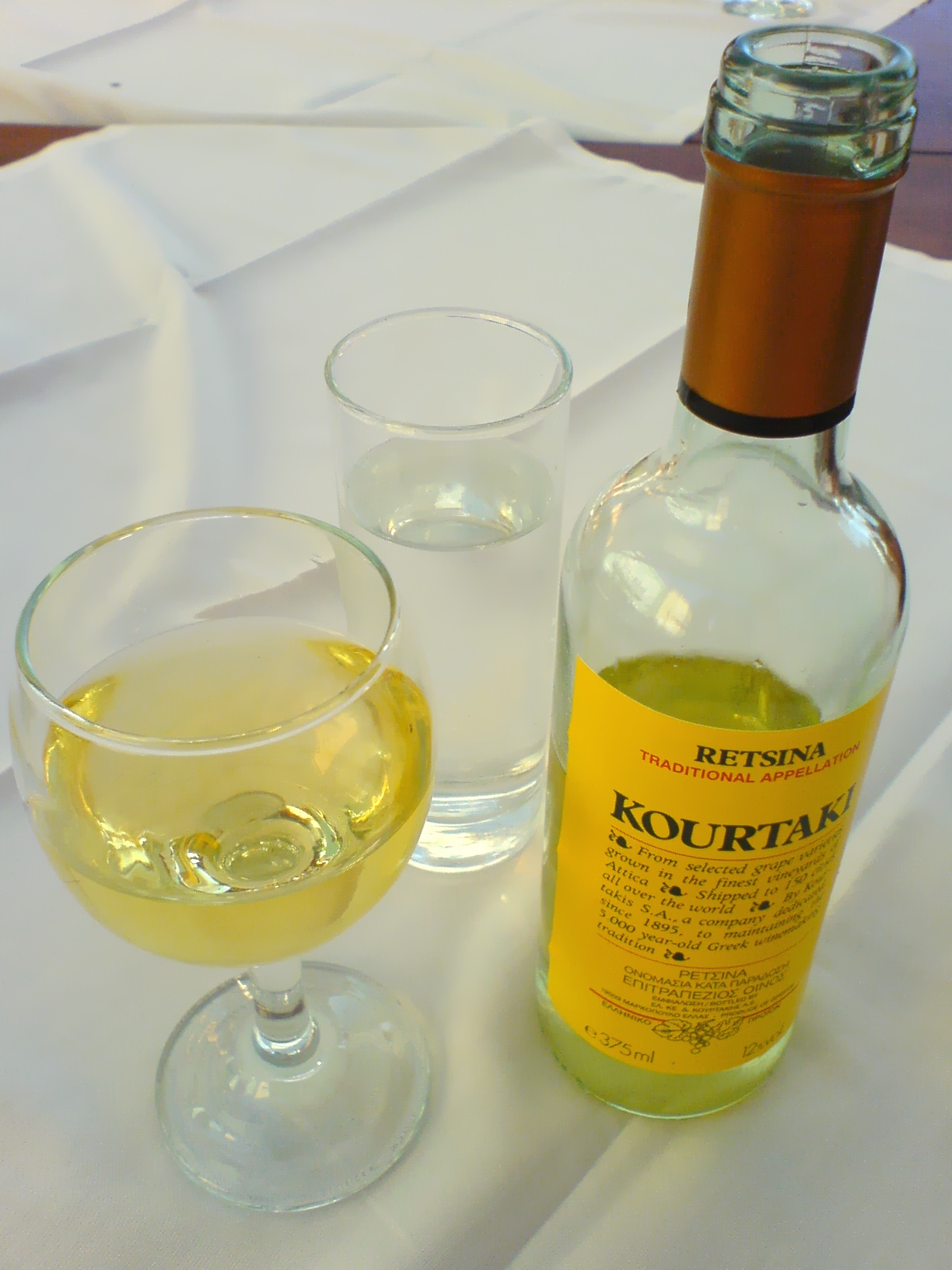 RetsinaVeganρετσίνα
🇬🇷 Greece and 1 moreGreek white or rosé wine flavored with pine resin
Drink
RetsinaVeganρετσίνα
🇬🇷 Greece and 1 moreGreek white or rosé wine flavored with pine resin
Drink
Its cousins elsewhere
All drinks TeaVegan茶
🇨🇳 China and 5 moreA drink made by soaking tea leaves in hot or cold water
Drink
TeaVegan茶
🇨🇳 China and 5 moreA drink made by soaking tea leaves in hot or cold water
Drink
 Hot chocolate
🇲🇽 Mexico and 5 moreA warm drink made from chocolate or cocoa, milk or water, and sugar
Drink, Breakfast, Snacks
Hot chocolate
🇲🇽 Mexico and 5 moreA warm drink made from chocolate or cocoa, milk or water, and sugar
Drink, Breakfast, Snacks
 LimeadeVegan
🇧🇸 Bahamas and 5 moreSweetened lime juice mixed with water, served cold as a refreshing drink
Drink, Snacks
LimeadeVegan
🇧🇸 Bahamas and 5 moreSweetened lime juice mixed with water, served cold as a refreshing drink
Drink, Snacks
 SatoVeganสาโท
🇹🇭 ThailandFermented rice drink from northeastern Thailand, often shared from a communal bowl or jar
Drink
SatoVeganสาโท
🇹🇭 ThailandFermented rice drink from northeastern Thailand, often shared from a communal bowl or jar
Drink